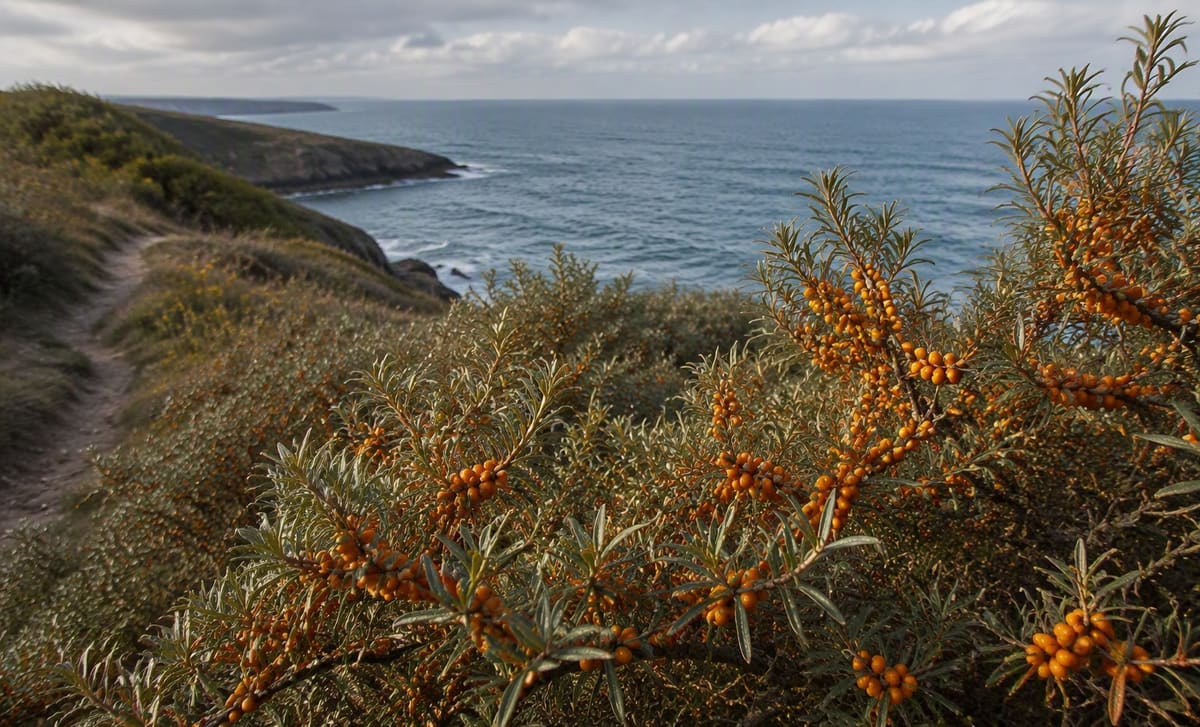
In Britain, sea buckthorn is a coastal character. It grows wild along stretches of the shore, naturalized from dune plantings and long established in places, and it draws foragers every autumn. What it does not have is a farming industry, so most British products start life as imported berries.
Coastal and naturalized
Sea buckthorn was planted around Britain to hold dunes and ornament coasts, and it liked the maritime climate enough to stay and spread. Today it is a fixture on parts of the southern and eastern English coast and scattered elsewhere, fruiting reliably in autumn. The foraging page covers finding and picking it without bloodshed, which matters, because the thorns are serious. Across the North Sea, Germany shares the same dune ecology.
Pick-your-own and gardens
A small number of British growers offer pick-your-own or sell fresh berries in season, and interest keeps growing. Gardeners can plant it themselves, since British winters are milder than the shrub needs, and our growing hub covers the realities: sun, drainage, a male plant, and the suckering habit.
Buying notes
On British shelves and websites, most sea buckthorn is imported, commonly Himalayan or European in origin, so the origin questions from the Europe page apply. Fresh local berries remain a seasonal rarity worth grabbing when you see them. For anything bottled, apply the standard checks from our guide to where to buy sea buckthorn: named origin, named plant part, and a seller who answers questions.
The regions hub maps where British products typically begin, and Finland shows what a serious northern industry looks like.
Native or not, and why it matters
Britain’s relationship with the shrub is ambiguous: planted for centuries to hold dunes and ornament coasts, established long enough to feel native, and spreading on its own in places. That spreading habit has a real debate around it, covered on the is it invasive page, because a shrub that stabilizes dunes can also colonize ground where it was not invited. Conservation bodies now weigh both sides, which is one reason foragers should pick berries, not transplant bushes.
The forager’s calendar
The berries color from late summer and hold into autumn, sometimes winter, though birds take their share as the season turns. The best patches are open coastal stretches of the south and east, and the work is slow: thorns, stained hands, and a freezer at home as the reward. First-timers should confirm the identification against the identification page, because coastal shrubs have lookalikes and the thorns punish guessing.
The pick-your-own scene, honestly
British commercial growing is small but real: a scattering of growers offering u-pick days, farmgate berries, or frozen fruit by post in season. Supply never meets the interest, so autumn farm-shop boards and grower websites are the practical radar. Fresh British berries are a seasonal event, not a category.
For the British gardener
The shrub suits Britain almost too well: winters milder than it needs, rain it tolerates given drainage, and sun the limiting factor. The garden checklist runs drainage first, sun second, a male plant third, and a plan for suckers fourth. Bred varieties fruit heavier than wild stock, and the thorns make it a boundary plant with benefits, provided the neighbors are warned.
What British shelves say
Imported product dominates, and the origin spread is wide: Himalayan oils, European juices, Canadian berries occasionally. British-grown appears rarely and proudly, usually at a premium that reflects how little exists, and usually in season rather than year-round. The gap between what Britain grows and what Britain buys is the whole story of the category here, and it closes a little every autumn as another grower plants another field. Watch the farm shops.
Frequently asked questions
Does sea buckthorn grow wild in the UK?
Yes. It grows wild along stretches of the British coast, especially in southern and eastern England, where it was planted to stabilize dunes and has naturalized. Autumn foragers seek it out, though the thorns make picking slow work.
Is sea buckthorn native to Britain?
No. It was planted for centuries to stabilize dunes and ornament coasts, and it has naturalized so thoroughly in places that it now feels native. Some stands spread on their own, which is why conservation opinion is divided and why foragers should pick berries rather than move plants.