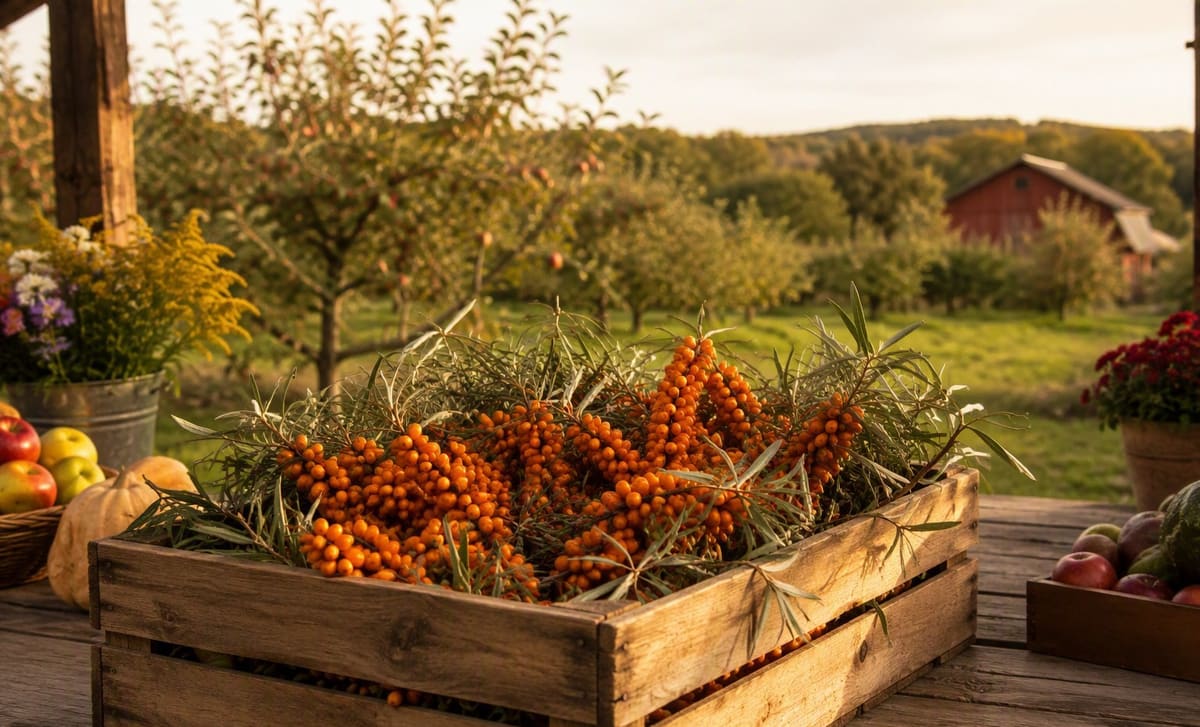
Sea buckthorn is not native to the United States, but it is not exotic either: cold-region growers plant it from the Pacific Northwest to the upper Midwest, and Americans buy the products mostly online. Fresh berries remain a farmers-market rarity, while oil and capsules are a solved problem through the big verified channels.
Not native, but at home in the cold
The shrub evolved across Europe and Asia, and what it wants is exactly what much of the northern US has: real winters, poor-to-average soil, and open sun. It fixes its own nitrogen, so it thrives on ground other crops reject, and it shrugs off frosts that would end lesser shrubs. That is why American plantings cluster in the Pacific Northwest, the upper Midwest, the Northeast, and the mountain states, mirroring the Canadian prairie orchards just over the border that supply much of North America’s whole-berry trade.
The south is another story. Hot, humid summers and mild winters do not suit it, which is why sea buckthorn remains a northern curiosity rather than a national crop. The regions hub sets the American picture beside the countries that grow it at scale.
Where Americans actually get it
Online, mostly. The brands we verify ship nationwide, and the reliable retail channels (iHerb, Vitacost, brand websites) carry the full range of oils and capsules with proper storage. The where to buy guide ranks those channels, and the Amazon vs iHerb vs direct comparison settles the marketplace question.
Farmers markets, occasionally. In grower states you will sometimes find fresh or frozen berries, juices, and jams from small orchards in season. That is the only reliable route to fresh berries in America, since supermarkets do not carry a soft, staining fruit with a two-day shelf life.
Your own yard, increasingly. Gardeners in cold zones are planting it for the berries, the drought tolerance, and the wildlife. Remember the one rule that surprises everyone: the species is dioecious, so you need a male plant near your females or you get zero berries. The growing hub covers zones, planting, and harvest in detail.
What the US market means for label reading
American shelves mix Himalayan imports, Canadian prairie products, and European brands, so origin varies wildly within one search result. The same label discipline applies everywhere: named plant part, species, extraction, certification, origin. Our oil guide scores the bottles that pass, with the prices we verified at US retailers.
The zone question, answered properly
The shrub’s American range is a cold map: roughly USDA zones 3 through 7, with the climate and zones page giving the exact bands. Cold is rarely the problem. Heat, humidity, and wet clay are, which is why the South stays out of the story and the northern tier stays in it.
The male-female rule, once more
Every failed American planting traces to one of two errors: buying a single plant, or buying two of the same sex. The species is dioecious, the male vs female page shows how to tell them apart before they flower, and one male serves several females. Nurseries selling named varieties sell sexed plants. Seedlings are a coin flip that takes years to call.
Buying American-grown
A small but real domestic supply exists: northern orchards selling frozen berries, juices, and jams through farmers markets, farm stands, and their own websites, much of it tracing to prairie harvests just over the Canadian border. Fresh never ships, so frozen is the authentic form, and autumn is the season to watch. The growers selling at those markets are usually happy to talk varieties, which makes them the best label-readers you will meet all season.
Frequently asked questions
Can you grow sea buckthorn in the USA?
Yes, in cold-winter regions. The shrub is very cold-hardy and suits northern zones: the Pacific Northwest, the upper Midwest, the Northeast, and mountain states all work. Hot, humid southern climates do not. You need both a male and a female plant to get berries, since the species is dioecious.
When can I buy fresh sea buckthorn in America?
Briefly, in autumn, and only near growers. Farmers markets and farm stands in northern states carry fresh or just-frozen berries in season, while supermarkets never do. Frozen berries from growers or the Canadian trade are the practical year-round form.