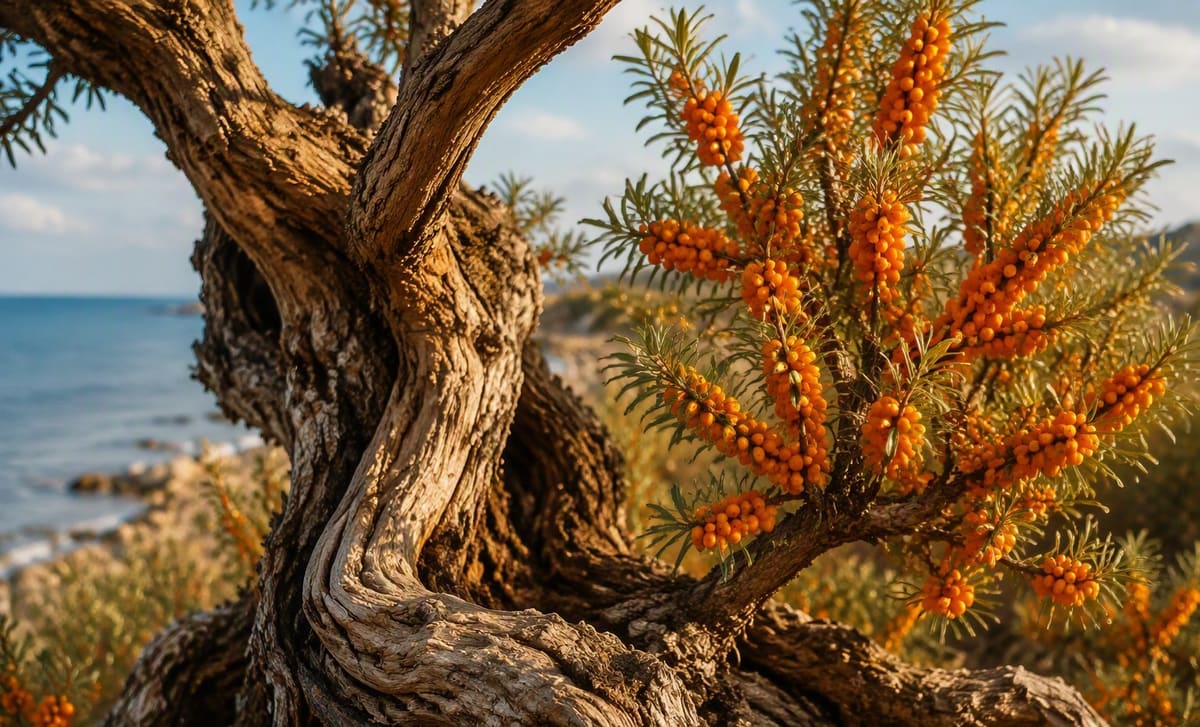
A single sea buckthorn stem lives for decades, not centuries. But the plant plays a longer game: its roots send up suckers, the thicket renews itself stem by stem, and a stand can persist and fruit for many decades even as individual trunks come and go.
The life of one stem, year by year
Year one is survival: roots before everything. The next couple of years build the framework of stems. First fruit typically follows a few seasons in for cuttings, later for seedlings, and seed-grown plants add their own delay at the start, since they must flower before they can even reveal their sex, a wait the male versus female page covers. Then the shrub settles into steady cropping for years.
Old stems eventually thin, shade out, and die back. That’s normal turnover, not tragedy. None of this runs on a strict calendar, because site and care move every date, but the sequence is reliable even when the timing isn’t.
The thicket outlives the shrub
The roots are the long-lived part. They spread and sucker, sending up new stems that are genetically the same plant, so the stand continues long after the original trunk is gone. Left alone, one shrub becomes a thicket that can hold a riverbank for generations. That same persistence, walked into the wrong place, is the spread the invasive question page weighs honestly.
Reading an old stand
A mature thicket tells its own age in layers: thick gnarled stems in the middle, dead wood going gray among them, and young suckers ringing the edge. That edge is the stand’s future, and it’s why a colony can fruit for generations while no single stem is old. When the center dies back entirely, the ring keeps going, and the stand simply walks outward across decades.
What shortens the run
Waterlogged soil is the fast killer, and deep shade slowly starves the stand. Hot humid summers stress it, and stripping whole branches year after year at harvest wears plants down, one reason the foraging rules forbid it on wild stands.
Long life is mostly site selection done once: full sun and fast drainage, the same two demands the climate and zones page frames. After that, renewal pruning is the whole secret. Take out the oldest stems so the young ones inherit the light, as the pruning guide shows. Pests and disease are mercifully rare on a well-sited plant, and the pests and diseases guide covers the exceptions.
The orchard arithmetic
Commercial plantings think in decades, and the commercial farming guide runs the numbers. A well-managed block crops for a long working life before replanting makes sense, and the yield math on the yield per acre page assumes exactly that. The gardener’s version is friendlier: plant once, prune yearly, hand the thicket to the next generation.
When to worry
A stem dying here and there is turnover. Several stems dying in one season, with sparse leaves across the stand, points at the site rather than the age. Check drainage first and shade second. Old plants on good ground decline slowly and gracefully, so fast decline is almost never about years. The age question is patient and the site question is urgent, and telling them apart saves stands. The plant hub covers the rest of the life story.
Frequently asked questions
How long before sea buckthorn fruits?
Seed-grown plants take several years to reach fruiting, and only then reveal their sex. Rooted cuttings from a mature plant start sooner, because they are genetically the age of the parent wood. Either way, the first real harvest is a patience test, and the growing hub maps the year-by-year expectations.
Do old sea buckthorn bushes stop fruiting?
Aging stems thin and crop less, but the plant renews itself from the roots. Renewal pruning, removing the oldest stems so young ones take the light, restores production, and an untouched thicket simply fruits on its younger edge. Decline is a stem story, not a stand story.