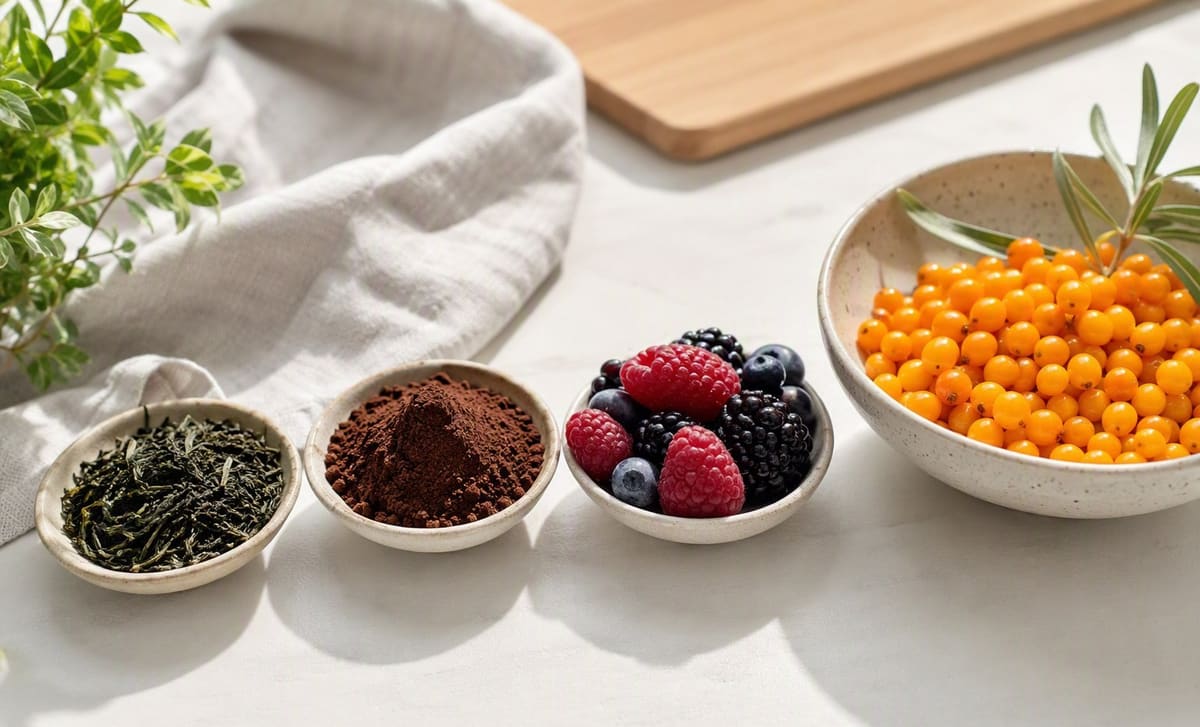
Polyphenols is the umbrella term: the flavonoids like quercetin and isorhamnetin under one roof with the phenolic acids. Sea buckthorn carries a broad panel, totals swing by cultivar, and most of the family lives in the parts of the plant that oil capsules leave behind.
The family tree
Two branches matter here. The flavonoids, quercetin, kaempferol, and isorhamnetin glycosides, are the named leads, each covered on the flavonoids page. The phenolic acids form the quieter second branch, less marketed and still part of the plant’s chemistry. The leaves run rich in polyphenols too, which is why sea buckthorn tea has a real nutritional story despite containing no berry oil.
The glycoside detail
One word on labels repays learning: glycoside. Sea buckthorn’s flavonoids travel mostly as glycosides, meaning each molecule carries a small sugar attachment, the plant’s own packaging. During digestion the sugar is stripped, gut microbes transform what remains, and the blood ends up carrying modest levels of converted forms rather than the original compounds. This is normal for dietary flavonoids and the main reason lab-dish concentrations never match a lunchtime bloodstream. The chemistry is real. The amplification is not.
Why totals vary
When a 2015 study measured phytochemical content across multiple sea buckthorn cultivars grown for comparison, the totals moved meaningfully from one cultivar to the next. That spread is not measurement error. It is the biology of a plant collected across climates, altitudes, and breeding lines. Harvest timing shifts the numbers again, since polyphenols accumulate on their own schedule through the season, and storage quietly subtracts them afterward. Add origin and handling, and any single polyphenol number on a label becomes fiction. Ranges named with their variety and method are the honest format, the same standard we apply on the vitamin C page.
Form and processing
Polyphenols are water-leaning, so the form split is predictable. Juice carries a share, and analyses of commercial products confirm the compounds survive pressing while heat and shelf time chip away at them. Whole berries and powders keep the most. The oil keeps little, because this family does not follow the fat fraction. The fresh vs dried vs powder page maps retention form by form.
What a serving actually delivers
Translated into the forms on the shelf: a 100 g portion of fresh berries carries the full panel, whatever the cultivar supplied. A glass of pure juice carries a share of it, smaller in blends, which trade content for drinkability. A spoon of powder concentrates whatever the drying spared. A cup of leaf tea steeps the leaf’s own panel, a different and respectable profile. A teaspoon of oil, about 4.5 grams, carries little, because this family does not follow fat. Five forms, five very different deliveries, and the label’s plant part tells you which one you bought.
Composition is not a clinical trial
A diet rich in polyphenol-bearing plants has real evidence behind it as a pattern. That is different from proof that this berry’s polyphenols, at these doses, produce a measured benefit in people, and no such trial exists. The strongest evidence for polyphenols belongs to dietary patterns rather than single compounds: populations eating polyphenol-rich plant foods show better health markers across years, while isolated-polyphenol supplement trials keep disappointing. The lesson generalizes cleanly. Buy the food, not the fraction. The antioxidants page explains why even the lab-measured antioxidant scores got retired as misleading. Buy the berry forms for what is measured, and let the powder guide point you at the form that carries the most. The nutrition hub holds the full map.
The leaf bonus
The berries get the fame, but the leaves carry their own respectable polyphenol load, flavonoid-rich by plant standards, and they deliver it through the cheapest format in the catalog: tea. Hot water steeps the leaf’s water-leaning compounds straight into the cup, no pressing or drying required, and the tea nutrition page breaks down what that cup holds. For polyphenols per dollar, leaf tea quietly competes with far pricier berry products, which is exactly the kind of sentence no supplement label will print.
Buying for the panel
Shoppers who want the most polyphenols per dollar have a short ladder to climb. Whole berries and powder sit on top, because nothing was pressed away. Pure juice sits a rung below, and blends below that, so the juice guide earns its read. Leaf tea is the honorable outlier, delivering the leaf panel for pennies a cup. Oil capsules sit at the bottom for this purpose, which no label will tell you. Match the form to the nutrient and the marketing reads itself.
Storage and the slow fade
Polyphenols are not immortal once the bottle opens. Light, heat, and oxygen chip away at the panel month by month, which is why juice bottles are dark and powder pouches reseal. A powder stored cool and closed keeps its load far better than one left open by the stove. The fresh vs dried vs powder page weighs what each form loses before it ever reaches your shelf.
Frequently asked questions
Are sea buckthorn polyphenols proven to work?
As chemistry, they are well measured: the berries and leaves carry a broad polyphenol panel dominated by flavonoid glycosides. As health outcomes, they are unproven in humans. No trial has dosed sea buckthorn polyphenols and measured a clinical endpoint. Enjoy them as part of a polyphenol-rich diet, the pattern with real evidence, rather than as a targeted treatment.
Which sea buckthorn form has the most polyphenols?
Whole berries and powders keep the most, because polyphenols lean water-soluble and ride along with the fruit solids. Juice carries a share, leaf tea steeps a different panel from the leaves, and the oil keeps little, since this family does not follow the fat fraction. If polyphenols are the goal, the berry forms win and the capsule loses.