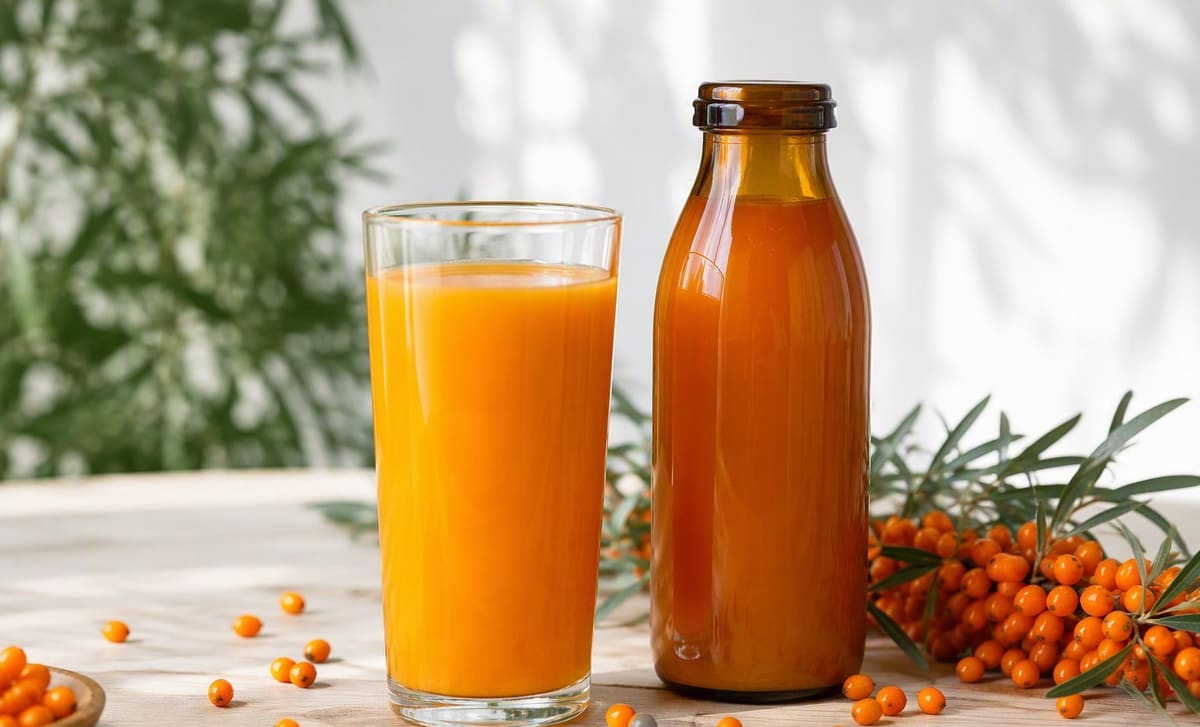
The best sea buckthorn juice is 100% berry, organic, and unsweetened, from a brand you can interrogate. We verified two: Weleda’s classic European juice as best overall and Erbology’s organic single-ingredient bottle for purists. Remember what juice is: a tart, vitamin C rich food. The studied supplement benefits came from the oil, and juice does not replace it.
Prices move and both brands sell through regional retailers, so we link to the brand rather than quoting numbers. This is a research-based review per our editorial policy.
The picks at a glance
| Product | Best for | What is in the bottle | Our score |
|---|---|---|---|
| Weleda Sea Buckthorn Juice | Best overall | Organic berry juice, long documented brand | 8.3 |
| Erbology Organic Sea Buckthorn Juice | Best single-ingredient pick | 100% organic juice, nothing added | 8.1 |
1. Weleda Sea Buckthorn Juice: best overall
Weleda Sea Buckthorn Juice
Best overallWhy it wins. Weleda has sold sea buckthorn products in Europe for decades, and the juice follows the house pattern: organic sourcing, a short ingredient list, and wide availability through European health stores and pharmacies. When a category is full of one-year-old brands, a company with this much history behind the label earns the top slot.
What we do not love. Availability swings by region, and import pricing can make the bottle expensive for what is, honestly, a food. US buyers may need to hunt. This is why we do not print a price: it moves too much to quote honestly.
Best for: daily food-level use, diluted in water or stirred into yogurt, for people who want the berry itself rather than a supplement.
We may earn a commission at no cost to you.
2. Erbology Organic Sea Buckthorn Juice: best single-ingredient pick
Erbology Organic Sea Buckthorn Juice
Best single-ingredient pickWhy it made the list. One ingredient, organic, clearly labeled. Erbology built its line around berries and roots with transparent sourcing, and the sea buckthorn juice is exactly what the front of the bottle says it is.
What we do not love. Distribution is thinner than Weleda’s, and the per bottle cost sits at the premium end for a juice. If you are after the studied oil benefits, no juice gets you there, this one included.
Best for: ingredient purists who read labels line by line and want nothing in the bottle but the berry.
We may earn a commission at no cost to you.
What juice can and cannot do
Juice carries the water-soluble side of the berry: vitamin C, organic acids, and flavonoids. Fresh sea buckthorn berries run roughly 200 to 600 mg of vitamin C per 100 g depending on variety and origin, and published analyses of commercial products show processing and shelf time eat into that fast, so a distant best-by date matters. The details are on our vitamin C page.
What juice does not give you is the oil. The omega-7 and carotenoids that powered the dry-eye, skin, and vaginal-health trials live in the berry’s oil fraction, and most of it stays behind in the pulp unless the product is an oily puree. No human trial has dosed sea buckthorn juice for a health outcome. Drink it because it is a tart, interesting, vitamin-rich food, not as a supplement strategy.
The acidity rules, non-negotiable
Undiluted sea buckthorn juice is seriously acidic (malic, quinic, and citric acids). Dilute about 1:3 with water, avoid drinking it on an empty stomach, and rinse your mouth with plain water afterward. Your tooth enamel and your stomach lining will both thank you. The safety hub covers this and every other caution in one place.
Beyond the front label: what the small print tells you
Four small-print lines separate real juice from marketing juice. First, concentrate status: “from concentrate” means the water was removed and added back, a processing step that costs freshness and usually flavor. Second, texture: a pulpy juice keeps more of the berry than a clarified one, at the price of sediment you shake back in. Third, ingredient order: if apple or grape juice leads the list, you are buying a blend with sea buckthorn flavoring, whatever the front panel implies. Fourth, the word “nectar,” which legally means diluted juice with added water and often sugar. The sugar content page shows the per-100-ml line to read, and the juice nutrition page maps what each style keeps.
Who should skip juice entirely
Skip this category if you have reflux, gastritis, or an ulcer: the acids that make the berry interesting make the juice a trigger, and the acid reflux page explains why capsules are the gentler route. Skip it if you are chasing the studied oil benefits for eyes, skin, or dryness, because those grams of oil never enter a juice. Skip it if you know you will not dilute, because straight juice on enamel and an empty stomach is a bad trade for a habit. The organic acids page has the chemistry and the enamel rules.
The 60-second decision path
- Want the berry as a daily food: either verified bottle above, diluted 1:3, with a meal.
- Want the studied supplement effects: wrong category. The oil guide is where those grams live.
- Sensitive stomach but curious: skip juice, read the reflux page, and consider capsules with your doctor’s sign-off.
- Comparing two bottles in a store: berry content first, concentrate status second, best-by distance third, price last.
Storage: before and after opening
Unopened, a juice bottle is shelf-stable in a cool, dark cabinet, and the best-by distance doubles as a freshness gauge because vitamin C declines on the shelf. After opening, everything speeds up: refrigerate, cap tight, and finish within the window on the label, usually days to a couple of weeks. The freezer trick from the FAQ above handles bottles you cannot finish, and any juice that darkens, fizzes, or smells fermented is done. Vitamin C decay is invisible, which is why the vitamin C page treats storage time as seriously as the printed milligrams.
Common juice mistakes
- Drinking it straight. The acidity rules exist because people keep testing them. Dilute, every time.
- Paying sea buckthorn prices for apple juice. If a sweeter juice leads the ingredient list, that is what the bottle is.
- The slow open bottle. A bottle opened three weeks ago is a different, weaker product than the one you bought. Freeze what you will not finish in week one.
- Expecting supplement outcomes. Juice is a tart food with real vitamin C. The dry-eye and skin numbers came from oil, and no juice pour gets there.
The four-line label check for any juice
- Berry content. 100% juice, not a nectar or a “blend” where sea buckthorn is ingredient number five.
- Added sugar. None needed. The berry is tart, and that is the point.
- Organic certification with a named certifier.
- Best-by distance. Vitamin C fades on the shelf, so fresher is better.
Juice is a food, so the supplement cautions mostly do not apply. But if you also take sea buckthorn oil capsules and blood thinners, or you are pregnant or nursing, read our safety notes and talk to your doctor. More ways to use the berries themselves live on the recipes hub, and the forms comparison maps juice against every other form.
Frequently asked questions
Is sea buckthorn juice as good as the oil?
They do different things. Juice delivers the water-soluble side of the berry: vitamin C, organic acids, flavonoids. The studied benefits for dry eyes, skin, and vaginal dryness came from the oil at gram doses, which juice does not provide. Treat juice as a tart, nutrient-rich food, not a supplement substitute.
How much sea buckthorn juice should I drink a day?
There is no studied dose, because no human trial dosed juice for a health outcome. A small glass diluted about 1:3 with water fits normal food patterns. Undiluted juice is highly acidic, so dilute it, avoid sipping it on an empty stomach, and rinse your mouth afterward.
Can I freeze sea buckthorn juice?
Yes, and it is the best trick for a bottle you will not finish quickly. Freeze it in ice cube trays soon after opening and drop the cubes into water or smoothies. Vitamin C still declines with time, but freezing slows the clock far better than a warm fridge shelf.