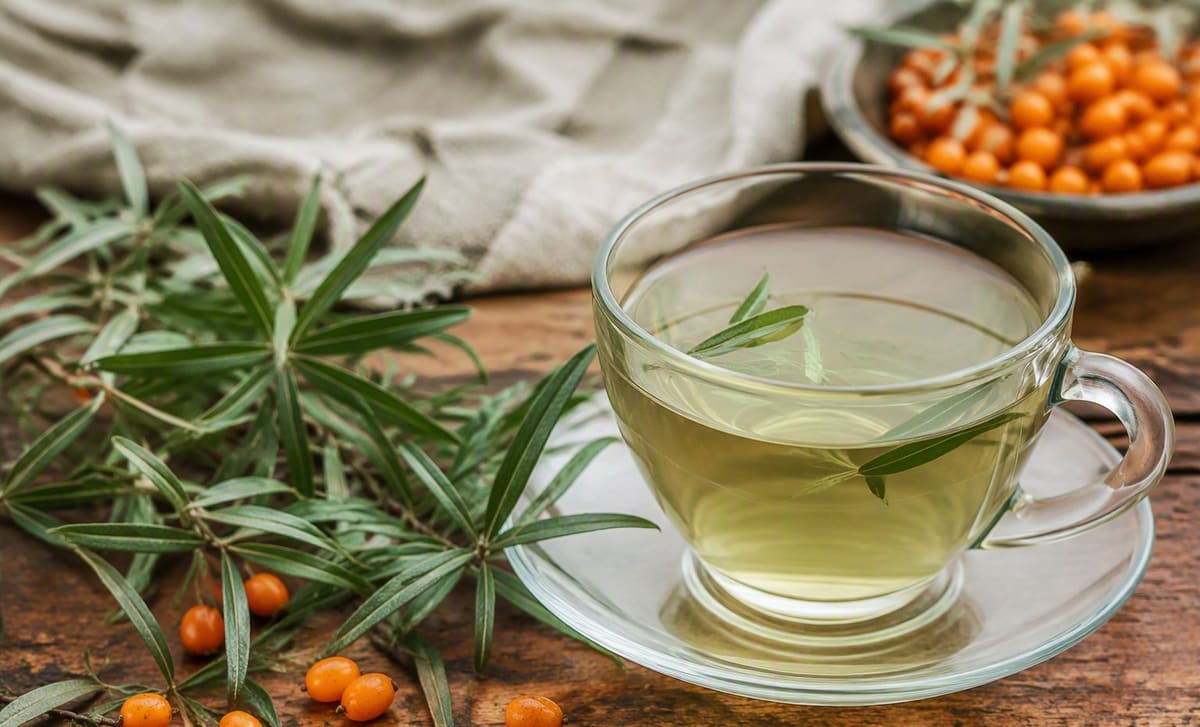
Sea buckthorn tea is two different drinks. Leaf tea steeps flavonoids and polyphenols into a caffeine-free cup. Berry tea is dried berries in hot water, closer to a diluted juice with whatever vitamin C survives the heat. Neither matches eating the berry, and both beat a sugary juice blend.
What hot water actually extracts
A tea is a selective extraction, and water only pulls what dissolves in it. From the leaf, hot water lifts flavonoids and other water-leaning polyphenols. From dried berries, it lifts a share of the same plus some vitamin C, with the heat taking a further cut of whatever the drying spared. What never enters the cup: the oil, the carotenoids that make the oil orange, the vitamin E, and the fiber, all stranded in the solids you strain out. Understanding tea is understanding that the cup is a filtrate. The berry’s fat-soluble story stays in the pot.
Leaf tea: the flavonoid cup
The leaves carry their own chemistry, rich in flavonoids and the wider polyphenol family, without the berry’s acid punch. The cup is mild, caffeine-free, and gentle on stomachs that the juice would provoke. What it does not bring is the berry’s headline nutrient: the leaves are not where the vitamin C lives, and marketing that credits leaf tea with berry-level vitamin C is mixing up the plant parts. Because there is no berry in the bag, there is also no oil and no carotenoids, which makes leaf tea the one sea buckthorn drink that reflux-prone sippers and evening drinkers can share.
Berry tea: the diluted juice
Dried berries in hot water make a different drink: sour, orange, and closer to a light juice. Some vitamin C survives, because drying already cost a share and hot water takes a little more, so the cup lands below fresh-berry numbers and above nothing. Whole dried berries edge out fine-cut blends here, because less surface area means less oxidation on the shelf. The acidity arrives intact, which reflux-prone drinkers should note, per the organic acids page. One upgrade costs nothing: eat the rehydrated berries after steeping, because the fiber never enters the water.
The nutrient ladder, cup by cup
Rank the drinks by what reaches you. Whole berries sit on top, then a spoon of powder, then a measured pour of pure juice, then berry tea, then leaf tea, at least for the berry’s headline nutrients. Leaf tea plays a different game and wins its own: the leaf polyphenol panel in a caffeine-free cup. The mistake is expecting any steeped drink to match the eaten forms. Tea is a delivery system for a pleasant habit, with nutrition as a genuine but junior partner.
The habit argument
The strongest case for this tea is behavioral. It is caffeine-free, so it owns the evening slot that coffee and green tea vacate. It costs pennies a cup against softgels. It asks nothing: no diluting, no rinsing, no scheduling around meals. The one caution belongs to berry tea, whose acidity calls for the same enamel rules as the juice. As a daily ritual with real, modest nutrition, few cups in this plant’s catalog beat it.
Blends and what to check
Most products in this category are blends, and the ingredient order is the whole audit. A tea listing sea buckthorn leaf first is a leaf tea. One listing it fourth, behind apple pieces, hibiscus, and “natural flavor”, is a fruit infusion with a sea buckthorn cameo, priced on the cameo. Berry teas face the same split between whole dried berries and dusting. Neither blend is a scam if the price matches the contents, but the front of the box will never do that math for you.
The iced version
Cold water changes the chemistry in your favor. An overnight cold steep of dried berries pulls flavor and acid with no heat at all, sparing more of the vitamin C that hot water would tax, and the result dilutes beautifully with sparkling water. The same extraction rules apply: oil and carotenoids stay in the berries, so eat the softened fruit afterward if you want the full serving. It is the summer lane for the same habit, with the same honest ceiling.
What a cup honestly delivers
Set the expectations at the right height. A tea, leaf or berry, is a pleasant, low-stakes way to make sea buckthorn a habit, and it will not match the nutrient density of whole berries, a spoon of powder, or a measured juice pour, which the juice nutrition page quantifies. Product quality swings widely in this category, from pure leaf or berry blends to teas that are mostly other ingredients, so the label’s ingredient order matters. Our tea guide scores the options, the tea product page explains the formats, and the nutrition hub shows where the cup sits in the berry’s full story.
Frequently asked questions
Does sea buckthorn tea have caffeine or vitamin C?
No caffeine, and it depends which tea for vitamin C. Sea buckthorn leaf tea is naturally caffeine-free and brings flavonoids rather than vitamin C. Berry tea, made from dried berries, delivers some vitamin C with losses to drying and hot water, plus the berry's signature acidity. Eating the rehydrated berries after steeping keeps the fiber in play.
Is it OK to drink sea buckthorn tea every day?
Yes, and it is one of the gentler daily habits in this plant's catalog. Both leaf and berry teas are caffeine-free, so there is no stimulant ceiling, and food-level exposure is what centuries of use support. The one caution is the berry tea's acidity for reflux-prone drinkers and tooth enamel. Expect a pleasant cup with modest nutrition, not a therapeutic dose.