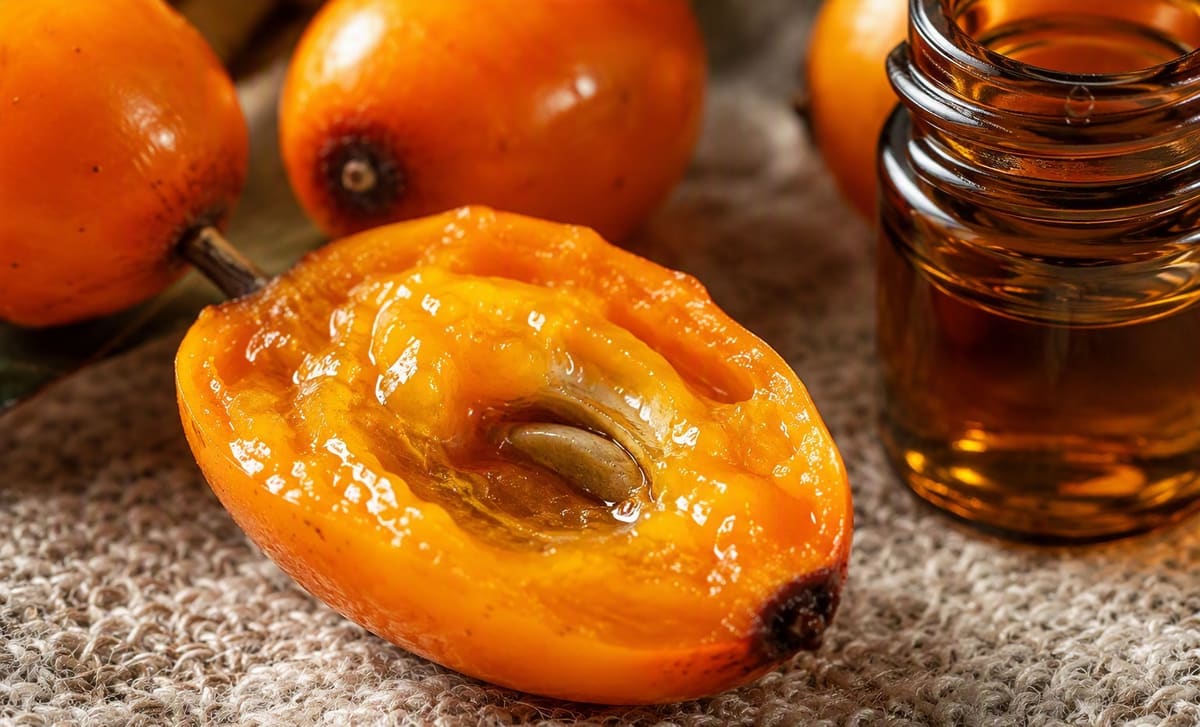
Omega-7 (palmitoleic acid) is the fatty acid that makes sea buckthorn famous, and the berry oil carries 30 to 40% of it, among the richest plant sources known. The seed oil carries almost none, which is why the plant part on your label matters more than the word “sea buckthorn” on the front.
What palmitoleic acid is
A monounsaturated omega-7 fatty acid, chemically distinct from the palmitic acid it gets confused with. Your skin and mucous membranes contain it naturally, which is the biological intuition behind its study for dry eyes, skin, and vaginal dryness. Intuition, though, is where research starts, not where claims should end.
Where it concentrates in the plant
- Berry (pulp) oil: roughly 30 to 40% palmitoleic acid. The omega-7 carrier.
- Seed oil: under 1%. Wrong bottle for this goal.
This single fact explains most of the disappointment in sea buckthorn reviews: people buying seed oil for an omega-7 benefit. The seed vs berry comparison exists to prevent exactly that purchase.
Which source has the most
Every source people name in the same breath as omega-7, ranked by the share of the fat that is actually palmitoleic acid. Two of these rows carry no number, because we have not opened a composition paper we would stake the site on. An unverified number is worse than an honest blank.
| Source | Palmitoleic acid share of its fat | What that means in practice |
|---|---|---|
| Sea buckthorn berry (pulp) oil | 15 to 54% across published profiles, typically 30 to 40% in commercial oils | The richest widely sold plant source, and the oil style the human trials dosed at 1 to 3 grams a day |
| Sea buckthorn 80/20 berry-seed blend | Set by the berry share. One label we score prints 32 to 38% on its 800 mg of berry oil, which works out to 256 to 304 mg per 1,000 mg serving | The closest common product to the trial oils. Check the berry share before you trust the front of the box |
| Sea buckthorn seed oil | Under 1% | The wrong bottle for this goal. Buy it for omega-3 and omega-6 instead |
| Macadamia nuts and macadamia oil | Meaningful but lower than berry oil. We have not verified a percentage we are willing to print | No human outcome trial credits macadamia omega-7 with anything. Eat them because they taste good |
| Fish-source omega-7 supplements | Some fish oils carry modest amounts. Again, no percentage we have verified | The research on isolated palmitoleic acid is mostly animal and cell work, whatever the source |
| A single 1,000 mg softgel | Decided entirely by the oil inside it, not by the capsule | Trial doses ran 2 to 3 grams of oil a day, so one softgel is a fraction of a studied dose |
Two numbers on a label are all you need to check any of this: the milligrams of oil per serving and the omega-7 percentage. Our omega-7 label checker does that multiplication for you and compares the answer against the blend the studies most resemble.
The teaspoon and softgel math
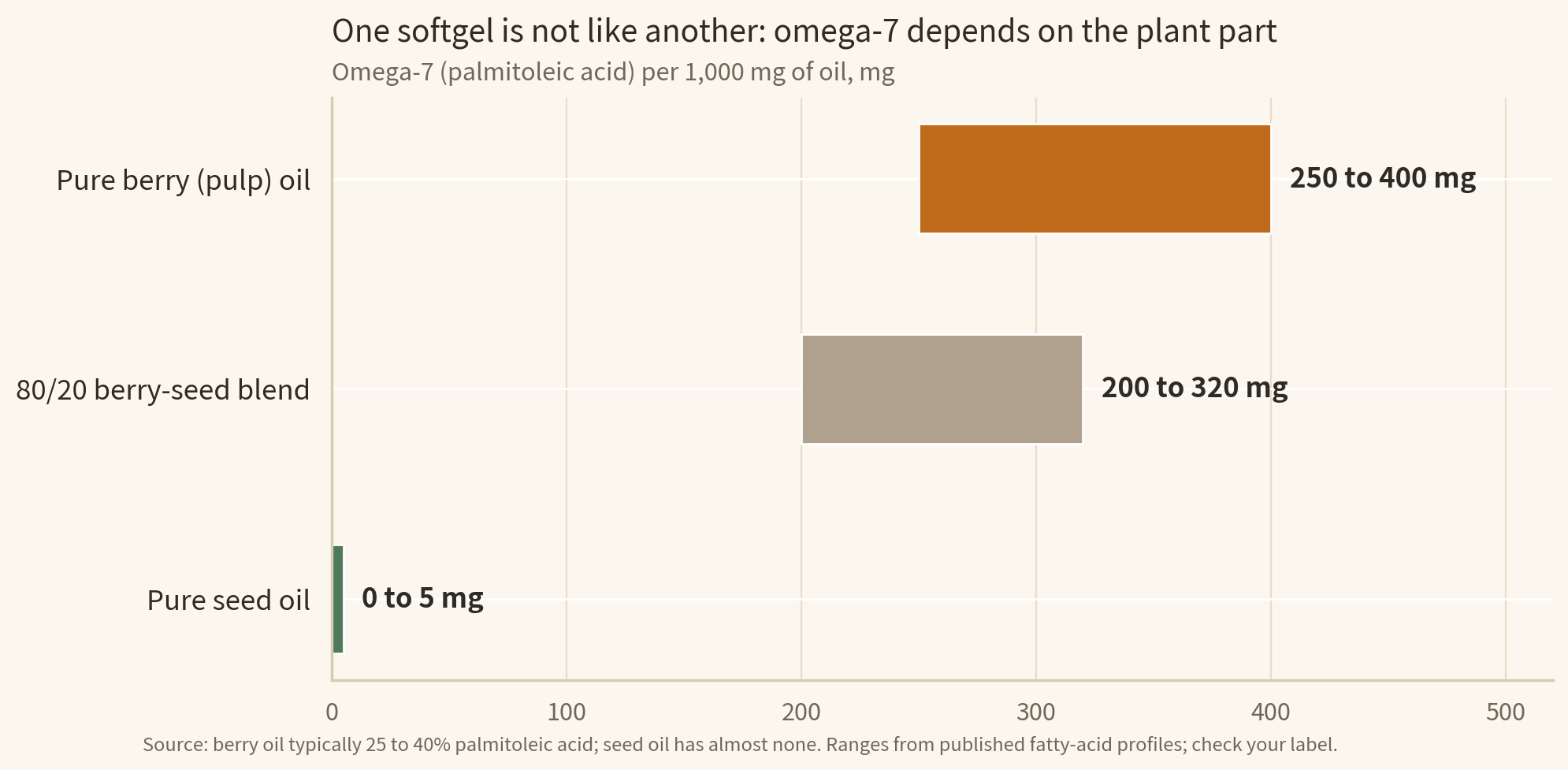
Run the numbers on the two forms people actually buy. A level teaspoon of pure berry oil weighs about 4.5 grams, so at 30 to 40% palmitoleic acid it delivers roughly 1.4 to 1.8 grams of omega-7. A 1,000 mg softgel of the same oil delivers 300 to 400 mg. The human trials that found benefits dosed 2 to 3 grams of oil daily, which works out to roughly 600 to 1,200 mg of omega-7 a day from a pure berry oil. The dosage page maps those trial doses to real products. Two lessons fall out: softgels need friends to reach a studied dose, and blends need their berry share checked first.
See the data behind this chart
| Oil type | Omega-7 per 1,000 mg |
|---|---|
| Pure berry (pulp) oil | 300 to 400 mg |
| 80/20 berry-seed blend | 240 to 320 mg |
| Pure seed oil | about 0 mg |
What research says it does
The benefits of omega-7 that survive contact with human data are narrower than the marketing, and every one of them traces back to trials of the whole oil rather than the isolated fatty acid. The honest state of play:
- In human trials of sea buckthorn oil (which contains omega-7 among other compounds): benefits for dry-eye symptoms, skin hydration, and vaginal dryness, covered across our benefits hub.
- For isolated palmitoleic acid (purified omega-7, usually from fish or macadamia sources): mostly animal and cell research on insulin sensitivity and fat metabolism. Promising mechanisms, unproven in people.
Notice the gap: sea buckthorn trials tested the whole oil, not isolated omega-7. Credit for trial results belongs to the oil as tested, and attributing everything to one fatty acid is marketing shorthand, not science.
The weight-loss story, defused
Omega-7’s loudest internet claim is fat burning, and it deserves a direct answer. The claim traces to mouse studies on fat metabolism, which is why labels can say “supports healthy weight” with a straight face. The human record says otherwise: the 2022 meta-analysis of 15 randomized trials found sea buckthorn improved blood lipids in people with abnormal levels while showing no effect on BMI, none on blood sugar, and none on blood pressure. Fifteen human trials outweigh any number of mice. Enjoy the oil for what it measured. Do not buy it to change the scale.
The heart-trial connection
That same meta-analysis is the strongest human evidence touching this fatty acid, and it belongs to the whole oil too. Fifteen randomized trials, pooled in 2022, found triglycerides, total cholesterol, and LDL down and HDL up, with the clearest effects in people whose lipids were abnormal at baseline, all graded on the cholesterol page. Was that the palmitoleic acid, the phytosterols, or the fatty acid pattern working together? Nobody has run the trial that separates them, and the phytosterols page explains why the dose math complicates any simple answer. Credit the oil. Leave the attribution blank.
What the mechanism studies add
One follow-up trial earns its own paragraph. When researchers measured the fatty acid composition of participants’ tear film after months of oral sea buckthorn oil, it had not changed, even as symptoms improved. Read that twice: the dry-eye benefit does not appear to work by pumping omega-7 into the target tissue. Whatever the oil does, it acts through routes the field has not mapped. That is exactly why this site credits trial outcomes to the oil as tested and treats “omega-7 did it” as an unproven, if reasonable, suspicion.
The macadamia comparison
Macadamia nuts carry some palmitoleic acid too, which is why they get dragged into omega-7 marketing. The comparison flatters no one. The nut’s percentage is real but modest next to berry oil’s, and neither food has human outcome trials crediting its omega-7 for anything. Buy macadamias because they taste good, and buy berry oil for the outcomes its trials actually measured.
How to verify a product’s omega-7
When a bottle sells itself as an omega-7 sea buckthorn oil, that claim lives or dies on two printed numbers. Good labels print the palmitoleic acid percentage in the supplement facts. Multiply it by the oil per serving: a 1,000 mg blend at 32 to 38% gives you roughly 320 to 380 mg. Labels silent on the percentage ask you to trust, and trust is not a number. Products that print it are scored in the capsules guide and the oil guide.
Frequently asked questions
How much omega-7 is in sea buckthorn?
Sea buckthorn berry oil typically contains 30 to 40% palmitoleic acid (omega-7), among the richest known plant sources. The seed oil contains almost none. A 1,000 mg dose of pure berry oil therefore delivers roughly 300 to 400 mg of omega-7, while a blend delivers less in proportion to its berry share: an 800/200 blend gives about 240 to 320 mg. Labels that print the percentage let you verify this directly.
Is omega-7 the same as omega-3?
No. They are different fatty acid families with different chemistry and different research stories. Omega-7 (palmitoleic acid) concentrates in the berry oil, while the seed oil carries the omega-3 and omega-6. A bottle gives you one family's benefits or the other's, which is why the plant part on the label decides what you are actually buying.