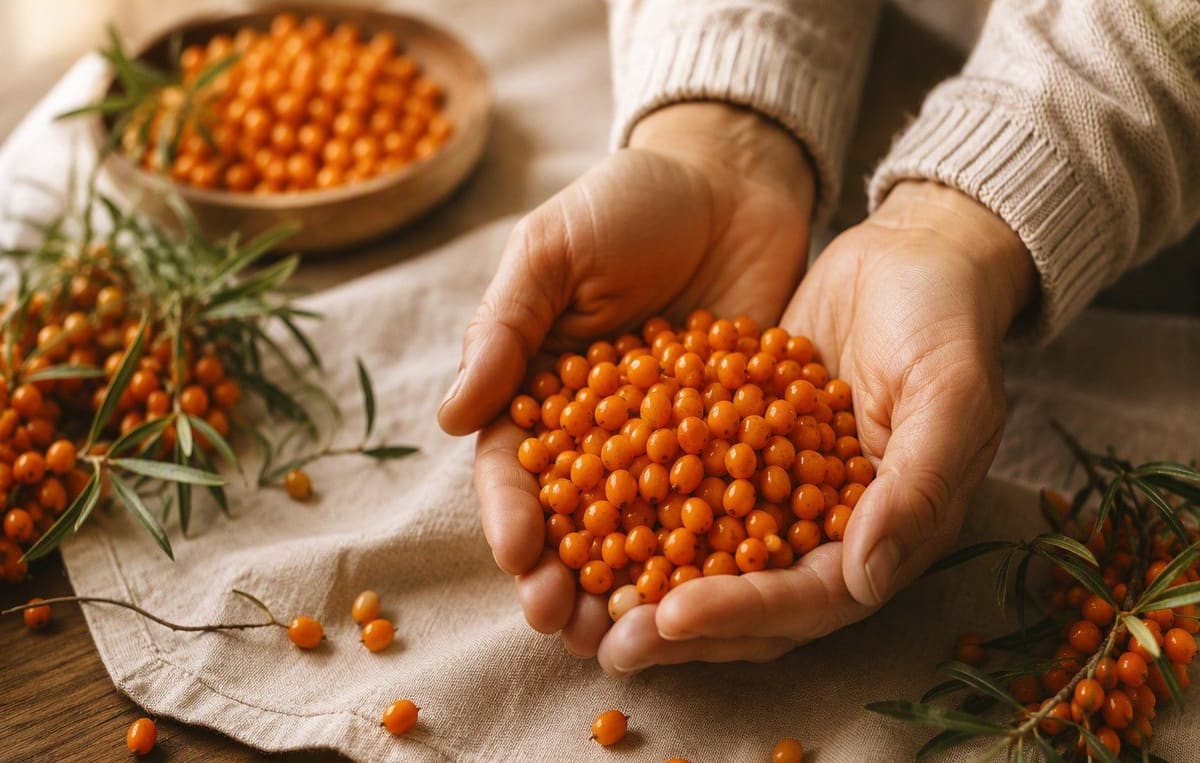
An antioxidant is any molecule that inhibits oxidation: it reacts with oxygen or free radicals so something else does not have to. That is a chemistry statement, and this is the important part, not a health guarantee. Sea buckthorn contains many antioxidants. What that means for you depends entirely on context.
What they actually do
In three places, with three levels of confidence. In the bottle, antioxidants like tocopherols keep the oil from going rancid, a proven, boring, useful job. In the test tube, sea buckthorn compounds neutralize radicals impressively, which is where scores like ORAC come from and where the certainty ends. In the body, the story gets complicated fast, because digestion, dose, and metabolism stand between the tube and any outcome.
The sea buckthorn context
The plant is genuinely antioxidant-rich: carotenoids in the berry oil, tocopherols in the seed oil, flavonoids and other polyphenols in the juice and leaves. Saying so is accurate. Saying “and therefore it prevents disease” would be the marketing leap the evidence does not allow.
The form decides which family you get. A juice delivers the water-side compounds, a berry oil the pigments, a seed oil mostly tocopherols, so an antioxidant claim on one form says nothing about another. Our rundown of which form carries which antioxidants lays that out before you buy.
How it shows up on labels
Three ways, with three levels of meaning. “Rich in antioxidants” on a juice or powder front label is the loosest: true of nearly every berry product and informative about none of them. A supplement facts line naming vitamin C or vitamin E in milligrams is firmer, because those are measured nutrients with declared amounts. And a marketing line like “antioxidant protection” borrows the chemistry to imply an outcome, which is exactly the move this entry exists to question.
Concrete example: two sea buckthorn juices both say “with natural antioxidants.” One lists vitamin C at 40 mg per serving. The other lists nothing. The first label told you something checkable. The second told you the berries once had antioxidants in them, which you already knew.
The honest caveat
The megadose antioxidant trials of past decades mostly found no benefit, and a few found harm, which is why serious nutrition science stopped treating “antioxidant” as a synonym for “healthy.” The full picture lives on the antioxidants and ORAC page, our guide to reading studies shows how these claims inflate, and the glossary hub defines the rest.
What the word never tells a buyer: which compound, at what dose, absorbed how well, doing what exactly. Those four answers decide whether an antioxidant claim means anything, and labels almost never supply them.
Where you meet it on this site
The compound pages carry the real numbers: polyphenols for the water-side family, carotenoids for the oil-side pigments, and vitamin C for the berry’s headline vitamin. On the research side, the mechanisms page explains how lab chemistry is supposed to connect to outcomes.
Related terms: ORAC, polyphenols, tocopherols.
Frequently asked questions
Are antioxidants good for you?
In food, they come along with the plant compounds that make varied diets work. As isolated megadose supplements, the big trials mostly disappointed, and a few found harm. The word describes a chemical behavior, not a health outcome, so treat antioxidant marketing as a starting question, not an answer.
Does sea buckthorn have more antioxidants than other berries?
Composition reviews rank it high on several measures, but the honest answer is that cross-berry comparisons depend on which assay you run and which part of the plant you test. Sea buckthorn is genuinely rich in antioxidant compounds. Whether it beats blueberries in a tube matters far less than which form of it you actually take.