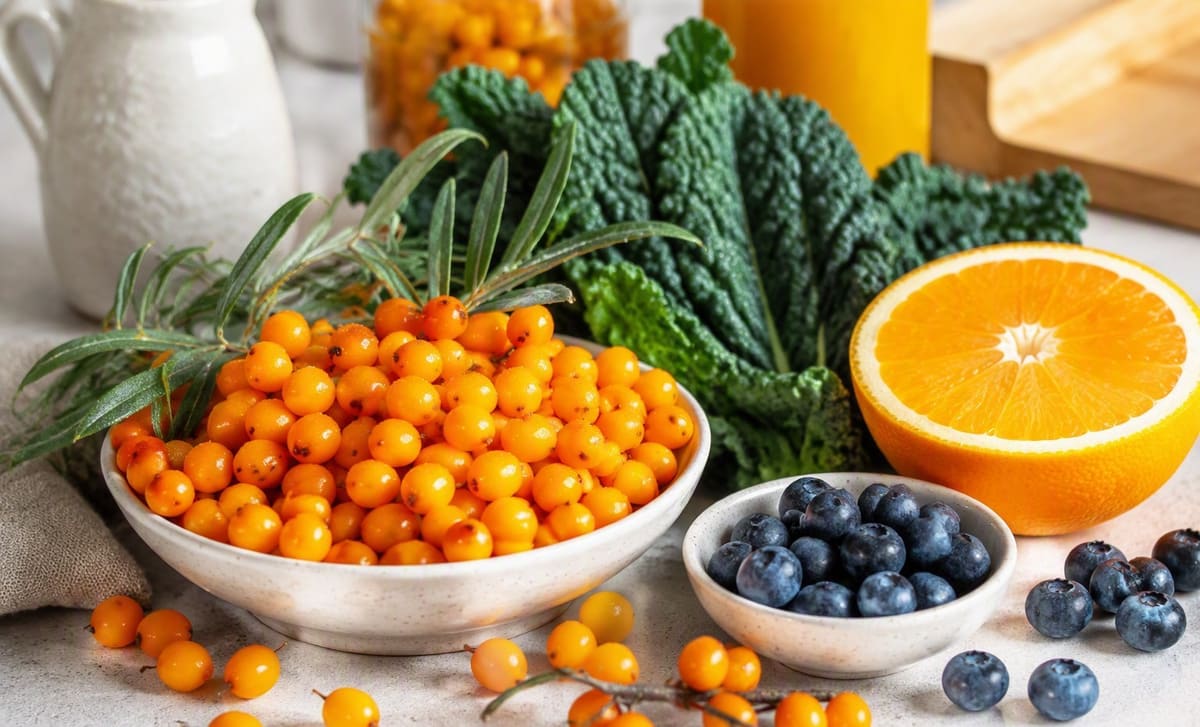
Sea buckthorn carries a real antioxidant cast: carotenoids, vitamin E compounds, flavonoids, phytosterols, and vitamin C in the fresh berries. What it doesn’t carry is a meaningful ORAC score, because ORAC was retired as misleading. Composition says what’s in the plant. Only human trials say what that does for a person, and we keep those two sentences separate.
The cast, member by member
- Carotenoids. The orange. Beta-carotene leads, with lycopene and zeaxanthin alongside, and the berry oil is among the richest plant sources of the family. Beta-carotene doubles as pro-vitamin A, converted by your body only as needed.
- Tocopherols and tocotrienols. The vitamin E family, present in both oils and concentrated in the seed oil. Vitamin E is the oil’s own preservative, guarding the fragile unsaturated fats.
- Flavonoids. Quercetin, kaempferol, and isorhamnetin glycosides, measured across the berries by cultivar studies. Isorhamnetin is uncommon enough in the diet that sea buckthorn is one of its few regular sources.
- Phytosterols. Plant sterols with a structural resemblance to cholesterol, present at meaningful levels in the berry oil.
- Vitamin C. A water-soluble antioxidant in the fresh berries (roughly 200 to 600 mg per 100 g, variety dependent). Absent from the oil, as our vitamin C page explains.
The ORAC honesty paragraph
ORAC scores once ranked foods by antioxidant capacity measured in a test tube, and supplement marketing ran the numbers into the ground. The problem was fundamental: a test tube has no digestion, no absorption limits, and no metabolism. Values in a tube never predicted what a food does in a body, and the USDA withdrew its ORAC database years ago for exactly that reason.
Any brand still leading with an ORAC number is measuring with a retired ruler. We won’t quote one for sea buckthorn, even though it would make this page easier to write.
What a serving actually delivers
So what lands on your plate from each form? The antioxidant cargo splits by form, and the split decides what you get. A 100-gram bowl of fresh berries delivers the vitamin C headline plus the flavonoid trio. A glass of recently bottled juice delivers a share of both, taxed by heat and shelf time. A teaspoon of berry oil, about 4.5 grams, delivers the fat-soluble half: carotenoids and vitamin E compounds, best absorbed alongside a meal, as the oil nutrition page explains.
No single form carries the whole cast. That’s why the plant’s forms compete on different stages rather than against each other, and seeing how the forms stack up beats picking one on antioxidant hype alone.
The SOD sidebar
Sea buckthorn marketing sometimes leads with superoxide dismutase, an antioxidant enzyme the plant contains. Here’s the catch: SOD is a protein, and proteins eaten by mouth get broken down like any other dietary protein. Swallowed SOD doesn’t arrive intact to do enzyme work in your cells, which is why the SOD page files the claim under composition, not benefit. Your body makes its own antioxidant enzymes. One wrinkle worth knowing: a small oil trial found catalase activity up after 12 weeks. A marker result awaiting replication, not a proven effect.
The pattern holds, the pill didn’t
The strongest evidence in this field was never about a compound. Across large cohort studies, people whose diets are rich in colorful plant foods tend to fare better on the outcomes antioxidant marketing invokes. Then researchers isolated the suspected heroes into high-dose pills and ran trials, and the benefits largely failed to appear.
The lesson nutrition science took from that split is unglamorous: the pattern matters more than any single molecule, and food matrices aren’t delivery wrappers to be stripped away. Sea buckthorn fits the pattern side of that lesson. It’s a colorful, acidic, polyphenol-rich fruit, best used as one strong tile in a varied mosaic of plants. Not as a concentrate meant to replace the mosaic.
Common misreadings
- “Highest antioxidant score wins.” The score was retired because test tubes don’t have digestive systems. The antioxidants glossary entry explains what the chemistry does and doesn’t predict.
- “Antioxidants in the plant means antioxidant effects in me.” Absorption, metabolism, and dose sit between those two sentences. Fat-soluble antioxidants travel with the oil and absorb best with food. Processing cuts the vitamin C and flavonoids in juice and powder.
- “More compounds means more benefit.” A longer cast list is chemistry. The human-outcome lanes for this plant are specific: lipids, dry eyes, and skin, mapped on the benefits hub. Those trials measured outcomes, not antioxidant scores, and that’s the only kind of evidence we grade. The mechanisms page shows how researchers connect compound to outcome, and how often the connection fails.
The full composition context is on the nutrition hub, and the fatty acid half of the oil story is on the fatty acid profile page.
Frequently asked questions
Is sea buckthorn high in antioxidants?
Yes, by composition analysis. The berries and especially the berry oil carry carotenoids, vitamin E compounds, flavonoids (quercetin, kaempferol, and isorhamnetin glycosides), and phytosterols, and the fresh berries add vitamin C. What that chemistry does inside a body is a separate, harder question, which is why we report the compounds rather than a single antioxidant score.
What happened to ORAC scores?
The USDA withdrew its ORAC database years ago after the scores were widely misused in marketing. ORAC measured antioxidant capacity in a test tube, and test-tube values turned out not to predict health effects in people. Any product still leading with an ORAC number is using a retired ruler.
Do antioxidant supplements actually work?
The honest answer from decades of research: antioxidant-rich diets track with good health, while high-dose antioxidant pills have mostly failed to show the same benefit in trials. Food matrix, dose, and which compound all matter. For sea buckthorn specifically, the antioxidants are real chemistry, and the human evidence exists for specific outcomes like lipids and dry eyes, not for a generic antioxidant effect.