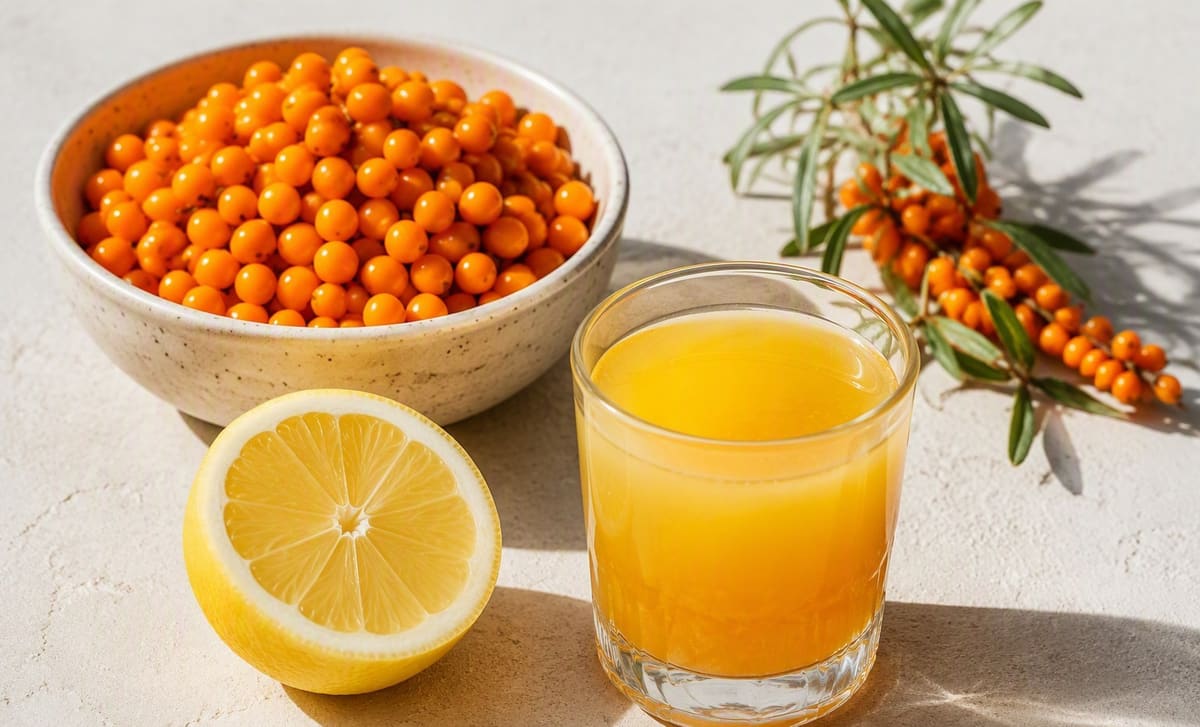
Malic, quinic, and citric acids are why a sea buckthorn berry tastes like a controlled electric shock. They dominate the juice, barely touch the oil, and explain the two practical cautions on this site: your tooth enamel and any reflux-prone esophagus.
The acid trio
Malic acid leads the panel, the same acid that gives green apples their bite, with quinic acid close behind and citric acid contributing. In the fresh berry they outweigh the sugars so thoroughly that the fruit reads as sour rather than sweet, which is why the sugar page calls the fresh berry a low-sugar food hiding behind an acid reputation. Analyses of commercial products confirm the acids survive pressing and define the juice’s character.
Where they end up
Acids are water-soluble, so they follow the juice fraction. Pure juice is the concentrated form, and blends dilute the acids with sweeter juices. Powders keep them alongside everything else the drying spared. The oil is the exception: acids stay behind when the fat is separated, which is why oil capsules are the gentle route for sensitive stomachs, as the oil nutrition page notes.
The per-glass reality
Acidity per sip is what your enamel and esophagus actually experience, and the form decides it. A small neat pour of pure juice is the maximum exposure, and few people enjoy it. The standard 1:3 dilution cuts the acid per sip to a quarter while keeping the glass’s total nutrient cargo intact. Commercial blends go further, mixing the juice into sweeter bases, which softens the acid and raises the sugar, a trade the sugar page maps in full. The oil capsules sit at zero on this scale, because the acids never entered the bottle.
Why the acid earns its keep
The acids are not a flaw to engineer out. They are the plant’s own preservation system, keeping the juice hostile to spoilage organisms, and they slow the oxidation of the vitamin C travelling alongside them, which is part of why properly handled juice keeps so much of it. The same sourness also made the berry usable in traditional kitchens, where it brightened rich dishes the way lemon or vinegar does. The acid is the berry’s defense, its flavor, and its shelf life in one package. Your enamel simply did not evolve for it.
What “low-acid” products actually are
A few brands sell gentler versions, and the label tells you how the acid left. Blended juice pushes it down with sweeter, milder juices, the commonest route. De-acidified juice treats the acid out directly, which softens the flavor and strips part of the natural preservation system with it, so shelf life and taste both change. Neither is sinister, but neither is the full-strength berry either. If you bought sea buckthorn for its nutrition, check that the gentler product did not dilute away the vitamin C you came for.
The enamel caution
Repeated exposure to acidic drinks erodes enamel, and straight sea buckthorn juice qualifies as an acidic drink by any definition. The hygiene is simple: dilute about 1 part juice to 3 parts water, drink with meals rather than sipping all day, and rinse with plain water afterward instead of brushing immediately. These are the same rules dentists give for citrus, applied to a more acidic berry. A straw moves the glass past your front teeth, swishing or holding the juice in your mouth undoes every other precaution, and giving enamel thirty minutes before brushing matters, because acid-softened enamel scrubs off more easily.
The reflux flip
The form most associated with digestive health marketing is the worst form for the people most likely to shop for digestive relief. Undiluted acidic juice aggravates reflux, gastritis, and ulcers, and the acid reflux page lays out that case in full. Timing matters too: acidic drinks on an empty stomach hit harder than the same glass with a meal, which is one more reason the morning-shot ritual is the wrong ritual for sensitive digestions. If your stomach is sensitive, capsules skip the acid entirely. The juice nutrition page covers what else the glass delivers, the nutrition hub maps the rest, and the juice guide scores the bottles.
The capsule lane
If the acid rules you out, the supplement aisle has the workaround built in. Oil capsules carry none of the acids, none of the sugar, and none of the vitamin C either, which is the honest trade, and the capsules guide scores what they do carry. People with reflux, gastritis, ulcers, or freshly repaired enamel should shop that lane exclusively. One group should not self-assign to it: people drinking the juice for its vitamin C. Capsules carry essentially none, so the trade only makes sense when the acid is the actual problem. The berry’s acid is a feature for most people and a hard boundary for a few, and no juice is worth proving you are in the second group.
Frequently asked questions
How acidic is sea buckthorn?
Very. The berries are dominated by organic acids, mainly malic and quinic with citric contributing, which is why the fresh juice tastes sharply sour and sits low on the pH scale. Dilute the juice about 1 part to 3 parts water, rinse your mouth with plain water afterward, and skip the straight juice entirely if you have reflux, gastritis, or an ulcer.
Does diluting sea buckthorn juice reduce its nutrients?
Dilution reduces what each sip carries, not what the glass contains. Pour the same measured ounce of juice into water and the total vitamin C and flavonoids reaching you is unchanged, just spread across a larger, kinder volume. What genuinely cuts nutrients is heat, drying, and shelf time, not water. Dilute freely, especially for your enamel's sake.