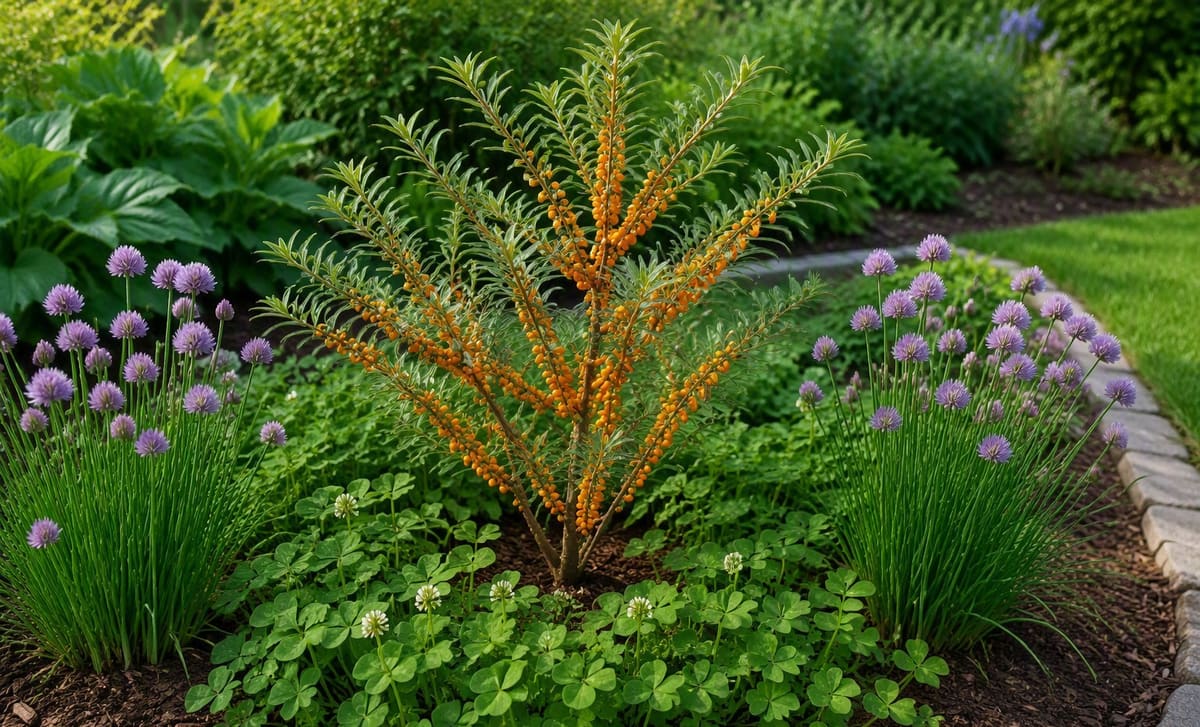
Sea buckthorn sounds like the perfect companion: it fixes nitrogen and feeds the soil around it. In practice its shade, thorns, and suckering roots make it a difficult neighbor at close range. The winning pattern is to plant it at edges, where it acts as windbreak and soil builder without smothering anything.
The nitrogen gift is real
Root bacteria let the shrub pull nitrogen from the air, enriching the soil it grows in. Farmers historically planted it as a nurse crop for that reason, and the nitrogen-fixing page explains the biology. Neighboring plants genuinely benefit from the improved ground.
The two problems
Shade. A happy shrub reaches 3 meters or more and casts real shadow. Anything sun-loving planted within its canopy fades quietly.
Suckers. The roots travel meters in every direction and send up new stems, including straight through a tidy perennial bed. The soil page covers the rooting habit, and containment comes down to mowing distance.
What actually works
- Edge rows and boundaries. Planted along a fence or property line, it builds soil, blocks wind, and keeps its thorns away from daily traffic.
- Windbreaks. A row on the exposed side of a garden shelters everything leeward, and the sheltered plants pay no price beyond a few meters of root zone.
- Orchard borders. Fruit trees a few meters away enjoy the improved soil and wind shelter without competing directly.
What to avoid
Mixed beds, herb gardens, and anywhere you weed or kneel. Thorn pruning sessions among delicate perennials end badly for the perennials and the gardener. Keep a mown strip of at least a meter or two between the shrub and anything you care about, and mow it often.
Layout basics sit in the planting guide, and the growing hub frames the whole site plan.
The distances that decide everything
Two numbers run this whole page. The canopy casts useful shade for about its own height, roughly 3 meters on a happy shrub. The roots sucker freely for several meters beyond that. Anything you plant inside the first zone competes with shade and thorns. Anything inside the second zone will someday host a sea buckthorn shoot. Mown grass inside both zones is not a compromise. It is the design.
Using it as working shelter
A sea buckthorn row on the windward side of a garden is a genuine gift to everything behind it. Wind speed drops, soil dries less, and tender crops stop fighting the weather. Orchards have long used it this way, and wildlife approves: the thorny thicket shelters nesting birds, which then eat your berries, so the arrangement is honest rather than perfect. On slopes, the same roots that invade beds hold soil beautifully, which is why the shrub anchors erosion plantings from the Himalayas to the prairies, as the where it grows page maps.
Good neighbors, short list
- Mown grass or meadow. The classic. It eats suckers at the mower and asks nothing.
- Tough, sun-loving shrubs a few meters out. Dry-site natives shrug off the same conditions.
- Your vegetable beds, at a respectful distance. Close enough to enjoy the windbreak, far enough that harvest thorns and suckers stay theoretical.
If you want the nitrogen without the trouble
The soil improvement is real, and you can collect it without living next to the shrub. Plant it as a distant hedge and let the fertility build in the ground it already occupies. The fertilizer page explains why the shrub itself never needs the favor returned.
Common pairing failures
- Tucking it into a mixed border. The border loses. Suckers surface among the perennials and thorns meet the weeding hand.
- Planting against a shared fence. Suckers respect no property line, and your neighbor did not order a thicket.
- Underplanting with anything you love. Shade plus root competition plus annual thorn-pruning sessions is a slow way to kill a favorite plant.
The is it invasive page separates garden spread from true invasiveness, a distinction worth reading before you plant.
The one-sentence rule
Treat sea buckthorn as a hedge or a small orchard tree, never as a border plant, and companion planting stops being a problem and starts being what it should have been all along: free wind shelter, better soil, and berries on top, all from a shrub that minds its own end of the garden.
Frequently asked questions
What plants grow well next to sea buckthorn?
Tough, sun-loving plants that tolerate dry soil and can handle some root competition, planted beyond the shrub's drip line and out of sucker range. Grasses and meadow-style plantings work well. Avoid tucking it into mixed beds: its shade, thorns, and suckering roots make close neighbors regret the arrangement.
Can I plant sea buckthorn in my vegetable garden?
Not inside it. The shade, thorns, and suckering roots make it a poor bedfellow among crops you kneel in. Plant it at the garden's edge or as a windbreak row a few meters out, and the vegetables get the wind shelter and improved soil without the thorn tax at weeding time.