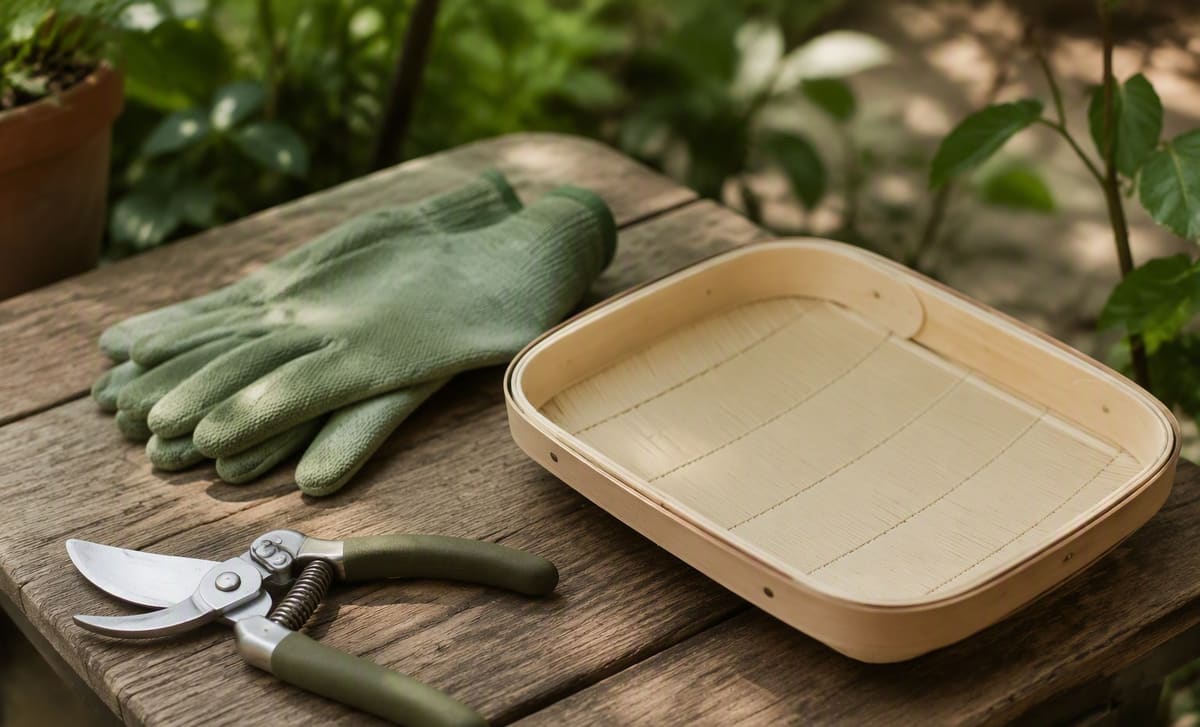
Home sea buckthorn harvesting needs almost nothing: thick gloves, old sheets, loppers, and freezer space. Commercial harvesting is where the money goes, because the berries resist every machine aimed at them. What scales is not picking but processing.
The home kit
- Thick gloves. Non-negotiable. The thorns draw blood through thin fabric.
- Old sheets or tarps. Spread under branches to catch shaken or snipped berries.
- Loppers. For the branch-snipping method, which doubles as pruning.
- Freezer space. The most useful tool in the whole list. Frozen berries detach cleanly, so a freezer turns a sticky job into a shake and pour.
The harvesting page explains how each tool fits the two workable methods.
The middle scale
Serious hobbyists and smallholders add berry combs, picking buckets, and crates, and some build simple knock-off frames. The honest expectation: picking speed barely improves. The berry’s biology, soft fruit tight against thorny wood, caps how fast hands can move no matter the gadget.
The commercial kit
Farm-scale equipment splits into harvest and processing:
- Mechanical shakers. Vibrate branches so ripe berries drop onto catch frames. Fast, with real berry damage.
- Branch harvesters. Cut whole fruiting branches for stripping indoors, trading field speed for cleaner fruit.
- Processing lines. Destemmers, washers, presses, and separators for juice and oil. This is where most of the capital sits, and it is why commercial operations think in tonnes of product rather than baskets of berries.
The commercial farming page covers how these choices shape the economics, and the yield per acre page shows what the machinery is working toward.
What not to buy
Anything promising effortless picking. Decades of soft berries on thorny branches have defeated a long line of clever inventions. Spend on gloves and freezer capacity first.
The growing hub links the full harvest season.
The home processing corner
Harvest equipment is half the story. The other half is what catches the berries afterward. Freezer bags and tray space do most of the work, because frozen berries keep for months and shake off stems at your leisure. A sturdy sieve and a potato masher cover small-batch juice, and the make juice guide turns that into a repeatable routine. If jam is the plan, a heavy pot and patience are the full list, with the jam page as the recipe. Drying needs a dehydrator or a very low oven and realistic expectations, since the berries are mostly water.
What farms buy first
The order surprises people. Before any harvest machinery, serious operations buy cold storage and processing capacity, because picked berries are a countdown timer. Catch frames and tarps come before shakers. Pruning tools get replaced on schedule, because thorns win. Only when labor costs exceed machine damage do shakers and branch harvesters earn their space, and that math is the commercial farming page in one sentence.
Safety kit, because thorns
- Leather gauntlet gloves. Not gardening gloves. Gauntlets.
- Eye protection for branch work. Thorns at face height are a real hazard.
- Old clothes and a hat. Berry juice stains permanently, and the shrub does not care about your plans afterward.
Cleaning and care
Berry juice is acidic and sticky in equal measure. Wash tools the same day, dry metal parts, and oil secateur and lopper pivots before storage, or next spring starts with rust and a squeak. Netting goes away dry and folded, because a wet net stored in a heap is a mildew farm by autumn.
Common buying mistakes
- The miracle picker. Any gadget promising fast, clean picking of fresh berries has a long line of disappointed owners ahead of you.
- A shaker for three bushes. Farm machines pay for themselves in hectares, not shrubs.
- Skimping on the freezer. The cheapest yield upgrade available is frozen storage, and it costs less than one clever gadget.
Buy in season order
Purchase nothing until its season approaches. Gloves and loppers in year one, netting the summer the bushes first color, freezer capacity the week before harvest, processing gear only when the freezer is full and you are still picking. Spreading purchases this way keeps the shed honest and stops the classic spring splurge on tools for a crop that has not fruited yet.
The borrowed-kit option
Much of this list rents or borrows well. Dehydrators, steam juicers, and preserving pans sit idle in other kitchens eleven months a year, and a neighborhood harvest weekend splits both the labor and the equipment bill. The only items that must be yours are the gloves, because nobody lends gloves twice to the person pruning sea buckthorn.
Frequently asked questions
Is there a machine that picks sea buckthorn?
Yes, at farm scale: mechanical shakers that vibrate berries off, and equipment for cutting whole fruiting branches for indoor stripping. No machine solves the core problem, though. The berries are soft and crush easily, so mechanical harvest trades speed for berry damage, which is why most commercial fruit goes straight to processing into juice or oil.
What is the first thing to buy for harvesting sea buckthorn?
Thick leather gauntlet gloves, then freezer space. Gloves get you through the thorns, and a freezer makes the whole job easier because frozen berries shake off the branch cleanly. Sheets or tarps come next, loppers if you snip branches. Everything beyond that short list is optional at home scale.