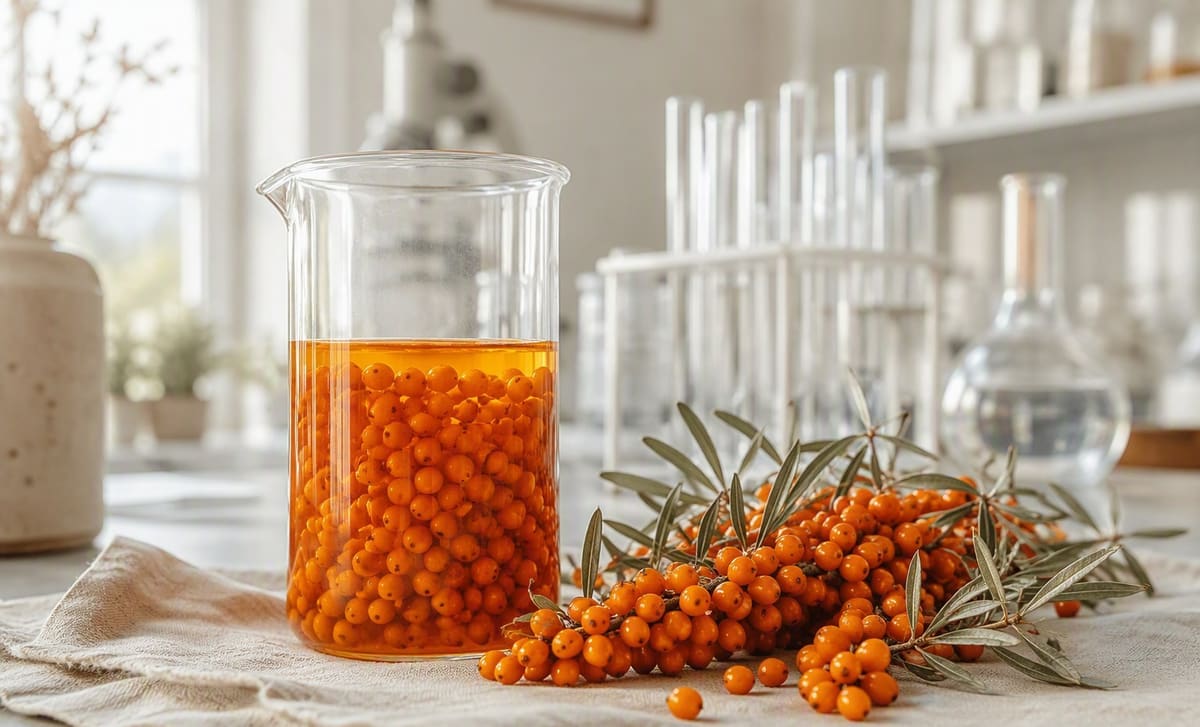
Germany’s sea buckthorn story runs from wild dune thickets on the North Sea and Baltic coasts to one of Europe’s most organized industries. Germans call the shrub Sanddorn, their researchers have studied it for decades, and German shelves carry everything from juice to skincare made from it.
Native on the coast
Along both German coasts, wild sea buckthorn is what holds the dunes together, and those soil-binding roots made it a favorite for deliberate coastal planting as well. A lot of that wild resource sits inside protected dune reserves, so picking there is often off-limits. That’s on purpose. The same dune ecology runs west to Britain, where the shrub naturalized along the shore, so you’ll meet the plant doing the identical job on two coastlines.
Research and breeding
Germany took this plant seriously early. Breeding and processing research ran right through the second half of the twentieth century, and German-bred varieties still circulate among growers today, work the varieties page puts in context. The country’s natural-cosmetics companies built whole product lines on the oil decades ago. That head start still shows. Walk into a shop and you can choose among juices, oils, capsules, and skincare, most of it carefully labeled and a lot of it organic. The cosmetics end of that shelf overlaps with the sea buckthorn skincare we rated. Finland is the other European research heavyweight, and the Europe page sets the two side by side.
Buying notes
- Bio is common, not automatic. German organic certification is everywhere in this category, but read the label instead of assuming it.
- Made in Germany isn’t grown in Germany. Ask where the berries themselves came from, because processing and origin are two different questions.
- Read the oil label closely. Berry oil and seed oil both turn up in German shops, and the label should tell you which one you’re holding.
The regions hub maps Germany against every other origin we cover.
Sanddorn on the shelf
First-time visitors are always surprised by the same thing. In Germany the berry is completely ordinary. Juice turns up in the regular supermarket. The oil sits in pharmacies and natural-cosmetics aisles. The shrub itself shows up in garden centers every spring. This isn’t a passing wellness trend, it’s a settled category with decades of shelf history behind it, and that history is exactly why German products tend to be so disciplined about their labels.
The dune reserves rule
Those wild coastal stands are working infrastructure, not a free harvest, and inside the protected reserves picking is often restricted or banned outright. The rangers aren’t being precious about it. Dune stabilization is the entire reason the shrubs went in, and stripped branches undo that job. So treat a coastal thicket as look-but-ask-first ground, and let the foraging page cover legal, sustainable picking wherever it’s actually allowed.
For the garden-center shopper
Shopping for a plant rather than a bottle? German garden centers are the easiest place in Europe to buy named, bred varieties, and the labels usually state the pollinator requirement plainly. Your checklist is short. Pick a named variety over a random seedling. Make sure a male plant, or a confirmed male next door, is nearby. Leave room for a shrub that suckers. Decades of German breeding mean the varieties you’ll find are genuinely good ones.
The pipeline that built the category
Germany’s path from research station to supermarket shelf ran straight through the twentieth century’s natural-products industry, a story the modern industry page tells in full. So what did all that history leave the shopper? Choice. You can compare juices, oils, capsules, and creams from several makers, across several price points, with labeling that mostly holds up when you actually read it.
If you visit the coast
Time a trip for autumn and the North Sea and Baltic coasts show the thickets at full color, while regional farm shops sell local juice in season. Photograph the wild stands. Buy the farmed bottle. Everyone wins, dunes included. It’s the rare tourist stop where the obvious souvenir, a bottle of local juice, is also the responsible one. And that single trip teaches the whole German lesson. Wild is for looking. Farmed is for buying. The label is for reading.
Frequently asked questions
Is sea buckthorn native to Germany?
Yes. It grows wild on the dunes of the North Sea and Baltic coasts, where its roots help stabilize the sand. Germans know it as Sanddorn, and coastal stands often sit inside protected dune reserves where picking is restricted.
Can I pick wild Sanddorn on the German coast?
Usually not. The wild stands grow mostly inside protected dune reserves, where the shrubs serve as erosion control and picking is restricted or banned. Buy from farmed sources instead, and enjoy the wild thickets with a camera rather than a basket.