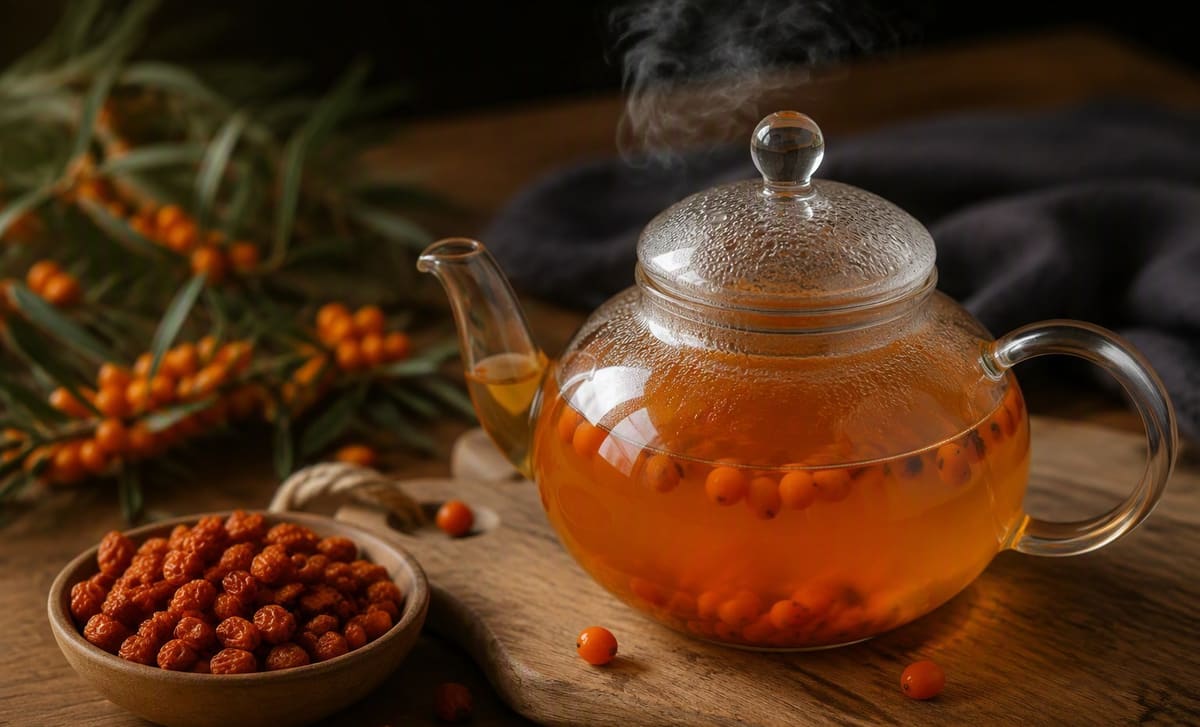
Sea buckthorn tea comes in two honest versions: a tart berry infusion, steeped gently to protect what vitamin C is in the fruit, and a mild leaf tea with almost none of the berry’s chemistry. Both make a good cup. Neither delivers the studied oil benefits, because hot water does not extract oil.
Tea is the gentlest entry on the how-to-use hub, and the one that asks least of you.
Version 1: the berry infusion
- Crush the berries. A teaspoon of dried berries (or a small spoon of fresh or frozen), lightly crushed. Breaking the skin lets the water-soluble compounds out.
- Use hot, not boiling, water. Let the kettle sit a minute after boiling. Heat degrades vitamin C, so a gentler steep keeps more of it in the cup.
- Steep 5 to 10 minutes. Longer steeping pulls more tartness and more of the good stuff, at the cost of more pucker.
- Strain and sweeten. Honey handles the sourness better than sugar. Ginger or a cinnamon stick both work well with the tropical edge.
- Eat the berries. The strained fruit still holds the oil and fiber. Wasteful to bin, pleasant to eat.
Version 2: the leaf tea
- A teaspoon of dried leaves per cup.
- Hot water, 5 to 10 minutes. Leaves are sturdier than vitamin C, so normal tea temperature is fine here.
- Strain and drink. The result is mild, green, and gently herbal, nothing like the berry’s sour punch. It takes honey or a slice of lemon well.
What is and is not in the cup
In the berry infusion: some vitamin C (the berry’s drying already cost part of it, and heat takes a little more), the organic acids behind the tartness, and a share of the flavonoids. In the leaf tea: leaf flavonoids and not much else. In neither: the omega-7, carotenoids, and oil that the dry-eye, skin, and vaginal-health trials dosed. If you want those, the how much per day page maps the studied forms and doses.
Tea is for pleasure and warmth, and on those terms it earns its place. For what to expect from store-bought blends, including why we named no winner in the category, see the tea page. Our tea buying guide carries the label checklist for a category with no winner to hand you. More ways to use a berry haul live on the recipes hub.
The dried-berry math
A level teaspoon of dried berries is about 2 grams, and that is one cup’s worth. A standard 100-gram bag therefore yields around 40 to 50 cups, which reframes the price on the shelf considerably. Fresh or frozen berries work at roughly double the amount, a small spoonful per cup, since water is most of their weight.
Getting more from the cup
Three small upgrades compound. Crush the berries before steeping, because intact skins keep most of the water-soluble compounds locked in. Cover the cup while it steeps, which holds both heat and the aromatics that make the drink. And steep the same berries a second time: the second cup is milder but far from empty, and the spent fruit is still edible afterward.
Variations worth the shelf space
- With ginger. A few slices in the steep. The heat and the tartness were made for each other.
- With cinnamon. One stick per pot, especially in winter.
- With rosehip. Half and half, two sour fruits that soften into something rounder together.
- Blended into black tea. A teaspoon of berries alongside your normal leaves, for drinkers who want the edge without the full pucker.
- Iced. Double strength, cooled, over ice with honey. The summer version holds its own against any bottled tea.
Mistakes that flatten the cup
- Hard-boiling the berries. A rolling boil for ten minutes is how you get brown, flat liquid. Steep, do not punish.
- Expecting the oil trials. Hot water extracts no oil, so the cup carries vitamin C, acids, and flavonoids, not the studied omega benefits. The flavonoids page covers what does make it across.
- Binning the berries. The strained fruit holds the fiber and oil. Eat it, or stir it into yogurt.
A note on the leaf tea’s audience
Leaf tea is for people who want a gentle daily herbal without the sour program. It brews like any green-ish leaf, forgives boiling water, and takes lemon well. The dried berries page covers the pantry form this page steeps, and both forms want airtight jars away from light, fading over months rather than spoiling overnight.
The winter evening version
The cup this page builds toward: a heaped teaspoon of crushed dried berries, a slice of ginger, hot water off the boil, ten minutes under a saucer, honey at the end. It is the pleasant end of the sea buckthorn world, and it asks nothing of you except the berries. Spent fruit into tomorrow’s yogurt, cup in hand, winter handled. No trial, no claim, just a good drink. That is the whole recipe, and it never gets old.
Frequently asked questions
Does boiling water destroy the vitamin C in sea buckthorn tea?
Heat degrades vitamin C over time, so a gentler steep keeps more of it. Use water just off the boil rather than a rolling boil for berry infusions, and steep rather than simmer. Some vitamin C survives either way, just less of it the hotter and longer you go.
Is sea buckthorn tea as healthy as the oil?
No, and that is chemistry, not pessimism. The studied benefits came from the berry's oil in gram doses, and hot water does not extract oil. Tea gives you the water-soluble side: some vitamin C, organic acids, and a tart, pleasant drink.