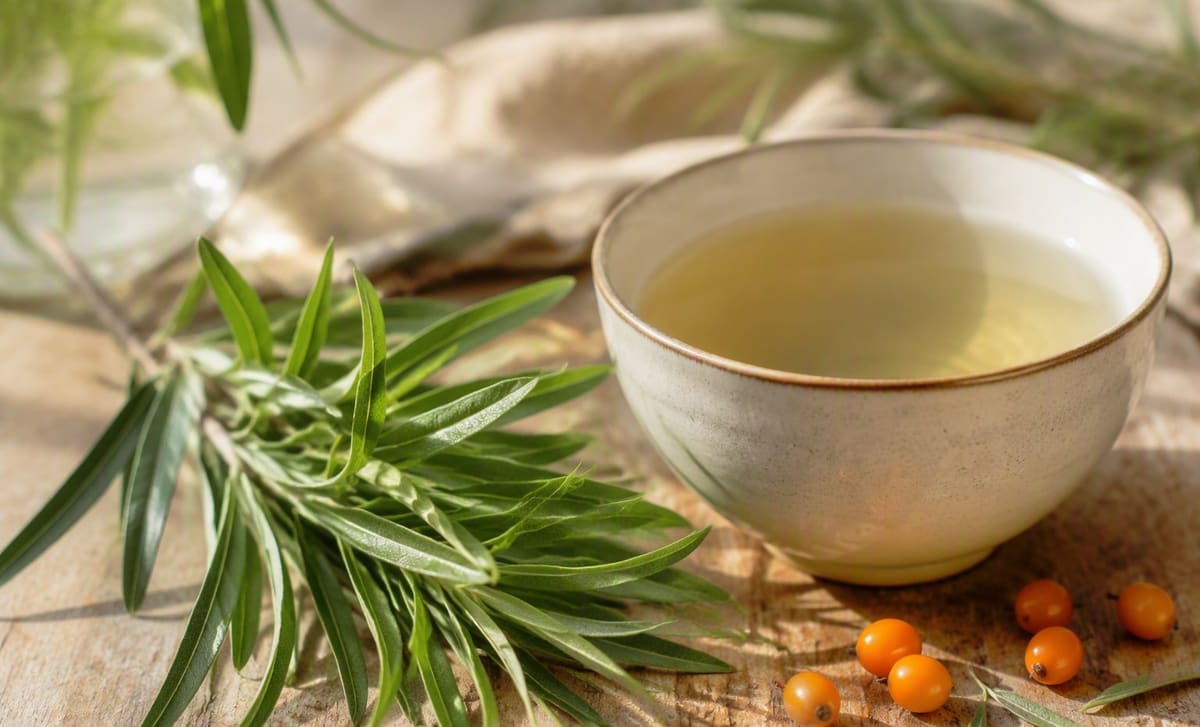
Let’s be straight about sea buckthorn leaf benefits: none has been proven in people. The leaf is genuinely rich in flavonoids, the quercetin, kaempferol, and isorhamnetin family, and cell and animal studies find those compounds doing interesting things. But no human trial has ever tested the leaf, in any form, for any health outcome. And here is the fact that reframes the whole question. The leaf is not the part the famous sea buckthorn trials used. Those dosed the berry and seed oil, or whole berries, for dry eyes, skin, and blood lipids. So the honest grade for leaf benefits is Preliminary at best, ●●○○, for the lab work, and Traditional, ●○○○, for its long life as a tonic. Treat leaf extract or leaf powder as an interesting food ingredient, not a remedy.
The part the trials didn’t use
This is the misunderstanding worth clearing first. Sea buckthorn has a real stack of human trials behind it, and people reasonably assume the whole plant shares the credit. It does not. Read the studies and the same thing keeps happening. The dry-eye trial, the skin trials, the cholesterol meta-analysis, the vaginal-dryness trial, the recent constipation trial, every one of them dosed the berry oil, the seed oil, whole berries, or a fruit extract. Not the leaf. The benefits hub grades those results claim by claim, and the honest thread through all of them is that the studied material is the fruit and its oil. The leaf sat the trials out. So when a product borrows the plant’s reputation to sell a leaf, it is borrowing evidence the leaf never earned.
What the leaf actually contains
Give the leaf its due. It carries flavonoids, and a good amount of them. A cultivar analysis of the plant confirmed the three lead flavonoids, quercetin, kaempferol, and the signature isorhamnetin, across varieties, and isorhamnetin shows up in the leaves as well as the fruit, at levels that swing by cultivar and origin. The flavonoids page maps that family in full. This is composition though, not benefit. Knowing a leaf holds flavonoids tells you what is in it, not what it does for you, and the two get blurred constantly in this aisle. Flavonoids lean water-soluble, so they gather in the watery parts of the plant rather than the oil, which is one honest reason the leaf and the oil end up such different products.
Sea buckthorn leaf benefits, graded
| Leaf claim | What actually backs it | Grade |
|---|---|---|
| A benefit you would feel, shown in people | Nothing. No human trial has tested sea buckthorn leaf, in any form, for any health outcome | ●○○○ None in humans |
| Leaf flavonoids acting in cells or animals | Cell and animal work catalogued in pharmacology reviews, at concentrations food cannot reach | ●●○○ Preliminary |
| The leaf as a traditional tonic | Centuries of customary use, real as history, untested as medicine | ●○○○ Traditional |
| The leaf is rich in flavonoids | Cultivar analysis confirms the quercetin, kaempferol, and isorhamnetin family. Composition, not benefit | ●●○○ Composition |
Leaf extract and leaf powder
You will see sea buckthorn leaf extract and sea buckthorn leaf powder sold on the strength of that flavonoid story. Here is the honest frame for both. No human dosing trial exists for either, so there is no evidence-based amount to take and no measured effect to expect. A leaf extract concentrates the flavonoids, which makes for a neat label number and tells you nothing about what that number does in a person. A leaf powder is a dried, ground leaf, a flavonoid-bearing food ingredient, and it is not the same thing as sea buckthorn berry powder, which carries the fruit’s vitamin C and colour. If a leaf product appeals to you, buy it as an ingredient you find pleasant, the way you would any herbal, and hold its health claims to the same empty evidence the whole leaf faces.
If you want the leaf as a drink, or the botany
Two quick pointers to keep the pages tidy. If you want the leaf as a drink, that is the sea buckthorn tea page’s territory, and it lays out what does and does not end up in the cup. If you want the plant part itself, why it flashes silver and how it feeds the soil, the sea buckthorn leaves page covers the botany. This page sticks to the one question those two send here. Do the benefits hold up? In people, untested.
The honest takeaway
So, sea buckthorn leaf benefits, in one honest paragraph. The leaf is a real flavonoid source and a pleasant traditional herbal, and its compounds do interesting things in a dish and in animals. That is the ceiling of what we can say. It sits at preliminary, ●●○○, with the traditional use a rung lower at ●○○○, and the distance between a lab result and a human one is exactly what the traditional versus evidence page is about. The human evidence that makes sea buckthorn worth writing about belongs to the berry and its oil, mapped on the benefits hub. Buy the leaf if you like it. Just don’t buy it expecting the berry’s track record.
Frequently asked questions
What are sea buckthorn leaf benefits?
Honestly, none is proven in people. The leaf is rich in flavonoids, and lab and animal studies find those compounds doing interesting things, but no human trial has tested the leaf for any health outcome. The benefits sea buckthorn is known for came from the berry and seed oil, not the leaf.
Does sea buckthorn leaf extract do anything?
No human dosing trial exists for it, so there is no evidence-based amount and no measured effect to expect. A leaf extract concentrates flavonoids, which makes a tidy label number and tells you nothing about what it does in a body. Interesting chemistry, unproven in people.
Is sea buckthorn leaf powder worth taking?
As a pleasant flavonoid-bearing food ingredient, sure, the way you would use any herbal. As a remedy, no, because nothing about the leaf has been tested in a human trial. And leaf powder is not sea buckthorn berry powder, which is the one that carries the fruit's vitamin C.