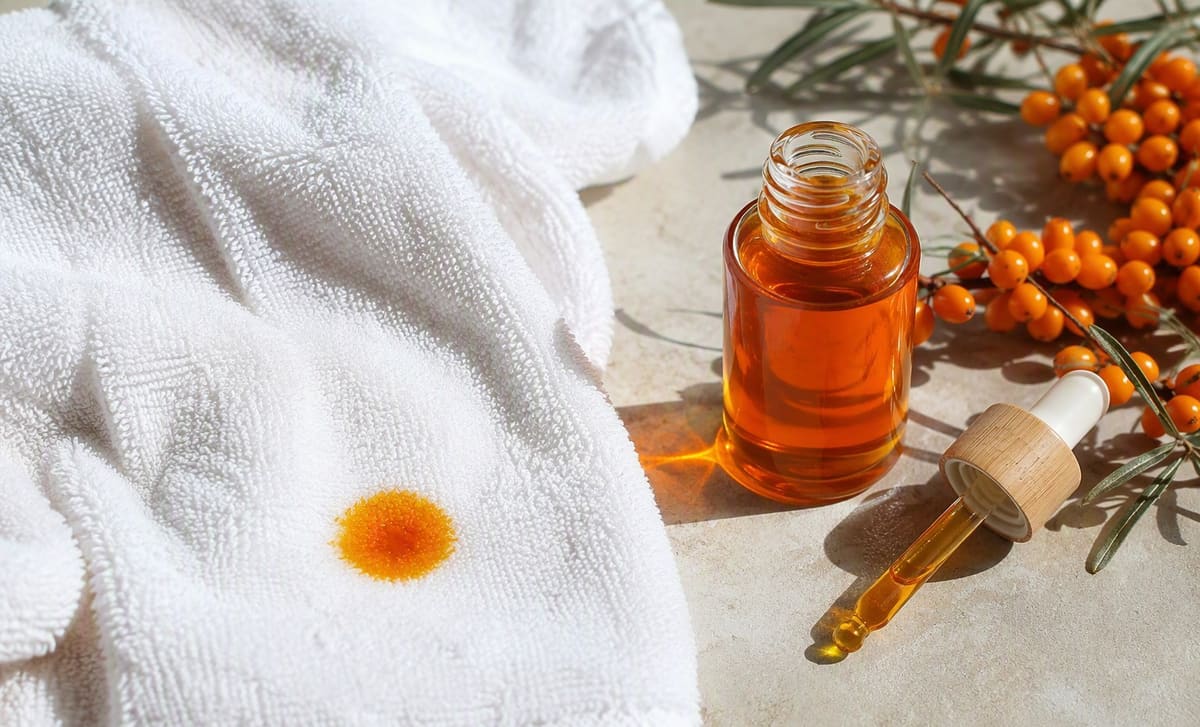
Berry oil is orange because it is dense in carotenoids, the same pigment family that colors carrots. On skin the tint sits on the surface, lasts a few hours at most, and washes off. On fabric it is often permanent. The fixes are simple: fewer drops, mix into moisturizer, use at night, or switch to the pale seed oil.
Why the oil is orange
Sea buckthorn berries pack carotenoids at levels that put the oil among the richest plant sources of them. Those pigments are exactly what many people buy the oil for, and they are also what paints everything they touch. Seed oil tells a different story: pressed from the seed, not the pigmented pulp, it comes out pale yellow and stains nothing. That one choice decides more than any claim on the skin hub.
How orange a given bottle runs varies. Species, harvest, and extraction all shift the carotenoid load, and a berry oil stretched with a pale carrier is paler still. That is why one brand tints noticeably at two drops and another at six, and why the label’s carrier list matters as much as the color in the bottle. Price follows pigment too: full-strength berry oil costs more than diluted blends, because the pigmented pulp yields little oil.
A quick label check before your first drop
Thirty seconds with the ingredient list predicts your staining risk. “100% sea buckthorn berry oil” or “supercritical CO2 extract” means full-strength pigment and the full tint protocol. “Berry oil” buried third in a blend behind sunflower or jojoba means the tint is already diluted, for better or worse. And “sea buckthorn oil” with no plant part named is a question mark, since seed oil and berry oil are different products wearing one name. The seed vs berry breakdown is the five-minute read that settles that question permanently.
One more label trap: “sea buckthorn oil capsules” are for swallowing, and some people pierce them for topical use. That works chemically, but a capsule of berry oil is a concentrated pigment bomb with no drop control, so expect the full orange experience, and read the capsules guide if the oral route was what you actually wanted. Whichever bottle you buy, pigment fades with age and light, so a berry oil that has gone pale on the shelf is telling you something about its freshness, not its gentleness.
Skin tint: how long and how to avoid it
A visible tint means too much oil on the surface. Done right, there is nothing to see:
- One or two drops, not a pipette. Press into damp skin and give it a minute to settle.
- Mix into moisturizer. A drop of berry oil in your night cream dilutes the pigment below notice for most skin tones.
- Night shift. Even a faint tint disappears by morning, and nobody photographs your pillow.
- Fair skin in daylight is the one combination where straight berry oil shows. That is a seed-oil day.
Skin tone changes the math less than people expect. Deeper tones hide a light tint easily, fair tones show it sooner, but the deciding factor is still the dose: two pressed-in drops vanish on nearly everyone, while a glossy layer announces itself on nearly everyone too. If you overdid it, any face wash or oil cleanser removes surface pigment immediately, and what remains fades within a few hours as the oil absorbs. A faint morning warmth after a night application is normal and washes off with your first splash.
Fabric: the stricter physics
Fabric cannot exfoliate. Carotenoids bind to cotton and linen the same way they bind to skin, and on cloth they stay. Collars, pillowcases, and towels are the usual victims.
- Treat spots immediately: work dish soap into the dry stain, then wash warm. Speed decides the outcome.
- Assign an old pillowcase to oil nights.
- Never drip the bottle over bedding. Decant into your palm first.
- Accept the losses. A fully set, washed-and-dried carotenoid stain is rarely recoverable, so prevention is the whole strategy.
Common mistakes
- Measuring by pipette. A full dropper is ten times a facial dose. Count drops, not squeezes.
- Dripping from the bottle. The bottle mouth is the stain vector. Palm first, always.
- Mixing oil into sunscreen. Diluting SPF with any oil undermines the protection you are counting on. Oil goes on at night, sunscreen goes on unmixed in the morning.
- Judging by bottle color alone. Deep orange says real carotenoids are present, nothing more, as the FAQ above explains.
The clean alternative
If the ritual annoys you, seed oil is the answer: pale, lighter on the skin, and free of pigment entirely. You give up the berry oil’s carotenoids and keep the fatty-acid emollience. Freshness matters for both: heat and light fade carotenoids and turn oils, so small bottles, used up, stored cool and dark, per the storage guide. The face oil page helps you choose, the oil-on-face guide has the technique.
Frequently asked questions
How long does sea buckthorn oil stay orange on skin?
A few hours at most. The tint is carotenoid pigment sitting on the skin surface, and it fades as the oil absorbs and washes away. One or two drops pressed in well usually leaves no visible tint at all. If you overdid it, a normal face wash or oil cleanser takes it off.
Does sea buckthorn oil permanently stain clothes?
Often, yes. Carotenoid pigment binds to fabric the way it does to skin, but fabric cannot shed it. Treat collar and pillowcase stains immediately with dish soap worked into the spot before washing, and even then, success is not guaranteed. Night application on old pillowcases is the pragmatic answer.
Does a deep orange color mean the oil is more potent?
It means the oil contains real berry-oil carotenoids, which is a crude authenticity signal, not a potency score. Color varies by species, harvest, and how much the product was diluted, so a paler oil is not automatically weaker. Judge by the label (plant part, carrier list), freshness, and brand testing rather than by shade.