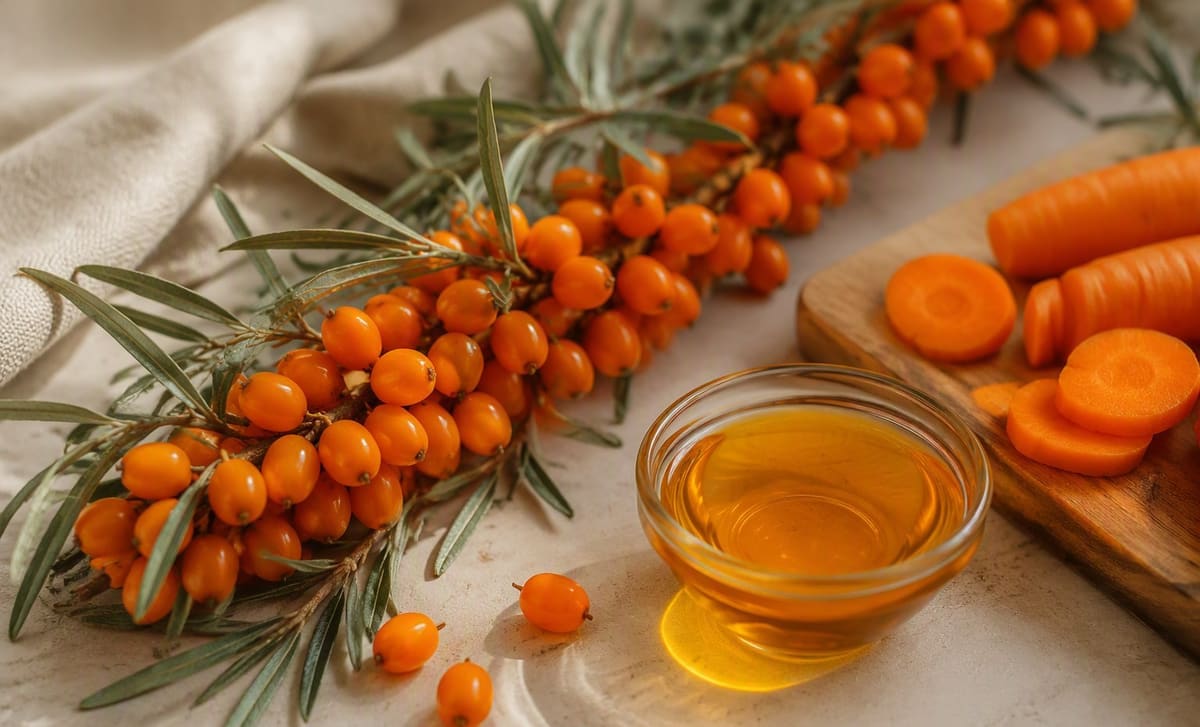
Sea buckthorn contains no vitamin A itself. It carries provitamin A carotenoids, led by beta-carotene, which your body converts to retinol on demand. That conversion throttle is the whole safety story: plant carotenoids do not cause the vitamin A overdose that preformed retinol can.
Provitamin A, explained
Beta-carotene is vitamin A in waiting. Your intestine splits it into retinol when your levels call for it and slows the conversion when stores are full, a built-in regulator that supplement-grade retinol bypasses. This is standard nutrition science, and it is why public health guidance treats carotenoid-rich plants as the safe vitamin A route while capping preformed retinol, especially in pregnancy.
The conversion, in rough numbers
Standard nutrition conversion puts about twelve units of dietary beta-carotene to one unit of retinol activity, and that is the average, not the promise. Real conversion swings widely between people, shaped by genetics, gut health, and what else is on the plate. Two rules hold for everyone: fat in the meal improves carotenoid uptake, which is one argument for the oil form, and the throttle never sleeps, so high intake slows conversion rather than overdosing you. Rough numbers, real variability, built-in safety.
What the berry delivers
Berry oil ranks among the richest plant sources of carotenoids, which the carotenoids page details, and the whole panel converts at different efficiencies with beta-carotene leading. Juice and powders carry a share from the pulp. Seed oil, pale as it is, carries little. If vitamin A activity is your goal, the berry oil is the form, taken with a meal so the fat-soluble cargo absorbs, as the oil nutrition page explains.
Per teaspoon of berry oil
A level teaspoon of berry oil weighs about 4.5 grams, and its deep orange is the carotenoid load made visible. How much vitamin A activity that converts to depends on the subspecies and origin of the berries, which is why honest labels quote carotenoid content rather than a vitamin A figure. Seed oil, pale by comparison, contributes little on this front. If provitamin A is part of why you are buying, the color is the first label: deep orange oil carries the goods, pale oil does not, and the seed vs berry page explains the split. Blends sit between the two poles in proportion to their berry share, which is why the ratio on the label matters as much here as it does for omega-7.
Retinol sources vs carotenoid sources
Vitamin A reaches your plate through two lanes. Preformed retinol comes from animal foods, liver above all, then dairy and eggs, and it absorbs ready-made with no throttle, which is why high-dose retinol supplements carry toxicity warnings. Provitamin carotenoids come from plants, with the throttled conversion this page describes. Every plant product labeled for vitamin A, this berry included, is selling the second lane. Neither lane is superior in principle. They are different tools with different safety profiles, and the berry is the gentle one.
The pregnancy nuance
Pregnancy sharpens the retinol question, because high-dose preformed retinol is capped in pregnancy for good reason while dietary carotenoids carry no such warning. That makes the berry’s self-limiting route look attractive, and berries in food amounts are fine, with centuries of use behind them. The caveat is the concentrated oil supplement, which is unstudied in pregnancy, as the pregnancy page lays out. Food yes, softgels on doctor’s advice, exactly the line the rest of this site holds.
The visible side effect
Heavy carotenoid intake can tint skin with a yellow-orange cast called carotenemia. It is harmless, fades when intake drops, and is the worst that overdoing berry oil does to your color. The bottle itself is less forgiving on fabric and countertops, so handle the oil like the pigment it is.
Who actually benefits from this route
Vegans and anyone eating little animal food get the most from carotenoid sources, since plants are their only vitamin A route. Conversion efficiency varies enough between people that some need richer sources than others, which is worth knowing if your diet is fully plant-based. For everyone else, the berry’s carotenoids are a bonus on top of an already covered need, and the skin hub shows where the pigment load earns its other keep.
Retinol vs carotenoids for shoppers
Plant foods never contain preformed retinol, and sea buckthorn is no exception. Vegans can count its carotenoids toward vitamin A needs, with the usual note that conversion efficiency varies person to person. Anyone already taking a retinol supplement does not need to fear stacking the berry oil on top, because the plant side self-limits. The antioxidants page places carotenoids in the wider defense cast, the oil guide scores the bottles, and the nutrition hub keeps the map.
Reading the label
Labels rarely say vitamin A outright. They list beta carotene or total carotenoids, and the conversion math is left to the reader. A rough rule is that food carotenoids count for a fraction of their weight as retinol activity, so big milligram numbers shrink on the way in. That is normal, not a trick, and the carotenoids page walks through the pigments behind the number.
Frequently asked questions
Does sea buckthorn contain vitamin A?
Not directly. It contains provitamin A carotenoids, led by beta-carotene, which your body converts to active vitamin A as needed and stops converting when stores are full. That self-limiting conversion is why carotenoid-rich plant oils do not cause the vitamin A toxicity that high-dose preformed retinol can. Sea buckthorn is a safe, plant-style vitamin A source.
Can sea buckthorn replace a vitamin A supplement?
It can contribute, but it is not a measured substitute. Conversion from beta-carotene to retinol varies considerably from person to person, so a carotenoid source never delivers a guaranteed retinol dose the way a labeled supplement does. Vegans can count it toward vitamin A needs, anyone with a diagnosed deficiency needs the measured form, and your doctor settles which camp you are in.