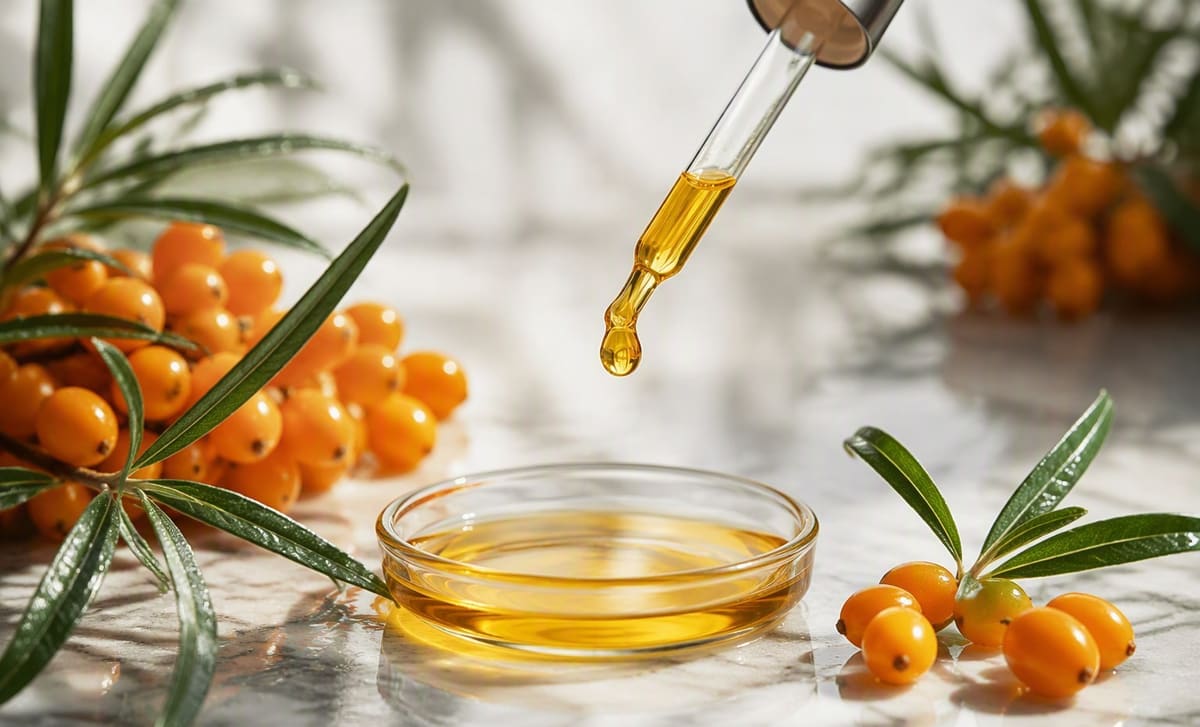
No study has measured glow, because glow is not an instrument reading. The plausible story is carotenoids (the orange pigments) plus vitamin C, and the nearest measured evidence is two trials showing better hydration and texture from daily oral oil. Expect subtly healthier-looking skin in about 12 weeks, not a highlighter effect.
Why glow is a hard word to test
Instruments measure hydration, elasticity, roughness, collagen density. Glow is a mirror judgment: a mix of light reflection, even tone, and moisture. So when a product promises glow, the honest question is which measurable change sits underneath the word. None of the sea buckthorn trials attempted that mirror judgment, which is why this page leans on proxy measures instead of promises. The skin hub grades the claims that do have measurements behind them.
The carotenoid and vitamin C story
Sea buckthorn berries are deep orange because they are dense in carotenoids, pigments that also work as antioxidants. Vitamin C supports normal collagen formation and helps protect cells from oxidative stress. Both are real chemistry, and both plausibly relate to how skin looks. Plausible is the operative word: presence in a berry does not prove a visible change on your face.
A practical note on pigment: concentrated berry oil can tint fair skin, towels, and collars orange. That is the carotenoids announcing themselves. It washes off skin. Fabric is another matter.
What the trials actually measured
- Yang 2009. Thirty women took 2 grams of oral oil daily for three months. Hydration rose about 49%, elasticity about 26%, roughness fell. No placebo group, so treat the size of the gain with suspicion.
- Chan 2024. Forty women took 1 gram daily for 12 weeks against a placebo. Hydration rose 8%, texture 14%, pore count fell 15%. Industry-funded, but placebo-controlled.
The honest synthesis: better hydration and smoother texture are supported. Hydrated, smooth skin reflects light more evenly, which is what most people mean by glow. The step from measured hydration to glow is inference, and we label it as such. If you judge by eye, give it the full 12 weeks and take a photo at the start, because week-to-week mirror memory is unreliable.
What glow is made of, mechanically
Glow is physics before it is chemistry. Smooth, well-hydrated skin reflects light evenly, and the eye reads even reflection as radiance. Dullness is the opposite: a rough surface of built-up dead cells and dehydrated patches scattering light in every direction. UV damage, poor sleep, and dehydration all roughen the surface. Anything that measurably smooths or hydrates the surface moves the glow dial. Anything that does not is a promise in a jar. Two things a glow routine cannot even out are set pigment and shadow: dark spots sit deeper than any moisturizer reaches, and under-eye dark circles are mostly anatomy.
The seed versus berry choice for glow
The two oils play different glow games. The berry oil gives an instant warm tint, real but cosmetic: carotenoid pigment sitting on the skin, washing off at night, staining a collar if you are careless. The pale seed oil gives no tint and suits daytime. The measured lane is neither bottle: it is swallowing the oil, 1 to 2 grams daily, for the hydration and texture changes the trials tracked, and the softgels that make that dose easy to hit list verified oil content so the counting is already done. The dilute oil guide shows how to wear the berry oil without wearing it on your clothes, and the carotenoids page explains the pigment itself.
A 12-week glow protocol
- Take a photo on day one, same window, same light, no filter. Mirror memory is unreliable.
- Oral oil at the studied dose, 1 to 2 grams daily with food.
- A real moisturizer on the surface, and sunscreen every morning, because UV dulls faster than any oil polishes.
- Judge at week twelve against the photo. Softer texture and better hydration are the realistic wins.
- Reassess honestly. If the photo shows nothing, the routine is not failing in secret. It is telling you the truth about your skin.
Common mistakes
- Wearing berry oil as a highlighter before an event. The tint is unpredictable on fair skin and transfers to fabric. Test it on a quiet evening first.
- Expecting week-one change. The measured changes took twelve weeks. What you see at week one is the tint, not the transformation.
- Stacking exfoliants to speed things up. Over-exfoliation roughens the barrier you are trying to smooth. Gentle and consistent beats aggressive and sporadic, and the skin studies page shows how modest even the measured wins are.
A routine that matches reality
- Oral oil at the studied dose: 1 to 2 grams daily with food, for 12 weeks before judging.
- Sun protection daily, because UV is the biggest measurable duller of skin.
- A real moisturizer for the surface. The dry skin page has the trial-matched detail.
Related reading: sea buckthorn and collagen, wrinkles, and our vitamin C page.
Frequently asked questions
Does sea buckthorn make your skin glow?
No trial has measured glow directly. Two trials found better hydration and texture from daily oral oil over 12 weeks, which is the closest measured proxy. Its carotenoids and vitamin C make the idea plausible, not proven.
Will sea buckthorn oil turn my skin orange?
Concentrated berry oil can leave a temporary orange tint on fair skin and can stain towels and clothing. Use a few drops, massage in well, and patch test first.
How long until sea buckthorn makes my skin glow?
The measured route takes the trial timeline: about 12 weeks of daily oral oil before hydration and texture changes show up, and those changes are what plausibly read as glow. The instant route is the berry oil's warm tint, which is real but cosmetic and washes off. Anyone promising a one-week glow is selling, not measuring.