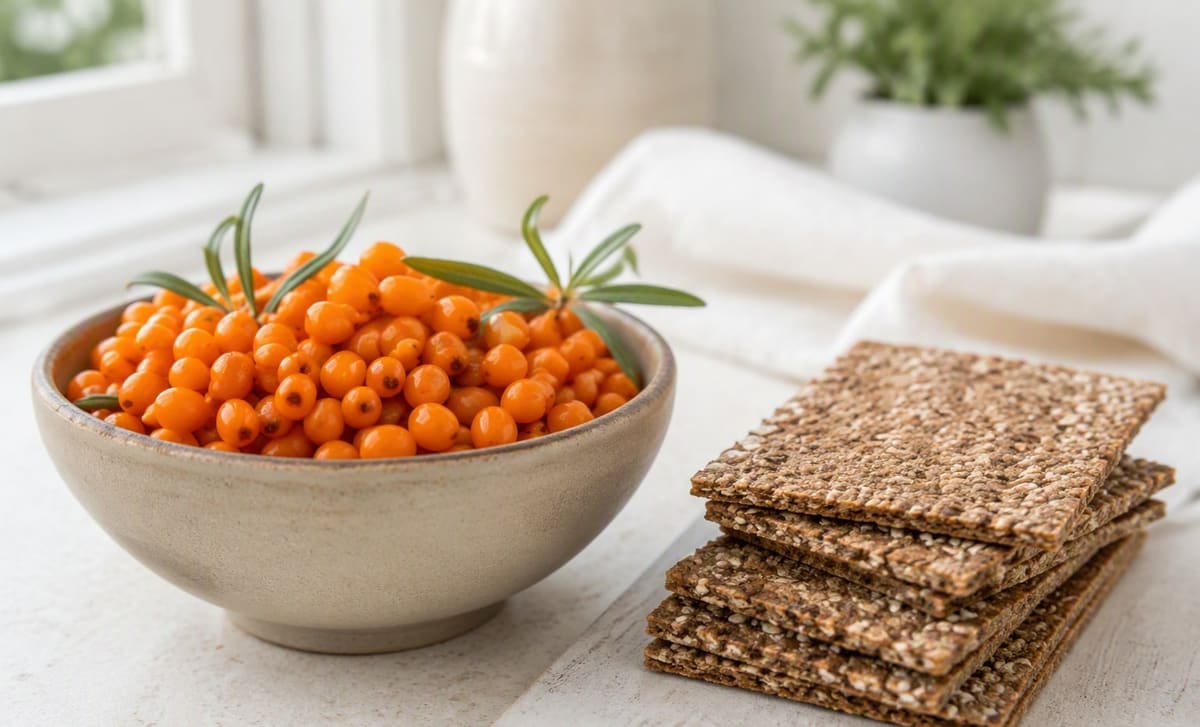
Fiber lives in the berry’s skin and pulp, so the form decides everything. Whole berries and powders carry it, juice drops nearly all of it, and the oil has none. As fiber sources go, the whole-berry forms are a genuine contribution, and fiber itself is the best-evidenced digestive nutrient in existence.
Where the fiber sits
Press a berry and the physics sorts itself: juice flows one way, and the skins, pulp, and seed hulls stay behind as pomace. The fiber is in the pomace. Analyses of juice products reflect that separation, which is why the juice nutrition page credits the glass with vitamins and acids but not fiber. The oil is even starker: zero fiber, because fiber is not fat-soluble and never enters the fat fraction.
Form by form
- Fresh or frozen berries: the full cargo, skins and all.
- Dried berries and powders: the same fiber, concentrated as the water leaves, with a caution about added sugar on some dried products that the sugar page flags.
- Juice: a share at best in pulpy styles, nearly none in clear ones.
- Oil and capsules: none.
The serving math
Daily fiber targets sit at 25 to 30 grams, and most people land well under. The whole-berry forms help at the margins, honestly framed. A daily spoon of powder in yogurt contributes a meaningful nudge, and a handful of dried berries adds a bit more. Neither closes the gap alone, and nobody should expect a berry to. The realistic role is one tile in a mosaic that also includes legumes, grains, vegetables, and fruit. The chia comparison covers the seed that does fiber-heavy lifting better than any berry, and the two sit happily in the same breakfast.
Soluble and insoluble, briefly
Fiber comes in two working types. Insoluble fiber, the skins and hulls, adds bulk and keeps things moving. Soluble fiber dissolves into a gel and slows digestion, which is the type tied to cholesterol and glucose effects in nutrition research generally. Berry skins and pulp carry a mix of both, like most whole fruits. We flag the distinction because marketing loves “fiber” as one word, and the two types do different jobs.
Common misreadings
- “Juice detoxes.” Juice removes the fiber and keeps the marketing. A cleanse with no fiber is missing the one component that does the sweeping people imagine.
- “Fiber capsules count the same.” Isolated fiber in a capsule is a different exposure from fiber inside a whole food matrix, and the capsule version of this plant carries no fiber at all.
- “Dried berries are fiber-free candy.” Unsweetened dried berries keep the fiber cargo, concentrated. The sugar caution is real and separate, and the two facts travel together.
Who benefits most
Anyone whose diet runs light on whole plants, which is most people on a busy schedule. The powder-in-yogurt habit is the cheapest, most durable fiber nudge this plant offers, and the powder products page sorts whole-berry powders from juice powders, which matters because only the whole-berry kind kept the fiber.
The sturdy nutrient
Fiber has one underrated virtue: it survives. Vitamin C bleeds out to heat, light, and time, and the vitamin C page documents the losses honestly. Fiber does none of that. Drying concentrates it, powdering keeps it, freezing preserves it, and a year in the pantry barely touches it. That sturdiness makes fiber claims the most trustworthy numbers on any sea buckthorn label. When a whole-berry powder states its fiber per serving, the figure will still be true when the jar empties, which is more than the vitamin line can promise. The flip side is that fiber is also the easiest claim to verify before buying: if the product is a juice, an oil, or a juice powder, the fiber is gone no matter what the front of the package implies, and the form list on this page is the only label-reading skill you need. Storage discipline still matters for the fragile nutrients, and the storage guide covers it, but the sturdy ones forgive you anyway.
Why it is worth buying for
Fiber earns its reputation the slow way, through decades of human evidence for digestive regularity and metabolic health, and most people fall short of the 25 to 30 grams a day that guidelines suggest. A spoon of sea buckthorn powder in yogurt or a handful of dried berries moves that number in the right direction, which is more than any capsule in this aisle can say. The constipation page grades the digestive claim honestly, and the fresh vs dried vs powder comparison shows what each form keeps.
For the most fiber per dollar, the powder guide and the dried berries page are the practical stops, and the nutrition hub frames fiber among the berry’s real strengths.
Frequently asked questions
Does sea buckthorn juice have fiber?
Essentially none. Fiber lives in the berry's skin and pulp, and pressing for juice separates the liquid from that cargo. Clear juice drops nearly all of it, and even pulpy juices keep only a share. Whole berries, dried berries, and powders are the forms that deliver fiber, and the oil delivers none at all.
How much fiber is in a spoon of sea buckthorn powder?
No verified per-spoon figure exists in the sources we trust, so we will not print one. The honest framing: powder is the berry's whole fiber cargo concentrated by water removal, so a daily spoon in yogurt moves your total in the right direction, but the precise grams belong to the label of the specific product. Against a 25 to 30 gram daily target, count it as a contribution, not a solution.