ORAC (Oxygen Radical Absorbance Capacity) is a laboratory assay that measures how well a substance neutralizes free radicals in a test tube. The USDA published ORAC values for foods for years, then withdrew the database because the numbers were being misused and predicted little about real health. A high-ORAC claim on a label today is a red flag, not a credential.
What the assay actually measures
In the lab, a sample meets a source of free radicals and a fluorescent probe. The slower the probe degrades, the higher the ORAC value. It is genuine chemistry, carefully measured, and it answers one narrow question: how does this substance behave in this tube. Results come out in micromoles of Trolox equivalents per gram, a unit built for lab notebooks, which is one more hint the number never belonged on a front label. The glossary hub defines the other numbers labels like to quote.
Why the USDA walked away
Two reasons. First, companies started printing enormous ORAC numbers on packaging as if they were health claims, which they are not. Second, the science itself failed to translate: what happens in a test tube does not predict what happens after digestion, absorption, and metabolism. The USDA removed its database in 2012, and the number has lived on mainly as marketing residue.
Where you still see it
The number survives in supplement marketing, especially on berry powders and antioxidant blends, where a big ORAC figure fills the space a measured nutrient would otherwise occupy. Comparison charts are the classic format: the product at the top, famous foods below it.
Concrete example: “ORAC 5x blueberries” packs three unknowns into one sentence. Which assay version, run by which lab, on what serving size. Without those answers the comparison is decoration, and with them it would still be test-tube chemistry rather than a health outcome.
The honest caveat
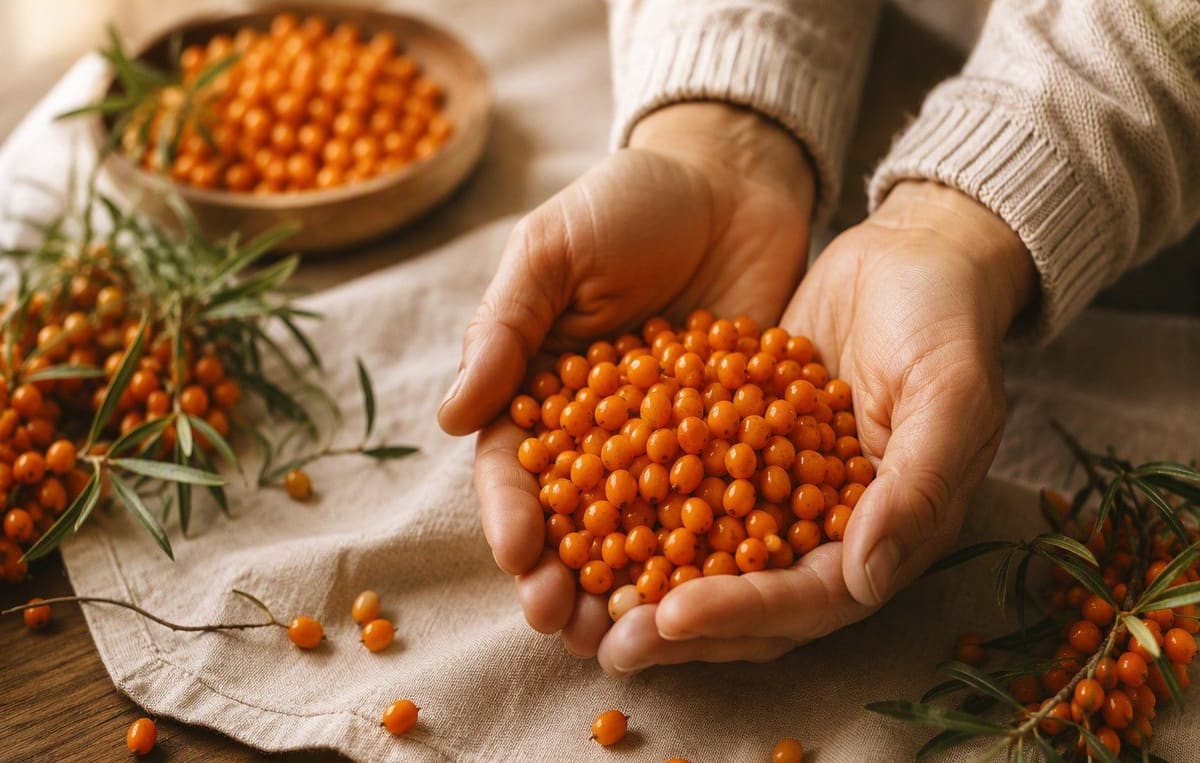
The retirement cuts both ways: a low ORAC value would not condemn a food either, because the assay simply does not translate to human outcomes. Values also vary by assay version and by laboratory, so even two honest measurements of the same product can differ widely, and a retired, lab-specific number was never built to compare bottles. Sea buckthorn contains real antioxidants like carotenoids and flavonoids, and you do not need a tube score to say so. The full context sits on the antioxidants and ORAC nutrition page, our guide to reading studies shows how claims like this get inflated.
Where you meet it on this site
The powder buying guide shows where the score shows up on real products, the mechanisms page explains why test-tube chemistry needs human trials behind it, and the polyphenols page introduces the compounds the assay was trying to measure.
Related terms: antioxidants, polyphenols, flavonoids.
Frequently asked questions
What is a good ORAC score?
There is no such thing in any way that matters for health. ORAC measures antioxidant capacity in a test tube, and the USDA withdrew its database because the numbers predicted little about real health effects and were being misused in marketing. A big ORAC number on a label is a sales tactic, not information.
Is a higher ORAC score always better?
No. ORAC is a retired test-tube metric that the USDA withdrew because it predicted little about real health, and values vary between labs and assay versions. A higher number on a package is a marketing comparison, not evidence of a health effect.