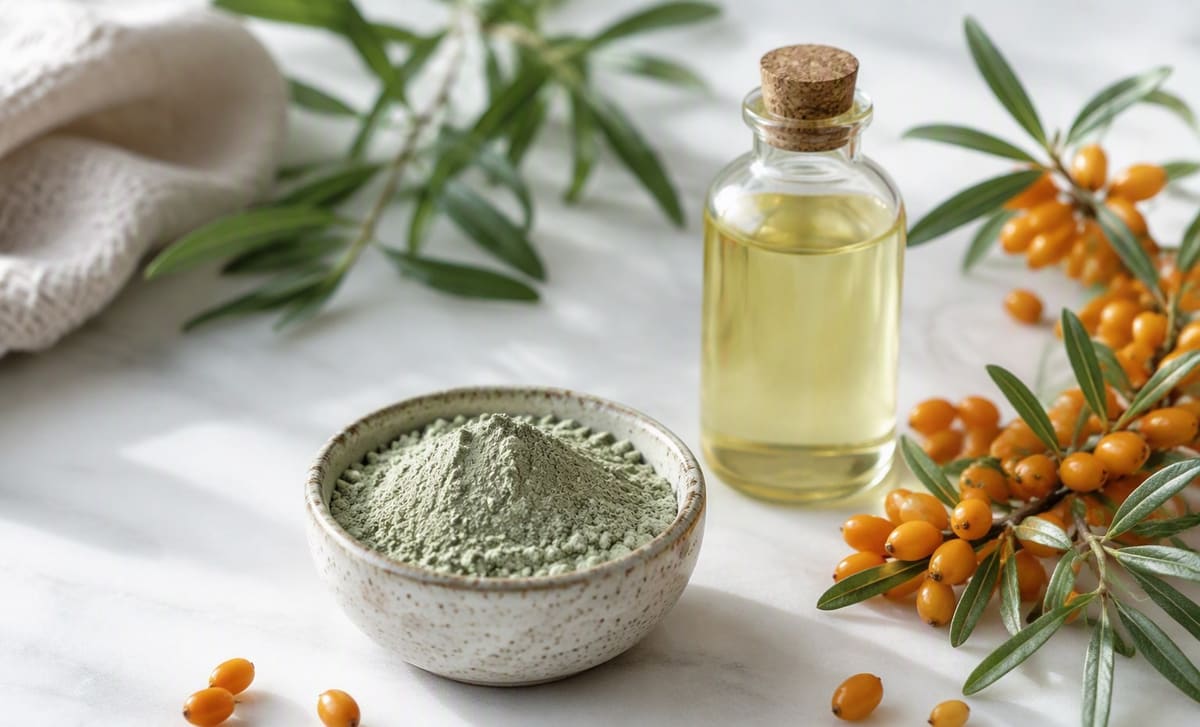
Putting oil on oily skin sounds wrong, and with the rich berry oil it mostly is. The nuance lives in the seed oil: lighter, linoleic-rich, and absorbed fast. Used in drops at night, it can suit oily skin that is secretly dehydrated. Used generously, it is a shine amplifier. And if your skin is content without oils, skipping them is a valid answer too.
The counterintuitive part
Oily skin is frequently dehydrated skin. Stripped by harsh cleansers, it overproduces sebum to compensate, and a light, non-greasy oil can interrupt that cycle by signaling the surface is already sealed. This is a plausible mechanism, not a sea buckthorn trial, and no study has measured the oil on oily skin specifically. The skin hub grades every claim in this collection, and this one sits in the plausible column.
The tell is the combination, not the shine. Skin that feels tight right after washing yet looks glossy by noon, with flaking around the nose underneath the oil, is dehydrated underneath. Skin that is simply oily, comfortable and unconcerned, has no cycle to interrupt and nothing to fix.
The linoleic angle, explained
Sebum chemistry adds one more plausible thread. Dermatology research has long noted that the sebum of oily and breakout-prone skin tends to run low on linoleic acid relative to oleic acid, and linoleic-rich oils are the standard suggestion for evening out that balance. Sea buckthorn seed oil is linoleic-rich, which is why it, and not the berry oil, is the candidate here. Plausible mechanism again, not a trial, and we grade it accordingly.
Why the seed oil is the only candidate
The two oils behave differently on a shiny face. Seed oil is pale, light, and rich in linoleic acid (roughly 30 to 40% of its fatty acids), the fatty acid that acne-prone and oily skin often runs low on. Berry oil is thick, deep orange, and happy to sit on the surface announcing itself. For oily skin, berry oil on the face is the wrong bottle, full stop. The comedogenic rating page explains the low-clog logic and its limits, and the seed vs berry breakdown covers the chemistry. For what that means at the shelf rather than in theory, the topical bottle broken down by skin type puts oily and acne-prone faces firmly in the seed oil column.
What two drops actually looks like
Two drops is less than it sounds. Dispense into a palm, rub palms together, then press onto a damp face: cheeks first, forehead last, and skip the already-shiny T-zone entirely for the first weeks. If your face looks wet or glossy a minute later, that was too much, and tomorrow’s dose is one drop. Oil should disappear into damp skin, not sit on it.
The morning verdict
This experiment is read in the mirror at breakfast, across two honest weeks. Skin that wakes calmer, less tight, and no shinier than usual is voting yes. Skin that wakes with new congestion, visible plugs, or a slicker T-zone is voting no, and the answer arrives fast enough that a fortnight is plenty. Judging after a single night tells you nothing, because one night is weather, not climate.
Seasons change the answer
Skin that is oily in July can be combination by January, because cold air, wind, and indoor heating strip water from everyone. Re-run the two-drop experiment when the seasons turn rather than assuming last summer’s verdict still holds. Plenty of people end up seed-oil users in winter and no-oil users in summer, and both answers can be right for the same face. The mistake is treating one season’s result as a permanent identity, then blaming the oil for what the weather did.
The rules if you try
- Seed oil only, two drops maximum, pressed into damp skin.
- Night only, until you know how your skin votes by morning.
- Patch test on the jaw for a week first.
- Stop if shine or congestion increases. That is data, not failure.
- Keep the rest of the routine quiet: gentle cleanser, light moisturizer, nothing else new that month.
Common mistakes
- Over-cleansing. Stripping twice a day with harsh surfactants is the very move that starts the overproduction cycle. Gentle and lukewarm wins.
- Skipping moisturizer from fear of grease. Dehydrated oily skin reads that as permission to produce more. A light water-based moisturizer is not the enemy.
- Reaching for the berry bottle. Rich, pigmented, slow to absorb: everything oily skin does not want on its face.
- Treating shine as the enemy. Shine is cosmetic. The dehydration cycle underneath is the mechanic, and that is what the routine actually targets.
The answer nobody sells
Some oily skins do best with no oils at all: a gentle cleanser, a light water-based moisturizer, sunscreen, done. That routine costs less than any oil and outperforms most of them. Sea buckthorn earns its place only if your skin is oily AND tight, the dehydration signature. If the two-drop experiment increases congestion after two honest weeks, the experiment has answered, and the no-oil routine is yours. For the breakout angle, the acne page applies, and the dilution guide shows how to start even lighter. Seed oil is the only version worth trying here, and our face oil picks sort the pale seed oils from the heavy orange berry ones.
Frequently asked questions
Can you use sea buckthorn oil on oily skin?
Yes, carefully: choose the seed oil (lighter, linoleic-rich, no pigment), use two drops at night only, and patch test. Oily skin is often dehydrated skin overcompensating, and a light oil can help. But if your skin is happy without oils, skipping them entirely is an equally valid answer.
Will sea buckthorn seed oil make oily skin break out?
There is no lab-tested clogging score for it, so nobody can promise either way. The seed oil is the light, linoleic-rich option most often suggested for oily skin, but skin is individual. Patch test on the jaw for a week, use two drops at night, and stop if congestion increases. A breakout during the test is an answer, not a failure.