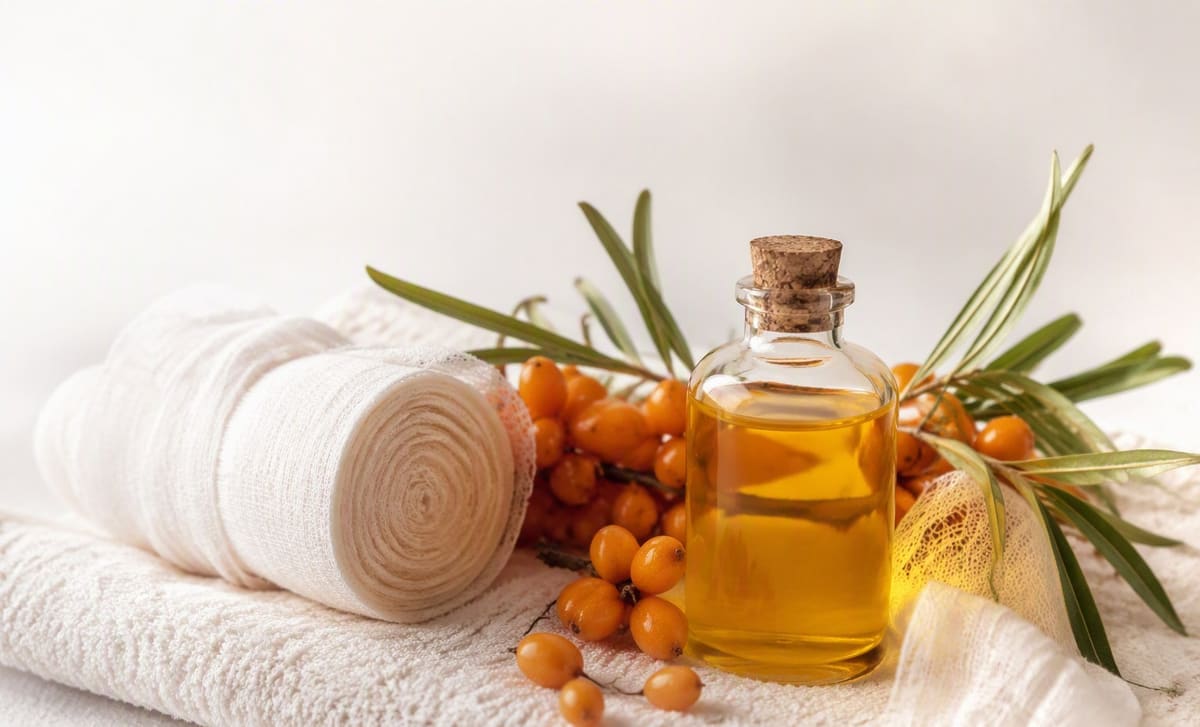
No trial has tested sea buckthorn for scars or stretch marks, and no topical product erases either. What oil and massage can honestly do: keep the area moisturized and pliable while a fresh mark matures, which improves comfort and can improve appearance. Time does most of the fading. Silicone sheets and dermatology procedures hold the real evidence.
What scars and stretch marks actually are
A scar is rebuilt tissue, collagen laid down in a hurry after injury, with a different structure from the skin it replaced. A stretch mark is a set of tiny tears in the dermis from fast stretching (growth, pregnancy, weight change), red when fresh and silvery when settled. Both live below the surface an oil can reach, as does the dimpling of cellulite. That one fact disciplines every claim, and the skin hub applies the same discipline to every topic in this collection.
The timeline underneath matters too. A healing area moves through inflammation, then rebuilding, then a long remodeling phase where collagen is slowly reorganized and strengthened, and that last phase runs for a year or more. The red of a fresh mark is blood supply doing construction work, and it fades to silver as the work winds down. Every honest intervention, oil, silicone, or procedure, works inside that calendar rather than against it.
What oil and massage can honestly do
- Moisture: scarred and stretched skin dries out and itches. An emollient layer fixes that, and sea buckthorn’s fatty acids do the job as well as any good oil.
- Massage: gentle daily massage keeps fresh scars pliable and is a standard part of scar aftercare. The oil is the slip, the massage is the mechanism.
- Appearance: hydrated, supple skin looks smoother and less shiny-tight while a mark matures. Better-looking is not the same as gone.
Use seed oil for this: pale, light, and free of the berry oil’s habit of tinting skin orange, which on a red fresh scar is the last thing you want.
The massage itself has a technique worth following. Clean hands, a few drops of oil for slip, then gentle circles and sweeps across the mark for a minute or two, once or twice daily. Pressure should move the skin, not hurt it, and any soreness afterwards means you pressed too hard. A minute a day for months beats an enthusiastic ten minutes for a week.
Pregnancy and stretch marks, the honest version
Most stretch-mark risk is written before you buy anything: genetics, skin type, and how fast the stretching happens decide most of the outcome, and no cream or oil has trial evidence for prevention. A food-grade oil as a daily moisturizer keeps stretching skin comfortable and less itchy, which is a real if modest benefit. Keep it topical, though: concentrated sea buckthorn supplements are unstudied in pregnancy, so the oral route is an ask-your-doctor conversation, not a default.
The words on the label, translated
Scar products sell on vocabulary, so a translation helps. “Fades” is legal and honest: hydrated skin looks better while time works. “Reduces the appearance of” means cosmetic, not structural. “Removes” or “erases” is where you put the bottle back. The ingredient list with actual scar evidence is short, silicone at the top, and sea buckthorn is not on it, which is why this page sells patience and massage instead of miracles. If a botanical oil is what you want anyway, rosehip is the one with the better scar file, and we say so on the comparison page even though it is not our plant. The pregnancy aisle gets its own translation too: “prevents stretch marks” has no trial support for any topical, whatever the jar claims. And since UV is the unglamorous half of every fading plan, the sun damage page is worth the read before summer.
What time and evidence actually do
Fresh red stretch marks fade toward silver over 6 to 12 months with or without products. Scars flatten and pale across a similar window, helped along by silicone gel sheets, the one topical with solid trial support. For marks that genuinely bother you, dermatology offers microneedling and laser options with real data, and early treatment beats late. The red stage is when every option, from silicone to procedures, works best, so “wait and see” is a strategy with an expiry date.
Common mistakes
- Oiling a wound that is not fully closed. Broken skin gets medical care, and oil goes on only after the area is intact and calm.
- Buying for the word “remove.” Nothing topical removes a scar or a stretch mark, and any label or page saying otherwise is selling fiction. Moisturize, massage, protect, and let time work.
- Skipping sun protection on fresh marks. UV darkens healing skin and locks in contrast that would otherwise have faded.
The honest routine
- Wait until any wound is fully closed. Oil never goes on broken skin.
- A few drops of seed oil, massaged gently for a minute, once or twice daily.
- Sunscreen over the area outdoors, because UV darkens fresh marks and undoes the fading.
- Judge at three months, not three days.
For claims with measured data behind them, see the elasticity page and the dry skin page.
Frequently asked questions
Can sea buckthorn oil remove scars or stretch marks?
No. No trial supports removal, and nothing topical erases scars or stretch marks. Oil plus massage keeps the area moisturized and pliable, which can improve how a fresh scar looks and feels as it matures. Time does most of the fading, and silicone gel sheets have the best topical evidence for scars.
Does oil massage help fresh stretch marks?
It keeps skin supple and may modestly improve comfort and appearance while marks are fresh and red, but no oil has trial evidence for stretch marks. Stretch marks are tiny tears in the dermis, and they fade mostly with time. Early dermatology treatments beat any oil if they bother you.
Which sea buckthorn oil should I use on a scar, seed or berry?
Seed oil. It is pale and light, while berry oil tints skin orange, an unfortunate look on a red, fresh scar. Remember the division of labor either way: the oil is the slip and the moisture, the massage is the mechanism, and time does most of the fading. Silicone gel sheets have the strongest topical evidence if you want a studied option.