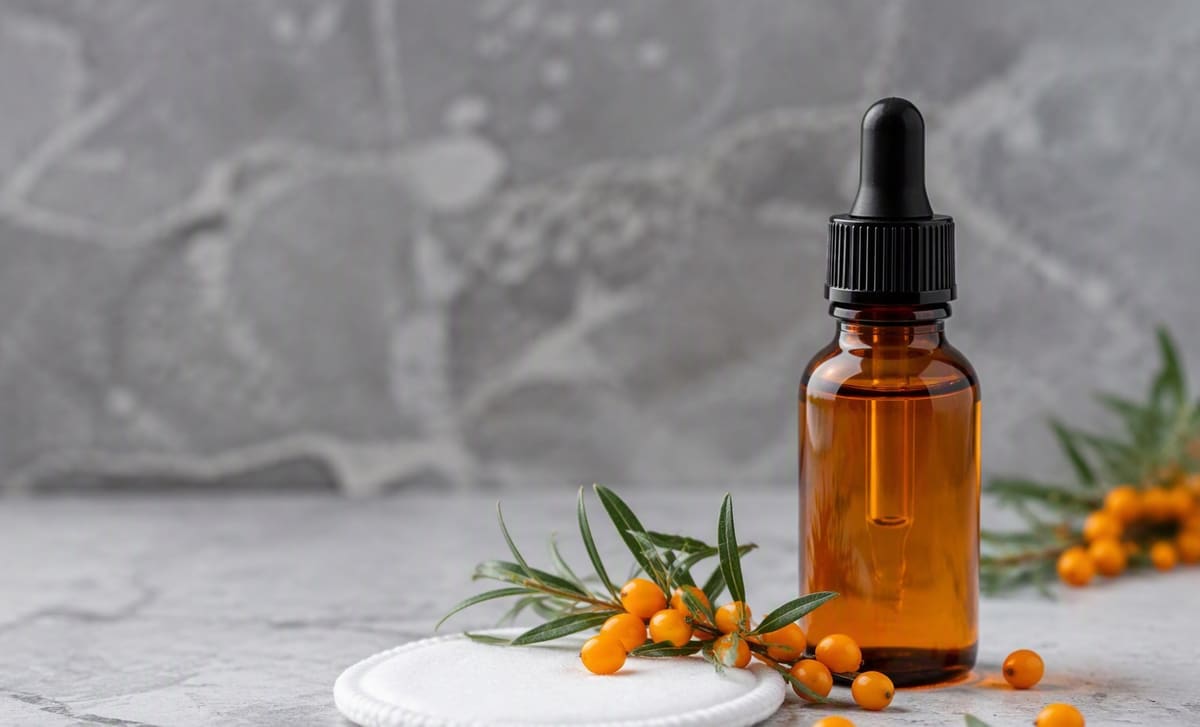
No human trial has tested sea buckthorn for acne, so nobody can honestly claim it treats breakouts. What the evidence does support: publisher and formulator ratings place the oil at the low end of the comedogenic scale, though no lab study has pinned an exact number on it. Its linoleic-rich seed oil suits the fatty acid profile that acne-prone skin tends to lack. Safe to try, unproven as a treatment. Patch test regardless.
Why “won’t clog pores” matters here
The first fear with any face oil is breakouts. Publisher and formulator ratings place sea buckthorn oil at the low end of the comedogenic scale, though no lab study has pinned an exact number on it. Light oils high in unsaturated fatty acids, like this one, are the kind that rarely clog pores. That signal comes from the fatty acid profile, not from acne trials. Patch test regardless. Acne sits near the bottom of the evidence ladder we grade every skin claim on, and this page does not pretend otherwise.
The linoleic acid angle
Here is the most interesting piece of real science in this topic. Some research suggests acne-prone skin tends to run low on linoleic acid, an omega-6 fat, and linoleic-rich oils are a recurring theme in acne research. Sea buckthorn seed oil is linoleic-rich and light, which is why formulators like it for breakout-prone skin. That is a logical fit, not a proven treatment. Logic is where acne claims should stop until trials exist.
The practical rules if you try it
- Choose seed oil, not berry oil. Lighter, pale, and the better fatty acid match. The berry oil’s carotenoids add nothing for acne.
- Patch test first on your inner arm for several days.
- A few drops, pressed into damp skin, not a slick layer.
- Give it weeks, and stop if irritation shows up.
Product picks that fit these rules are in the skincare guide, and the seed vs berry breakdown explains why the seed oil is the right bottle here.
What a breakout actually is
A pore is a hair follicle with an oil gland attached. When oil and dead skin cells plug the opening, bacteria that live on skin multiply inside the plug, and the immune system’s response is the red, swollen bump you see. Hormones drive the oil production, which is why acne tracks with puberty, cycles, and stress. Anything claiming to treat acne has to interrupt some part of that chain: the plugging, the bacteria, or the inflammation.
What sea buckthorn cannot do here
No human trial has tested sea buckthorn against any link in that chain. It does not touch hormone-driven oil production, it has no measured effect on acne bacteria in people, and nobody has counted breakouts on sea buckthorn users against a placebo. The honest ceiling for this oil is narrower: a moisturizer whose fatty acid profile suggests it is unlikely to clog pores, on skin that often tolerates heavy products poorly. That is a useful thing to be, and it is not acne treatment.
The realistic timeline
If you try it, the schedule looks like this. Days 1 to 7: patch test on a small area along the jaw, watching for redness or new bumps. Weeks 2 to 8: normal use, two or three drops pressed into damp skin, watching for clogged pores, which announce themselves within days to weeks, not months. If your skin is calm at week 8, the oil suits you. That is the only verdict available, because “suits my skin without breaking me out” is the whole claim.
Common mistakes
- Using the berry oil on oily, breakout-prone skin. It is the richer oil with an orange tint, and its carotenoids add nothing for acne. The pale seed oil is the right bottle.
- Judging after three days. Pores clog on a weeks timeline, and so does reassurance. Give the patch test and the trial period real time.
- Dropping proven actives to make room for oil. If a retinoid or benzoyl peroxide is working, the oil joins as a moisturizer on top, never as a replacement. The skin studies page shows exactly which claims have measurements behind them, and acne is not among them.
For technique, the oil-on-face guide walks through amounts and order, and the comedogenic glossary entry explains the scale behind the ratings.
What about the oral route?
The two skin trials behind sea buckthorn used oral oil and measured hydration and texture, never breakouts. Taking 1 to 2 grams daily for general skin quality is a reasonable experiment on that evidence. Taking it for acne is extrapolating past the data, because nobody has counted pimples in a sea buckthorn trial. If you try it for skin quality anyway, the studied doses are on the dry skin page.
What actually treats acne
Benzoyl peroxide, salicylic acid, retinoids, and dermatology visits have the trial evidence sea buckthorn lacks. Persistent or scarring acne deserves that lane first. Sea buckthorn can coexist with those treatments as a gentle moisturizing step, which is the honest role we recommend.
Frequently asked questions
Can sea buckthorn oil help with acne?
No human trial has tested sea buckthorn for acne, so no honest page can claim it treats breakouts. What we can say: publisher and formulator ratings place the oil at the low end of the comedogenic scale, though no lab study has pinned an exact number on it, and its seed oil is rich in linoleic acid, which acne-prone skin often lacks. It should not make acne worse and may suit acne-prone skin, but treatment claims are unproven. Patch test regardless.
Can I use sea buckthorn oil alongside retinoids or benzoyl peroxide?
Usually yes, as the moisturizing step, not the treatment step. Apply your proven active first, let it settle, then press a drop or two of seed oil on top. The oil may buffer the dryness those treatments cause. Introduce one product at a time, patch test, and keep treatment decisions with your dermatologist if your acne is persistent.