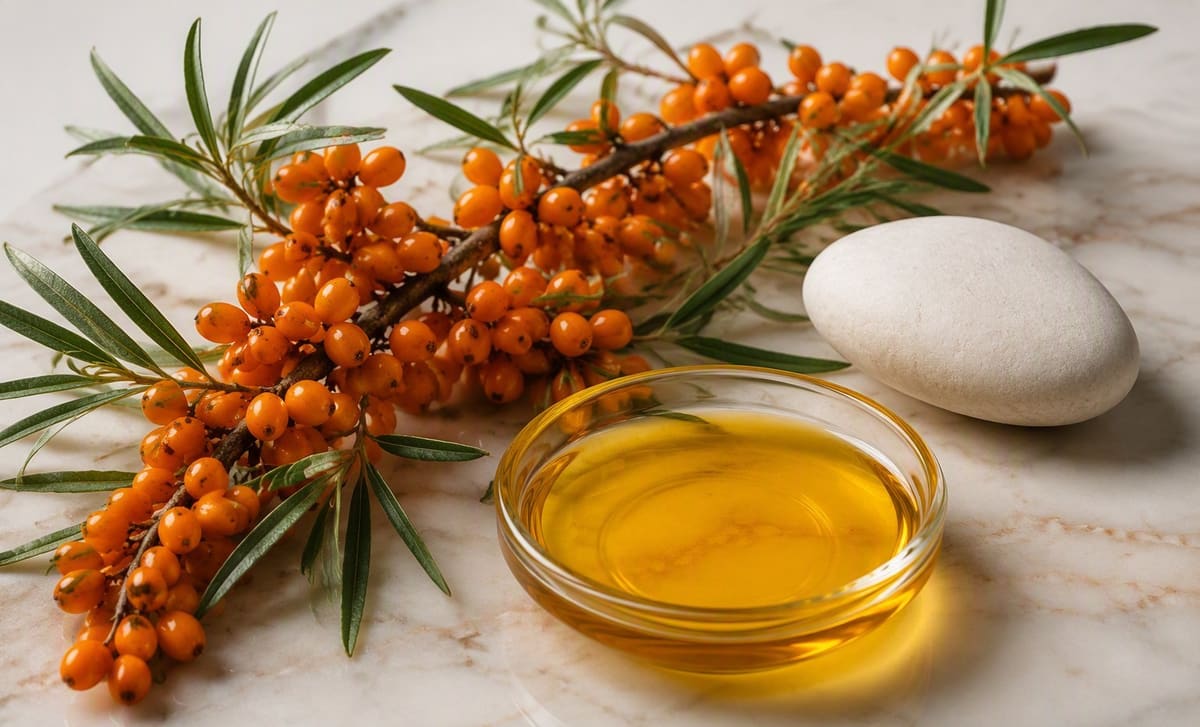
Vitamin C is a required cofactor for collagen synthesis. That is established nutrition science, and sea buckthorn berries carry plenty of it. On the direct-measure side, one 2024 placebo-controlled trial found skin collagen density up 10% after 12 weeks on 1 gram of sea buckthorn oil daily. One small industry-funded trial is a start, not a verdict.
The vitamin C foundation
Collagen is built by enzymes that need vitamin C to work. Without enough of it, collagen production falters, which is why scurvy unravels connective tissue. Sea buckthorn berries provide roughly 200 to 600 mg of vitamin C per 100 g fresh weight, varying by species and origin. Eating vitamin C rich food supports normal collagen formation. That claim needs no sea buckthorn trial, because it is basic biochemistry, and the skin hub grades it accordingly. Smokers, older adults, and people who rarely eat fruit are the groups most often running low.
The one direct measurement
Chan 2024 gave 40 healthy women 1 gram of sea buckthorn oil (or placebo) daily for 12 weeks and measured their skin with instruments. Collagen density rose about 10% versus placebo, alongside hydration up 8% and texture up 14%.
Two honest caveats travel with those numbers. The study was funded by the oil’s maker, and 40 people is small. It is the only placebo-controlled measurement of sea buckthorn and skin collagen we have, so it earns both attention and humility.
What no study shows
- No trial shows sea buckthorn rebuilds collagen lost to deep wrinkles or decades of sun damage.
- No trial compares it against plain vitamin C, so we cannot say the berry beats the vitamin.
- Topical application has no collagen measurement behind it at all. The trial used oral oil.
What collagen decline actually looks like
Collagen is the scaffolding protein of the dermis, and from our mid-twenties onward the body breaks it down slightly faster than it rebuilds. Ultraviolet exposure is the biggest accelerator, which is why sun-exposed skin thins and creases decades before covered skin does. Smoking and chronically low vitamin C intake also cost measurable collagen. The visible result is skin that is thinner, less springy, and slower to recover from folding. Any claim about “boosting collagen” is a claim about nudging that balance, and the honest question is always the same: nudging by how much, measured how.
The plausible mechanism stack
Sea buckthorn’s collagen story has three rungs, and they are not equally solid. The bottom rung is proven biochemistry: vitamin C is a required cofactor for the enzymes that build collagen, and the berries carry plenty. The middle rung is the 2024 trial: oral oil, 12 weeks, collagen density up about 10% against placebo, small and industry-funded. The top rung is speculation: carotenoid antioxidant protection and omega-7 membrane effects, interesting in the lab and unmeasured in skin. Grade each rung separately, as the skin studies page does.
Common mistakes
- Expecting a cream to do the trial’s job. The collagen measurement came from swallowing oil, not applying it. No instrument has tracked topical sea buckthorn and collagen at all.
- Megadosing vitamin C past need. The enzymes saturate, and the excess leaves in urine. Food-level intake covers the cofactor job.
- Judging at four weeks. The one trial measured at twelve. Collagen turnover is slow, and mirror memory is unreliable, which is why a start photo matters.
How this compares to collagen supplements
Collagen peptides have their own small-trial literature for skin, and shoppers reasonably ask which bottle wins. Nobody has run that comparison. The collagen comparison lays out the supplement side by the same evidence rules, and the honest summary is that both files are early, small, and awaiting larger independent studies.
The realistic timeline
Collagen turns over slowly, and the one measuring trial waited 12 weeks for a 10% density change, a shift you feel as firmness more than you see it. Expect nothing photographable before month three, expect the change to be modest even then, and expect sun protection and protein to deliver more of it than the bottle does.
Putting it to work
If collagen support is the goal, the evidence-shaped moves are enough daily vitamin C (food or supplement), adequate protein, sun protection, and 12 weeks of patience before judging anything. Sea buckthorn oil at 1 gram daily fits inside that plan without being the plan.
Food first, then oil. Berries, diluted juice, or a teaspoon of oil all deliver vitamin C alongside the rest of the fruit’s chemistry, and a plain vitamin C supplement does the cofactor job for a few cents a day. The case for choosing sea buckthorn specifically is the 2024 collagen-density number, and that number now needs a larger, independent study before it can carry more weight.
Related reading: wrinkles, glowing skin, and our vitamin C page.
Frequently asked questions
Does sea buckthorn increase collagen?
One placebo-controlled trial (40 women, 1 gram of oil daily, 12 weeks) measured skin collagen density up about 10% versus placebo. It was industry-funded and small, so treat it as promising rather than settled. Its vitamin C also supports normal collagen synthesis.
Is sea buckthorn better than a vitamin C supplement for collagen?
Unknown. No study has compared them head to head. Vitamin C is the established cofactor for collagen synthesis. Sea buckthorn supplies it plus fatty acids, but nobody has proven the combination beats the vitamin alone.
Does rubbing sea buckthorn oil on my face boost collagen?
There is no measurement behind that idea at all. The one trial that found higher collagen density used oral oil, 1 gram daily for 12 weeks. Topical sea buckthorn oil moisturizes and softens, which is worth having, but no instrument has ever tracked what it does to skin collagen.