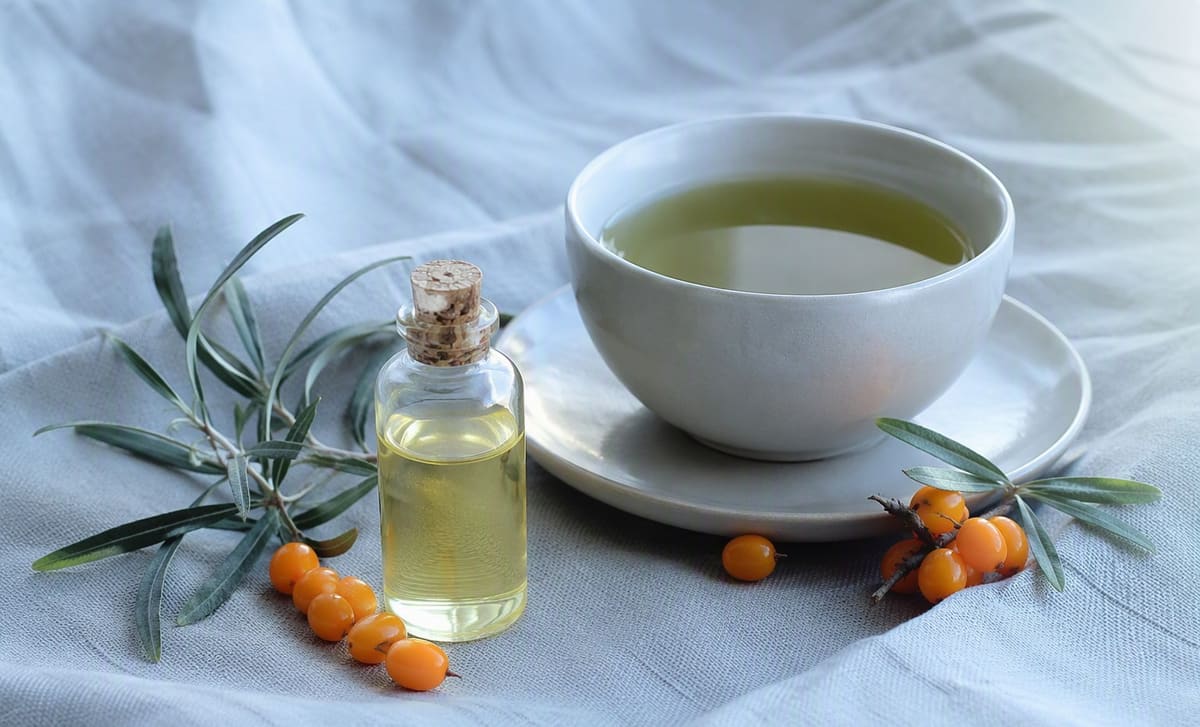
No trial has tested sea buckthorn for rosacea, and rosacea is the wrong condition for casual experiments. Rich oils can trap heat at the skin surface, and heat is a classic flushing trigger. If you try it, choose the pale seed oil, patch test for a full week, and treat any stinging or flushing as a stop signal. The treatments with evidence come through a doctor.
The evidence, in one line
There is none. Our research file holds no human trial of sea buckthorn for rosacea, redness, or flushing. The skin trials that do exist measured hydration and elasticity in healthy volunteers, which says nothing about reactive, redness-prone faces. The skin hub grades every claim in this collection, and this one has nothing to grade.
The trigger map, because triggers run this condition
Rosacea management is mostly trigger management. The usual suspects are heat, sun, wind, alcohol, spicy food, hot drinks, and stress, plus skincare itself: fragrance, strong acids, and physical scrubs are frequent offenders. Everyone’s list is personal, which is why dermatologists suggest a trigger diary before anything else. Two weeks of noting flushes against food, weather, and products teaches you more about your face than any single product purchase will.
Why caution leads here
Rosacea is a vascular and inflammatory condition with personal triggers: heat, sun, alcohol, spicy food, and for many people, new skincare. Two properties make any rich oil a questionable guest:
- Occlusion holds warmth in. A heavy layer can raise surface temperature slightly, and warmth provokes flushing.
- Reactive skin rejects novelty. Stinging on application is common with rosacea, and berry oil adds a tint problem on top: orange pigment on a red face helps nobody.
Seed oil is the safer experiment if there is one at all: pale, lighter, and linoleic-rich. Fragrance-free matters more than the plant on the label, because fragrance compounds are frequent rosacea irritants. Our sensitive-skin pick among the face oils was chosen on exactly that basis, single ingredient and nothing added for smell.
The one honest point in the oil’s favor: rosacea-prone skin often has a disrupted barrier, and a light, fragrance-free, single-ingredient oil is a gentle way to seal moisture while the barrier recovers. That is barrier logic, not a rosacea trial, and it caps out at “might suit some people, tested slowly.”
If you try it anyway
- Patch test on a small area near the jaw for a full week, not a day.
- Two drops maximum, pressed into damp skin, never layered thick.
- Introduce nothing else new at the same time, so you can read the result.
- Stop on flushing, stinging, or new bumps, and do not retry.
Reading the week matters as much as running it. A calm day one tells you almost nothing, because flushing is situational. You are watching the pattern across different days, temperatures, and meals, looking for anything that changed when the oil arrived. No change in a full week is the green light for cautious continued use, not for doubling the dose.
If your skin votes no
A failed patch test is useful data, and the response is simple: stop, give your skin a quiet week of cleanser and plain moisturizer only, and leave oils alone. The barrier-support job can be done by any bland, fragrance-free moisturizer, and the sensitive skin page has the full careful protocol if you want to try anything new later. The dilution guide also shows how to test at a fraction of full strength.
The sunscreen you will actually wear
Daily SPF advice is easy to give and hard to follow on reactive skin, because some filters sting. The practical answer is texture shopping, not skipping: mineral formulas with zinc oxide are the usual suggestion for rosacea-prone faces, fragrance-free, and tested on a small area like everything else. A sunscreen you tolerate and actually apply beats the theoretically better one sitting in a drawer.
Sun earns this emphasis because it is a top-tier flushing trigger for most people with rosacea, and cloud cover and windows do not exempt you: UVA passes through both. This is the one product category where “every single day” is not marketing language.
Common mistakes
- Testing three new products in the same week. With reactive skin you will never learn which one flushed you. One variable at a time.
- Using the berry oil. Pigment, richness, and heat retention are three strikes on a red face.
- Skipping sunscreen on cloudy days. UV is a first-tier rosacea trigger in every season, and daily broad-spectrum SPF is the one over-the-counter step with real weight here.
- Hot drinks on autopilot. Heat triggers flushing however it arrives, so letting tea and coffee cool a few minutes is a real trigger fix, not superstition.
What actually has evidence
Azelaic acid, metronidazole, and ivermectin creams carry the trial data for rosacea, with oral options and laser work for the stubborn cases. A dermatologist visit is the shortest path to a calmer face. Daily sunscreen is the one over-the-counter step with real weight here. For the gentler side of sea buckthorn skincare, the dry skin page shows the measured lane, and the acne page covers reactive-skin logic.
Frequently asked questions
Is sea buckthorn oil good for rosacea?
There is no trial evidence either way, and rosacea skin is exactly the skin that punishes experimentation. If you try it, use the pale seed oil, patch test for a full week on a small area, and stop at the first sign of flushing or stinging. The treatments with real data (azelaic acid, metronidazole, ivermectin) come through a doctor.
Can face oils make rosacea worse?
They can in some people. Rich or occlusive products trap heat at the skin surface, and heat is a classic flushing trigger. Fragrance and essential-oil blends are the bigger culprits. A single-ingredient, fragrance-free oil patch tested slowly is the cautious version of the experiment.
Is seed oil or berry oil better for rosacea-prone skin?
Seed oil, if either. It is pale, lighter, and free of the berry oil's orange pigment, which sits badly on a red face and makes flushing harder to judge. That said, no oil has rosacea trial data behind it. Patch test the seed oil for a full week, and let azelaic acid and the other proven options do the treating.