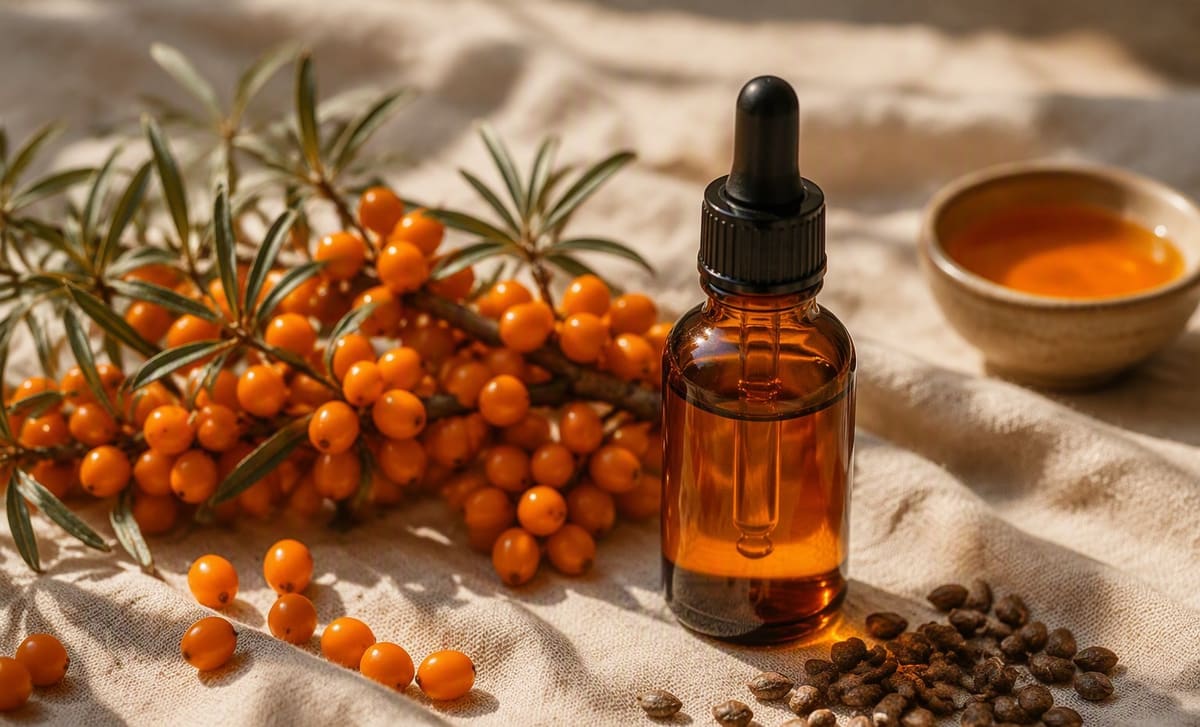
Both sea buckthorn oils carry the vitamin E family, tocopherols and tocotrienols, and the seed oil carries more. Inside the bottle, vitamin E guards the fragile unsaturated fats from oxidation. In your diet it adds fat-soluble antioxidant chemistry, absorbed best alongside a meal.
The vitamin E family, in short
Vitamin E is not one compound but a family: tocopherols and tocotrienols, in alpha through delta forms. Composition analyses find the family in both sea buckthorn oils, with the seed oil the richer source. The berry oil still contributes, sitting behind its carotenoid headline. The nutrition hub keeps the rest of the cast in one place.
Alpha versus the family
Not all family members count equally in the human body. Alpha-tocopherol is the form your liver preferentially keeps in circulation, which is why supplement labels and dietary references track alpha specifically. Plant oils carry a mix, and sea buckthorn’s mix is the natural one, spread across the family rather than concentrated in alpha. Whether the mix or the isolated alpha is the better long-term bet is a live scientific question, and the honest summary is that food matrices deliver the family while capsules deliver the favorite.
Why the oil needs it first
These oils are rich in polyunsaturated fats, and polyunsaturated fats oxidize easily. Vitamin E is the plant’s own preservative system, sacrificing itself so the fatty acids survive the trip from press to bottle to spoon. This is also why storage matters: dark glass, a cool shelf, and a recent pressing keep both the vitamin and the fats it protects. The oil guide scores products on exactly these handling signals.
Freshness is the nutrient
Vitamin E depletes itself doing its job. Every month on the shelf, the oil’s antioxidant guard spends itself protecting the fatty acids, so an old bottle carries less vitamin E and more oxidized fat than a fresh one. The tells are practical: a harvest or pressing date on the label, dark glass, cool storage, and your own nose, since oxidized oil smells like crayons or old paint. This is the rare nutrient where freshness is not a luxury claim. Freshness is the nutrient, and a bargain bottle of indeterminate age is no bargain at all.
What a teaspoon delivers
One level teaspoon of oil is about 4.5 grams, and everything in it, vitamin E and the berry’s modest vitamin K included, is fat-soluble. Take it with a meal that contains some fat and the absorption question answers itself. Set expectations at food scale: the teaspoon’s vitamin E is a modest share of daily needs, meaningful as a bonus inside the oil rather than as a supplement-grade dose. Dedicated vitamin E capsules dose far higher, which is a different product for a different purpose. The oil nutrition page runs the full teaspoon math, and the dosage page maps grams to softgels for the studied uses.
Who actually needs vitamin E attention
Vitamin E deficiency is rare outside fat-malabsorption conditions and very premature infants, because the vitamin hides in every oil, nut, and seed in a normal diet. Most people shopping for it are solving a problem they do not have. Sea buckthorn oil’s contribution is best read as a quality mark, proof the bottle carries its natural preservative system intact, rather than a nutrient gap you needed filled.
The neighbors in the bottle
Vitamin E never rides alone in this oil. The same fat fraction carries the carotenoids that color it and the phytosterols that interest lipid researchers, and the three share the spotlight on the phytosterols page and the vitamin A page. That passenger list is the real reason to choose the whole oil over any isolated capsule: you get the guard, the pigment, and the lookalikes in one pressing.
Topical versus oral
One lane delivers vitamin E without digestion at all: the skin. Smoothing the oil on your face puts tocopherols directly on the surface, where they do the same guarding job for skin lipids that they did in the bottle. That is the logic behind the oil’s entire skincare reputation, and the dry skin page grades what the topical and oral routes each measured. Patch test first, expect the orange tint to wash off, and count the oral route as the systemic version of the same chemistry.
Where vitamin E does not live
Juice is the wrong form for this nutrient. Vitamin E travels with the fat fraction, so pressing a berry for juice leaves the vitamin E behind with the oil. Whole berries and powders carry a little from their natural oil content, but if vitamin E is the goal, the oil is the product. The fatty acid profile page and the seed vs berry breakdown explain why the two oils pack their passengers so differently.
Freshness is the whole game
Because vitamin E’s job is absorbing oxidation, a stale oil has already spent some of its guard. Dark glass, a tight cap, and a cool shelf keep the tocopherols working for you instead of for the air. If an oil smells paint-like or harsh, oxidation has moved in and the vitamin E has done its duty early. Buy small bottles and finish them while they still smell clean and fruity.
Frequently asked questions
Which sea buckthorn oil has more vitamin E?
The seed oil. Both oils carry the vitamin E family of tocopherols and tocotrienols, but composition analyses consistently put more of it in the seed oil. If vitamin E is your main interest, choose a seed oil product, store it dark and cool, and take it with a meal for absorption.
Is sea buckthorn oil a good vitamin E supplement?
It contributes rather than replaces. A teaspoon of the oil carries a modest share of daily vitamin E needs, with the seed oil ahead of the berry oil, but dedicated vitamin E supplements dose far higher and more precisely. Think of the oil's vitamin E as a built-in preservative that also happens to count toward your day, not as a reason to buy the bottle.