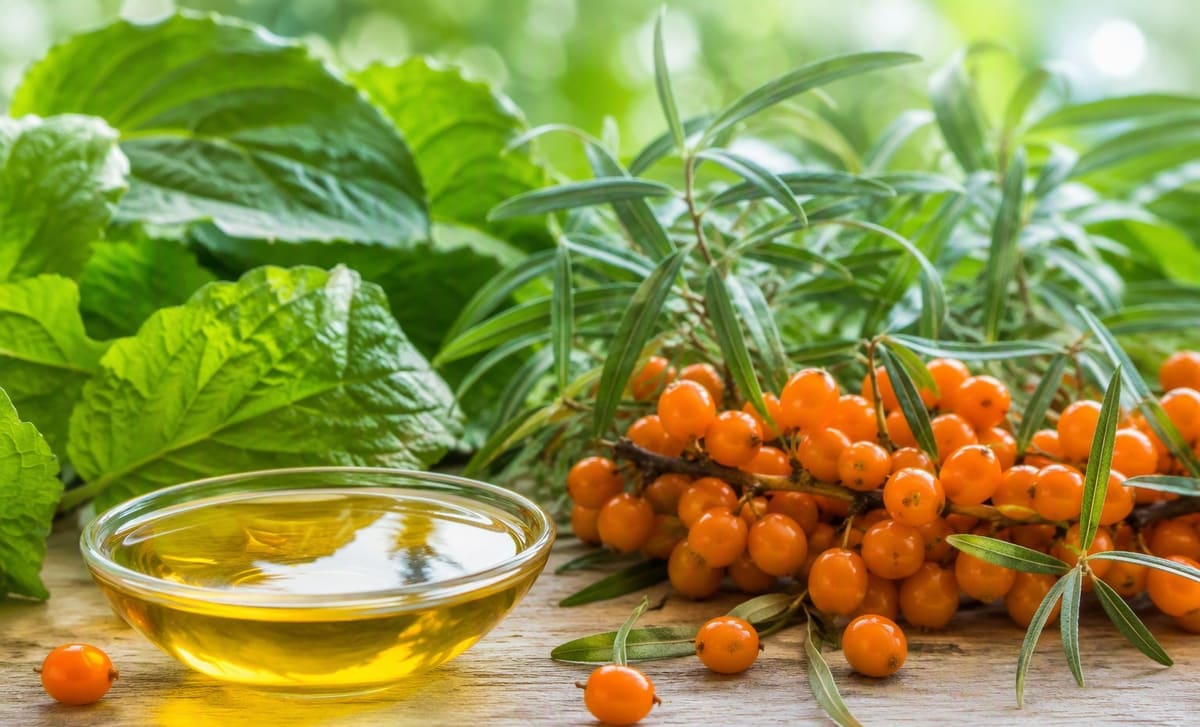
Vitamin K shows up in sea buckthorn oil in modest, unremarkable amounts. This is not a page where the berry shines, and honesty beats padding: leafy greens own this nutrient. The one audience that should keep reading is warfarin users, for a consistency reason rather than a content reason.
Present, not remarkable
Vitamin K is fat-soluble, so what the plant has travels with the oil fraction. Composition reviews list it among the oil’s residents, and nothing in those analyses puts sea buckthorn near the top of the vitamin K table. A serving of kale, spinach, or broccoli dwarfs it. If you are shopping for vitamin K, this aisle is the wrong stop, and the B vitamins page delivers the same verdict for a different letter.
The green-giant context
Vitamin K comes in two dietary families. K1 dominates in leafy greens, which is why kale and spinach own the nutrient tables. K2 comes from fermented foods and is a separate conversation. Sea buckthorn oil’s contribution sits in the K1 neighborhood at modest scale, a footnote next to a single serving of greens. If a label touts this plant for vitamin K, it is straining for a selling point, and the B vitamins page shows the same humility for a different letter.
The warfarin consistency note
Warfarin works by opposing vitamin K, which makes day-to-day consistency of vitamin K intake part of the prescription’s success. A new daily oil habit, even a modest-K one, is a change in that intake, and changes are what the monitoring is for. Mention it to whoever manages the dose. Separate from vitamin K entirely, one small study found sea buckthorn berry oil reduced platelet aggregation in healthy men, and the blood thinners page explains why that combination is your doctor’s call rather than a blog’s.
Consistency is the whole game
Warfarin management runs on a simple axis: keep vitamin K intake steady so the dose stays matched to it. The clinic measures your INR and adjusts the prescription to your life, and any new daily habit, a green-smoothie phase, a kale winter, or a new oil supplement, shifts the baseline the dose was tuned to. Modest-K or not, a daily oil is a change, and changes belong in the clinic’s notebook. One phone call before you start, and the monitoring does the rest. That is the entire protocol.
The platelet paragraph
Separate from vitamin K entirely, one small human study deserves its own mention. Twelve healthy men took 5 grams of sea buckthorn berry oil daily for four weeks, and their platelet aggregation measurably decreased. Twelve men, one high dose, one study: a signal, not proof, but exactly the kind of signal that matters when blood thinners are already in the picture. It is also a berry-oil finding at a dose above what most people take, which is why the blood thinners page frames it as a conversation rather than a ban.
The surgery rule
The same platelet signal writes one more rule: high-dose oil supplements should pause about two weeks before any planned surgery, the standard window surgeons apply to anything that touches clotting. Tell the surgical team what you take, all of it, at the pre-op appointment rather than the morning of. The safety hub collects every rule in this family in one place.
Who actually needs K attention
Three groups have real vitamin K homework. Warfarin users are covered above. People with fat-malabsorption conditions need attention, since K is fat-soluble. And newborns have their own protocol, which is standard pediatric practice rather than a parent’s research project. Everyone else can treat the nutrient as background noise. Take the oil with a meal for the usual fat-soluble absorption reasons, covered on the oil nutrition page, and spend your attention on the nutrients this plant genuinely leads in, like vitamin C. The vitamin E page covers the neighbor this oil actually brags about.
The deficiency that isn’t
Vitamin K deficiency in adults is rare enough that most clinicians never see one outside hospitals. The edge cases are long antibiotic courses, severely restricted diets, and absorption disorders, and each is a medical situation rather than a shopping one. Sea buckthorn oil plays no role in fixing a deficiency, and nobody should buy it for that. Its vitamin K is a small, quiet passenger in a bottle bought for other reasons, and for almost everyone that is the whole story.
Who can skip this page
Almost everyone. Vitamin K deficiency is rare in adults eating a varied diet, the berry adds a small amount quietly, and no action is required. Take the oil with a meal for the usual fat-soluble absorption reasons, covered on the oil nutrition page, and spend your attention on the nutrients this plant genuinely leads in, like vitamin C. The nutrition hub ranks them, and the oil guide handles the shopping.
Frequently asked questions
Is sea buckthorn high in vitamin K?
No. The oil carries vitamin K in modest, unremarkable amounts compared with leafy greens, the category's giants. For most people the berry's vitamin K is a footnote. Warfarin users are the exception: keep vitamin K intake consistent day to day, mention any new oil supplement to the clinician managing the prescription, and factor in the oil's separate platelet finding.
Should I worry about vitamin K in sea buckthorn oil?
Almost certainly not. The amounts are small, vitamin K from food is not something healthy people need to ration, and leafy greens deliver more per serving by a wide margin. The one group that should pay attention is warfarin users, where the rule is consistency rather than avoidance: keep intake steady and tell the clinician who manages your dose about any new supplement.