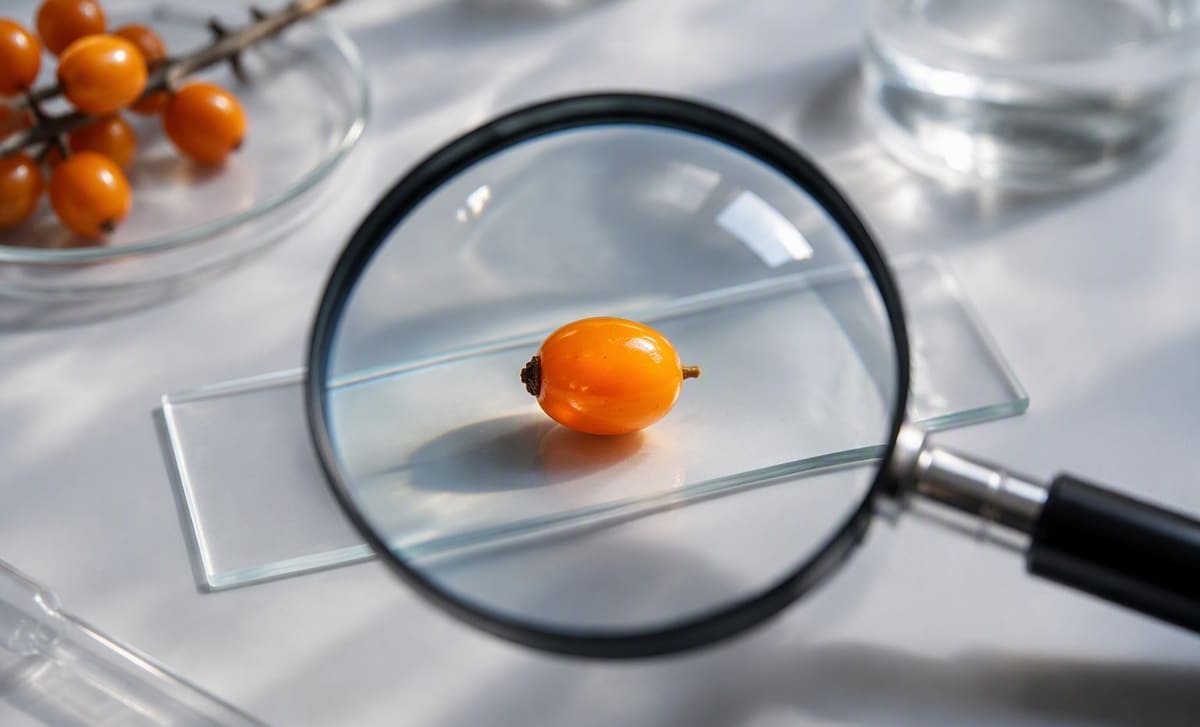
Isorhamnetin is the flavonoid that says sea buckthorn. It is a methylated form of quercetin, uncommon in everyday foods, and steady enough in these berries that laboratories use it as a fingerprint for the genuine plant. Research interest is real. Human dosing evidence is not here yet.
The fingerprint compound
Most flavonoids are everywhere: quercetin is in your onions, kaempferol in your kale. Isorhamnetin is pickier about where it grows, and sea buckthorn is one of its reliable homes. That makes it practical in a way most nutrients are not. Analytical labs checking whether an oil or powder contains real sea buckthorn can look for the isorhamnetin signature, and its absence is a red flag. Our fake oil guide explains why that check matters in this market.
Where it concentrates
Isorhamnetin rides as glycosides in the berry flesh and shows up in the leaves too. A 2015 analysis across cultivars confirmed its presence as one of the three lead flavonoids, with levels that move by variety and origin, which is why honest sources quote it as part of a range rather than a fixed figure. Like its flavonoid siblings, it barely enters the oil fraction, so berries, juice, powder, and leaf tea are its natural delivery forms. The flavonoids page maps the whole trio.
Where else it shows up
Part of isorhamnetin’s story is its rarity in the everyday diet. Its parent quercetin is everywhere, but the methylated form appears in few common foods, and sea buckthorn is the one most people will ever meet. That rarity cuts two ways. It makes the compound a useful authenticity marker for the plant, and it means almost nothing is known about its role in normal human nutrition, because almost nobody eats it regularly. An exotic compound is interesting chemistry, not a missing essential.
What a serving delivers
The delivery forms are the watery ones: berries, juice, powder, and leaf tea, with the oil carrying little of the flavonoid family. A 2015 cultivar analysis confirmed isorhamnetin as one of the three lead flavonoids across varieties, with levels that move by cultivar and origin, so no single per-serving figure deserves printing. The honest expectation: a daily berry or powder habit makes you one of the few people consuming this compound regularly, at food doses, as glycosides. What that does for you is the unmeasured part, and the mechanisms page explains why food-dose and lab-dose are different worlds.
The authenticity use, expanded
The fingerprint logic deserves one more paragraph, because it is the compound’s most practical role. Sea buckthorn products suffer routine dilution: berry oil stretched with cheap seed or sunflower oil, powders cut with fillers. A lab can check for the isorhamnetin signature, and a product missing it has questions to answer. Consumers cannot run that test at home, which is why the fake oil guide teaches the proxy checks: color, price realism, label specificity, and seller reputation.
Common misreadings
- “Standardized to isorhamnetin” as a quality badge. Standardization proves a compound was measured, not that it does anything for you. No human dose-response data exists to standardize toward.
- Lab findings as personal benefits. Cell and animal studies use concentrations food cannot deliver.
- Single-compound logic. The berry carries a trio plus a matrix, and the amla comparison shows the same whole-food-first discipline applied to another tradition-heavy berry.
Why you will not see it on a label
Isorhamnetin is a compound you shop for blind. Quantifying it takes laboratory chromatography, no regulation requires listing it, and the supplements that standardize anything standardize total flavonoids, not this molecule. Even the authenticity testing described above is a lab tool for catching counterfeit oil, not a certificate consumers ever see. So the label-reading skill here is indirect. Products that name the species and the plant part, and that publish third-party flavonoid assays, are the ones plausibly delivering the fingerprint compound along with the rest. Whole berries and honest juice need no assay at all, because the matrix is the fingerprint. A front label shouting “isorhamnetin” would actually be the red flag, because it would signal marketing running ahead of any testing the brand can show. The flavonoids page maps the family this molecule anchors, and the oil guide scores the products that disclose what they sell.
What the research says, honestly
Cell and animal studies find isorhamnetin doing interesting things, and pharmacology reviews list it among the compounds behind sea buckthorn’s lab reputation. The honest boundary: nobody has run a human trial dosing isorhamnetin by itself, and blood levels from eating berries run far below lab concentrations. Treat it as one reason the whole berry is interesting, not as a molecule with proven effects at food doses.
For the wider compound family, the polyphenols page zooms out, the quercetin page covers its better-known parent, and the nutrition hub keeps every nutrient in context.
Frequently asked questions
What is isorhamnetin and why does sea buckthorn have it?
Isorhamnetin is a flavonoid, a methylated form of quercetin, that shows up consistently in sea buckthorn berries and rarely in everyday foods. Labs use it as a fingerprint to confirm a product contains genuine sea buckthorn. Research interest in the compound is real, but no human trial has dosed it in isolation, so it remains a composition story rather than a proven benefit.
Should I buy an isorhamnetin supplement?
No human dosing trial exists, so there is no evidence-based dose to buy. Single-compound flavonoid supplements in general have a poor record of matching their lab promise in people. If the compound interests you, the sensible route is the food that makes it: whole berries, powder, or leaf tea, where isorhamnetin arrives in the matrix the research actually describes.