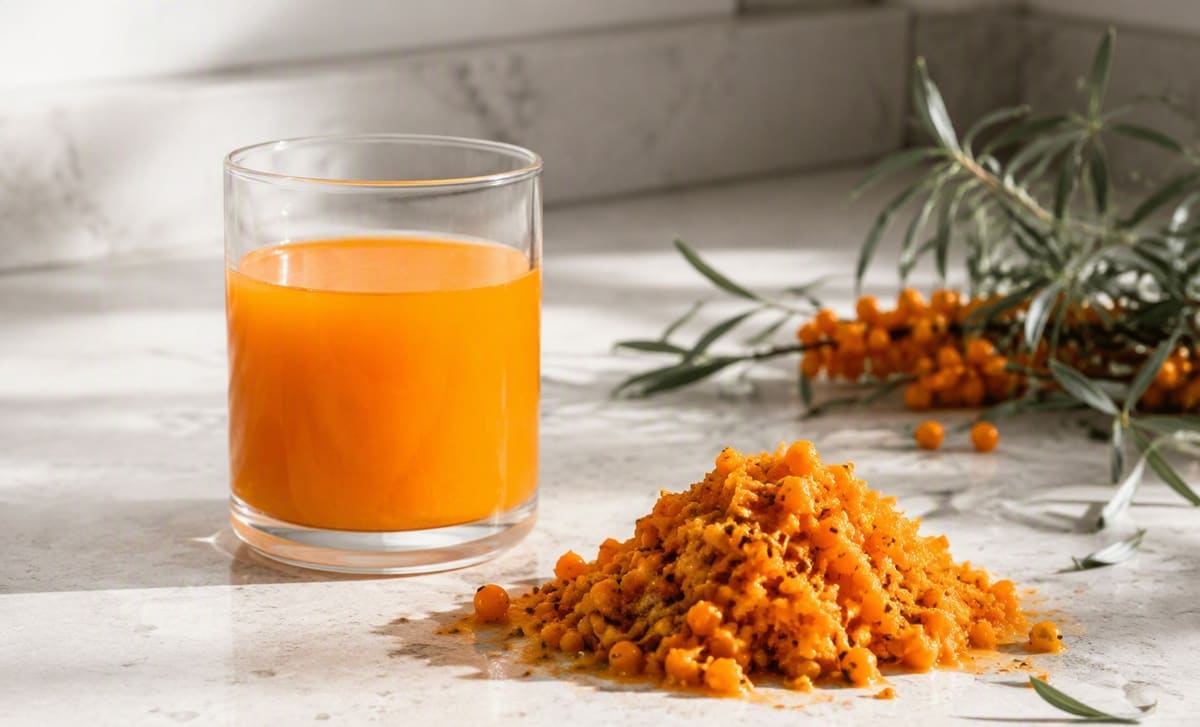
Pressing a sea buckthorn berry splits its nutrition in two. The juice keeps the vitamin C, the malic and quinic acids, and the flavonoids, plus some carotenoids if the pulp stays in. It loses nearly all the fiber and, in clear filtered juice, most of the oil fraction. What lands in your glass depends on pressing, pulp, pasteurization, and how long the bottle sat.
What survives the press
- Vitamin C. Yes, at meaningful levels, because it is water-soluble and lives in the juice fraction. Two taxes apply: pasteurization heat takes a cut at bottling, and shelf time keeps taking one, as the vitamin C page details. A recently bottled juice beats an old one.
- The acids. Malic and quinic acids (with citric alongside) survive fully. They are why the juice is punishingly sour and why dilution is not optional.
- Flavonoids. Quercetin, kaempferol, and isorhamnetin glycosides carry through into the juice.
- Some carotenoids. These ride with the pulp. Pulp-rich, cloudy juice keeps a share of the orange compounds. Clear, heavily filtered juice keeps far fewer.
What does not survive
- Fiber. Pressing removes it almost entirely. Whole-berry nutrition this is not.
- The oil fraction. The omega-7-rich oil lives in the pulp’s fat bodies. A pulp-rich juice keeps some. A clear juice keeps little to none. If your goal is the researched oil benefits, juice is the wrong product and the oil guide is the right page.
- Vitamin C, slowly. Already said, worth repeating: the vitamin fades with heat and time, so distance to the best-by date is a nutrition fact.
The glass math
A sensible serving of this juice is a shot, not a tumbler, because the acidity sets the limit. Diluted about one part juice to three parts water, a daily glass uses a small measure of pure juice, and its vitamin C contribution lands somewhere between “a meaningful share of your day” and “it depends on the bottle,” because per-bottle vitamin C varies with variety, pasteurization, and shelf time, and no universal figure exists. The acids arrive undiluted by processing and fully present in every serving, which your tooth enamel will confirm. The acidity and reflux page covers who should skip the glass entirely.
Pasteurization and shelf time, priced in
Two taxes apply to every bottle. Heat at bottling takes an immediate cut of the vitamin C, and shelf time keeps collecting weekly. A fresh-pressed refrigerated juice and a shelf-stable bottle from last year are different nutritional products wearing the same label. The best-by date, the storage instructions, and the presence or absence of refrigeration tell you which one you are holding, and the storage guide covers the home half of that clock after opening.
What a good purchase looks like
The label tells the truth in four places: sea buckthorn first in the ingredient list, the form stated (pure, nectar, or from concentrate), a date far enough out to imply a recent bottling, and no added sugar. The juice buying guide applies those checks product by product, and the make juice page is the end-around for anyone with a freezer bag of berries and a strainer.
Common misreadings
- “Detox juice cleanse.” Juice keeps the vitamins and drops the fiber, which is the opposite of a cleanse. The berry’s fiber never made it into the glass.
- “100 percent natural means 100 percent sea buckthorn.” Natural is not an ingredient list. Apple juice is natural too.
- “Sour means more vitamin C.” Sour means malic and quinic acids. Vitamin C is tasteless, and a mellow old bottle can hide a faded one.
Pure vs blend vs concentrate
100 percent pure juice is the intense form: undrinkably acidic for most people straight, designed for diluting a shot at a time.
Nectar is juice pre-diluted with water, typically to drinking strength. Honest nectars say so and price accordingly.
From concentrate means the water was removed for shipping and added back at the plant. It is a logistics choice, not a fraud, but each heat step costs vitamin C.
Blends are the label game to watch. Many “sea buckthorn juice” products are apple or grape juice with a sea buckthorn cameo, which changes both the nutrition and the sugar, as the sugar content page explains. The ingredient list order tells the truth the front label will not. Our juice guide does this reading product by product.
The acidity rule, non-negotiable
Undiluted sea buckthorn juice is acidic enough to bother tooth enamel and sensitive stomachs. Dilute it, drink it with food, rinse your mouth with water after, and choose capsules instead if reflux or ulcers are your reality. The safety hub covers the full caution list, and the fresh vs dried vs powder comparison places juice among the other forms.
Frequently asked questions
Is sea buckthorn juice good for you?
Pure, pulp-rich sea buckthorn juice keeps a meaningful share of the berry's vitamin C, its malic and quinic acids, and its flavonoids, plus some carotenoids in the pulp. It drops nearly all the fiber and, unless the juice keeps its pulp, most of the oil fraction. The catches are acidity (dilute it, take with food, rinse your mouth) and label games, since many bottles are mostly apple or grape juice.
What should I look for on a sea buckthorn juice label?
Three things. First, the ingredient list: sea buckthorn should be first, not apple or grape. Second, the form: 100 percent pure juice or nectar (watered down) or made from concentrate (water removed and returned), in descending order of intensity. Third, the date: vitamin C fades on the shelf, so a distant best-by date beats a near one for nutrition.
How much sea buckthorn juice should I drink a day?
No human trial has dosed the juice, so there is no studied amount to match. Treat it as a food: a small diluted glass with a meal is a sensible daily pattern for most people, and the acidity is the limiting factor, not a target to hit. People with reflux or sensitive stomachs should start smaller or skip the juice form entirely in favor of berries or capsules.