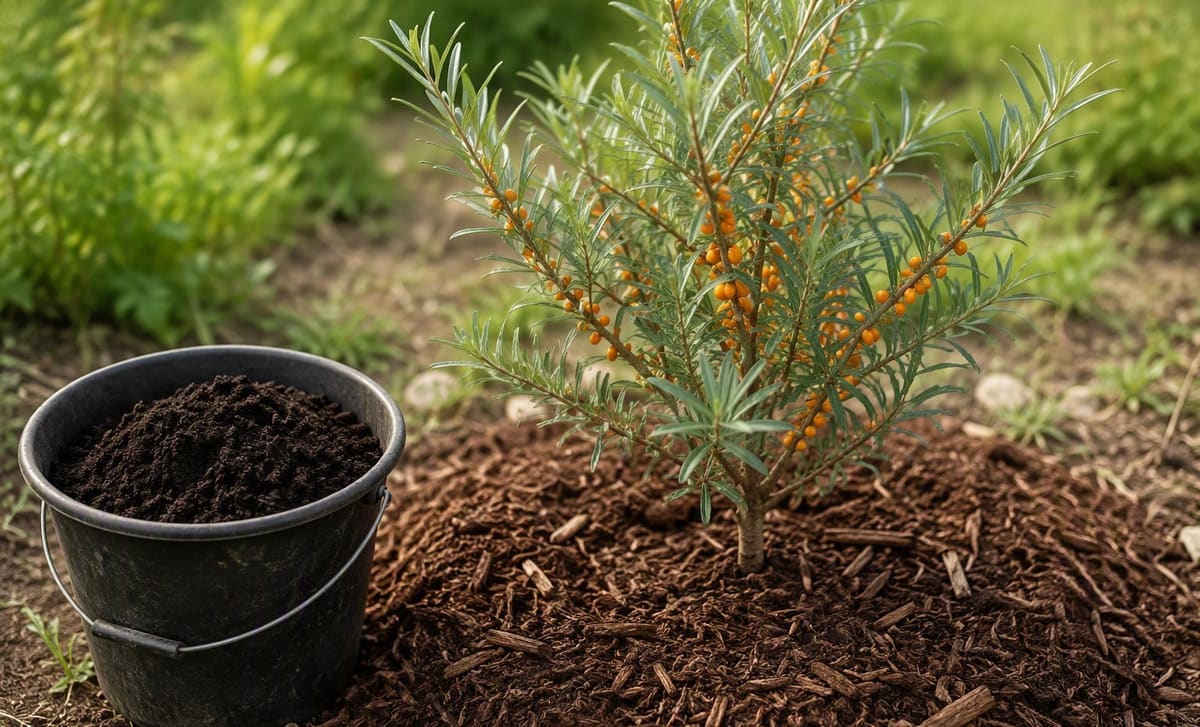
Sea buckthorn is one of the few fruiting shrubs you should underfeed on purpose. Its roots host bacteria that pull nitrogen from the air, so added nitrogen mostly grows leaves at the expense of berries. A thin compost mulch once a year is the entire feeding program for most gardens.
Why nitrogen backfires
Like peas and beans, sea buckthorn lives with nitrogen-fixing bacteria in its roots. The shrub feeds itself and even improves the soil around it, which the nitrogen-fixing page explains in detail. Dump high-nitrogen fertilizer on a plant that already makes its own and it responds the only way it knows: lush vegetative growth, soft wood, and disappointing fruit set. You end up with a beautiful green bush and a meager harvest.
What to actually give it
- Compost, thinly. A few centimeters around the base each spring, kept off the stems. That is usually enough for the year.
- Phosphorus and potassium on poor soil. These support roots, flowering, and fruit. On very sandy or stripped ground, a low-nitrogen blend (something like 5-10-10) at label rates fills the gap. The soil page helps you judge whether your ground qualifies as poor.
- Nothing at planting. Skip fertilizer in the planting hole. Compost is plenty while roots establish.
What overfeeding looks like
Dark, dense foliage. Long soft shoots. Few flowers and fewer berries. Soft growth also hardens off poorly going into winter, which matters in cold climates. If this sounds like your shrub, stop feeding entirely for a season. It will not starve. It will rebalance.
Established shrubs need almost nothing
A mature sea buckthorn in average soil asks for no feeding at all beyond the spring compost habit, and many growers skip even that. Spend the effort on pruning instead. Light reaches fruiting wood better when the canopy is open, and that does more for your harvest than any bag of fertilizer.
The growing hub links the full care calendar.
Test before you treat
A cheap soil test every few years beats a lifetime of guessing. The numbers that matter here are pH, comfortably tolerated from about 6 to 8, and phosphorus-potassium levels on sandy ground that has been cropped hard. If the test says adequate, believe it. Most garden centers and extension services offer basic tests, and the results pay for themselves the first time they talk you out of a bag you did not need.
Organic routes that work
- Compost, the standing recommendation. A few centimeters each spring feeds gently and mulches at once.
- Well-rotted manure, thin. Fine in moderation. Fresh manure is too hot and too nitrogen-rich for this shrub.
- Wood ash, with a caveat. Potash-rich and useful on acidic soils in small doses, but it pushes pH up, so skip it on ground that is already alkaline. The soil page covers the pH band.
- Leaf mold and mulch. Free, slow, and exactly the pace this plant prefers.
Containers are the exception
A pot has no soil food web, so container shrubs appreciate a little more: a spring top-up of compost plus a light, low-nitrogen slow-release feed at label rates. The containers page covers the rest of the potted balancing act.
What a well-fed shrub looks like
Moderate annual growth, firm wood that hardens before winter, open green foliage, and flowers you can find without searching. If your shrub pushes half a meter of soft shoot every season, it is not thriving. It is overfed, and the fix is a year of neglect. This is the one fruiting plant where restraint reads as skill.
Common feeding failures
- Lawn fertilizer drift. Granules meant for the grass land in the shrub’s root zone and you get a green fountain with no berries.
- Feeding at planting. Rich holes in heavy soil become sumps. Lean backfill is kinder.
- Fresh manure. Scorch, soft growth, and regret. Compost it a year first.
- Fixing yellow leaves with nitrogen. On wet ground, yellowing is usually drowning roots, not hunger. Check drainage before feeding anything.
The feeding calendar in one line
Spring compost, nothing in summer, nothing in autumn, nothing in winter. Late-season feeding is the one real mistake on the calendar, because soft growth pushed after midsummer hardens poorly before frost, as the winter care page warns. Everything else about feeding this shrub is the discipline of doing almost nothing on purpose.
Frequently asked questions
What is the best fertilizer for sea buckthorn?
Compost, and not much of it. Sea buckthorn pulls nitrogen from the air through its root bacteria, so high-nitrogen feeds push leaves instead of berries. A thin layer of compost each spring is usually the whole program. On very poor sandy soil, a low-nitrogen fertilizer with phosphorus and potassium can help.
Can I use manure on sea buckthorn?
Well-rotted manure, yes, spread thin in spring like compost. Fresh manure, no: it is too nitrogen-rich for a shrub that fixes its own, and it can scorch roots. If your soil is average, even rotted manure is optional, since the yearly compost mulch usually covers the whole feeding program.