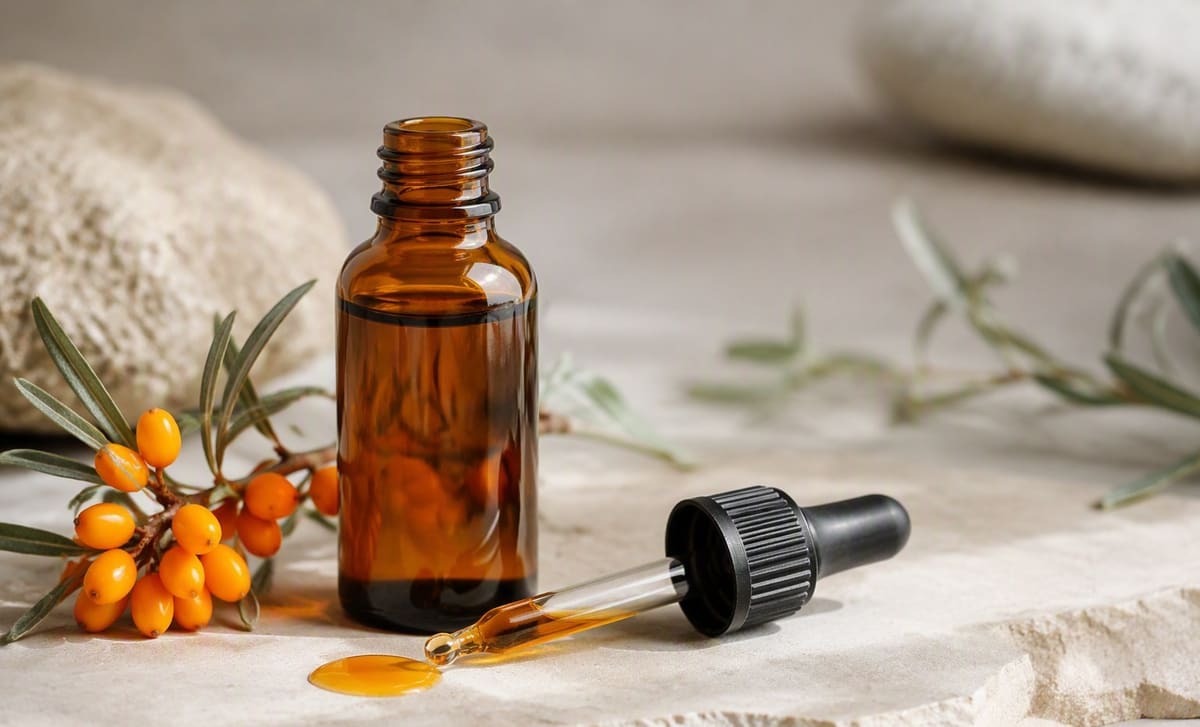
The best sea buckthorn face oil for most people is a pure, organic seed oil: light, pale, and very unlikely to clog pores. SIBU’s is our top verified pick, and The Ordinary’s fruit oil is the budget route for night-cream mixing. Choose the oil type by your skin type first, the brand second.
Prices and availability checked July 2026. Research-based reviews per our editorial policy: scores come from verified label data and certifications, not lab tests.
The picks at a glance
| Product | Best for | Oil type | Our score |
|---|---|---|---|
| SIBU Organic Sea Berry Seed Oil | Most faces, daily use | Pure seed oil | 8.5 |
| The Ordinary Sea Buckthorn Fruit Oil | Budget night mixing | Pure berry oil | 7.9 |
| SeabuckWonders Facial Oil (berry-seed blend) | Balanced pick | Blend | 7.7 |
1. SIBU Organic Sea Berry Seed Oil: best for most faces
SIBU Organic Sea Berry Seed Oil, 30 ml
Best overallWhy it wins. Certified organic, CO2-extracted, single-ingredient seed oil from the most documented sourcing in this market. Pale enough for daytime, light enough for oily skin, and zero tint risk.
What we do not love. You pay for the pedigree, and 30 ml goes quickly if you also use it on your neck.
We may earn a commission at no cost to you.
2. The Ordinary Sea Buckthorn Fruit Oil: budget night pick
The Ordinary 100% Organic Cold-Pressed Sea Buckthorn Fruit Oil
Budget pickWhy it made the list. Pure organic berry oil at a fraction of premium pricing. Mixed one or two drops into night cream, it delivers the carotenoid treatment cheaply.
What we do not love. Straight application tints fair skin orange, and cold pressing preserves less than CO2 extraction. Night use only, mixed, per our face oil guide.
We may earn a commission at no cost to you.
3. SeabuckWonders blend: the balanced pick
A berry-seed blend splits the difference: some omega-7 and carotenoids, less tint than pure berry oil. A reasonable single-bottle answer for normal skin, though we prefer the purity of the two picks above for type-matched routines.
Read the label like a formulator
The single most important line on a face oil is the ingredient list, not the front panel. A single-ingredient oil means every drop is what you paid for. A blend means you are buying whatever sits first on the list, and if sunflower or jojoba leads and sea buckthorn sits fifth, you are buying those oils with a sea buckthorn perfume. Blends can be fine products. They should cost like blends.
Two more lines worth checking. First, the oil type: “fruit oil” or “berry oil” means the omega-7 and carotenoid oil, “seed oil” means the lighter omega-3 and 6 oil, and the seed vs berry breakdown explains why that choice belongs to your skin type. Second, the extras: added fragrance and essential oils are the most common reason a face oil irritates, and a short ingredient list is the sensitive-skin feature nobody markets.
The orange-face math, precisely
The tint is carotenoids, the same pigments that make the oil worth buying, as the oil nutrition page details. Managing the color is a dilution problem, and the numbers are friendly. One drop is about 0.05 ml. Two drops mixed into a pea-sized amount of night cream is a roughly 1 in 10 dilution, which most fair skin tolerates without visible color by morning. Four drops straight onto bare skin at 8 am is how the orange-face stories happen.
The protocol that avoids every story: patch test on your inner arm and wait 24 hours, start at one or two drops mixed into cream, keep it a night product for the first two weeks, and wash your hands after applying. If your skin is very fair and very dry, the tint fades within hours, and it always washes off.
What face oil cannot do
An oil seals. It does not hydrate. Water is what hydrates skin, and oil’s job is slowing the escape of water that is already there, which is why a drop over damp skin or mixed into cream outperforms the same drop on a bone-dry face. Very dry skin often needs a humectant cream underneath and the oil on top, not oil alone. And no cosmetic oil treats a medical skin condition: eczema, rosacea, and persistent dermatitis belong to a clinician, with oil as comfort support at most.
Who should skip face oil entirely
Honest disqualifiers, because refunds are annoying for everyone. Skip this category if your main concern is an active acne flare: that is a treatment conversation for a dermatologist, and the acne page grades what evidence exists. Skip it if your skin hates occlusive layers, because even light seed oil is still an oil. Skip it if you will not patch test, because the one person in a hundred who reacts finds out the cheap way or the hard way. And skip it for broken or freshly peeled skin, where nothing new belongs until the barrier is back.
Common face-oil mistakes
- Daytime berry oil, straight. The tint is manageable at night and unmissable at noon. Berry oil is a night product for fair skin.
- More drops, expecting more effect. Past two or three drops you are adding color and grease, not results. The skin absorbs what it absorbs.
- Mixing into sunscreen. Diluting your SPF changes its protection. Keep the oil in the night cream and leave the day cream alone.
- Judging at day ten. Skin turnover runs in weeks. Give a new oil a month before scoring it, and take a baseline photo so the comparison is honest.
The 60-second decision path
- Oily, combination, or acne-prone skin: pure seed oil. Our top pick above, a few drops at night.
- Dry or mature skin: berry oil mixed into night cream, The Ordinary bottle if budget matters, premium if sourcing paperwork matters.
- Sensitive or reactive skin: whichever you choose, single-ingredient, no fragrance, patch test first.
- Want a full routine rather than one bottle: the skincare guide scores the systems.
Storage: bathroom shelves kill face oils
A face oil lives or dies by heat, light, and steam, and the average bathroom windowsill offers all three. The unsaturated fatty acids and carotenoids you paid for oxidize fastest in exactly those conditions. Store the bottle in a cabinet or a drawer, cap tight, away from the shower’s steam. A 30 ml bottle used in drops lasts months, so treat the six-month mark after opening as the freshness horizon, not the printed best-by date. If the oil starts smelling like crayons or old paint, it is oxidized, and oxidized oil on your face is worse than no oil. The dry skin evidence page covers what the research says once you have a fresh bottle and a working routine.
Match the oil to your face, not the hype
- Oily or acne-prone: seed oil only. See the acne page for the reasoning.
- Dry or mature: berry oil at night, mixed into cream.
- Unsure: start with seed oil, patch test, and read the technique page before your first drop.
Frequently asked questions
What is the best sea buckthorn oil for your face?
For most faces, a pure seed oil (light, pale, low clogging risk), with SIBU's organic seed oil as our top verified pick. The Ordinary's fruit oil is the budget choice for mixing into night cream. Match oil type to skin type before brand: seed for oily or acne-prone, berry for dry skin at night.
How long does a 30 ml face oil last?
At 2 to 4 drops per use once daily, roughly four to eight months, because a drop is a small fraction of a milliliter. That comfortably outlasts the post-opening freshness window, which is one more reason to dose in drops and store the bottle well.