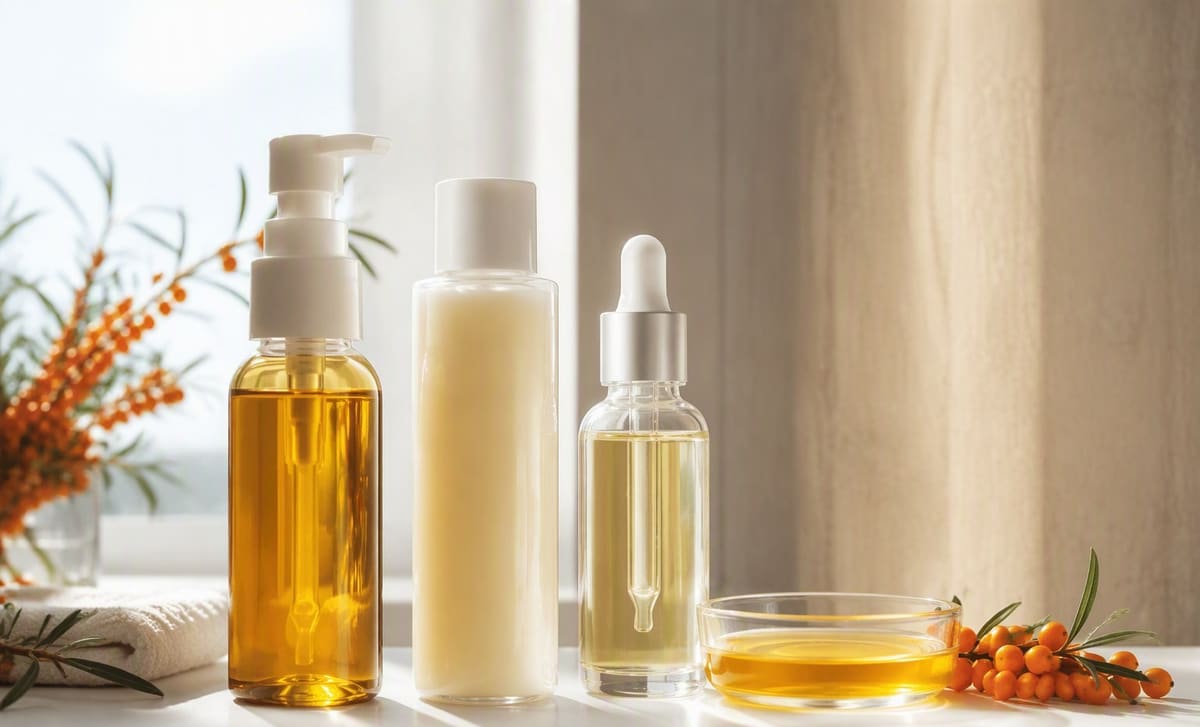
A sensible sea buckthorn skincare routine is short: gentle cleanse, the right oil at the right time of day, sunscreen every morning, and patience measured in weeks. Berry oil at night, seed oil whenever, everything patch tested, and one new product at a time so you can tell what is working.
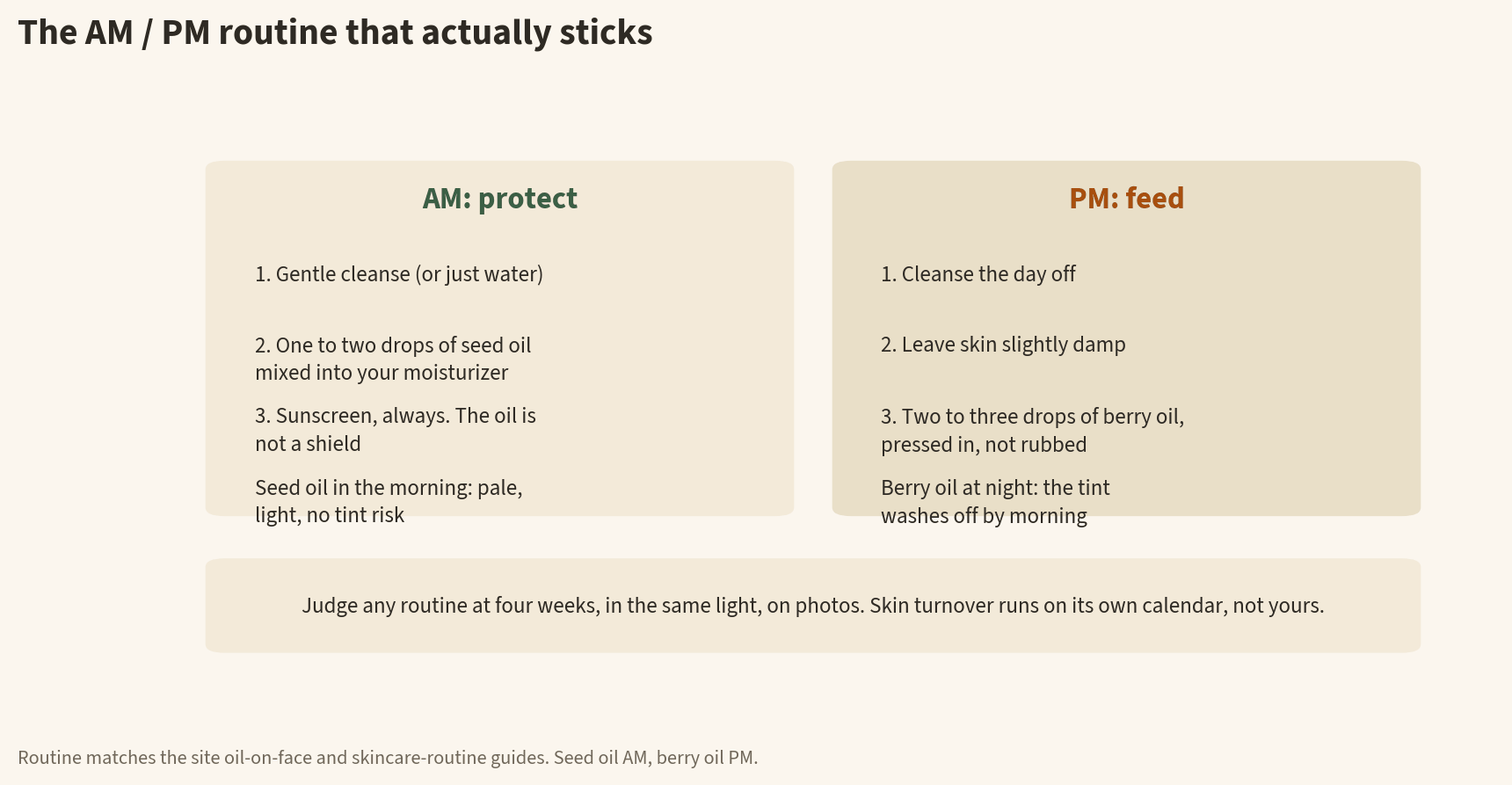
Morning
- Cleanse gently. Lukewarm water and a mild cleanser. Stripped skin wastes whatever you put on next.
- Optional light oil. A few drops of pale seed oil, or one drop of berry oil diluted into your moisturizer. Well-diluted means no visible tint by the time you leave the house. The dilution guide has the ratios.
- Sunscreen, non-negotiable. Every morning, rain or shine. No oil routine outruns unprotected sun, and this is the step with the deepest evidence in all of skincare.
Evening
- Cleanse. Sunscreen and the day come off before anything goes on.
- Apply the treatment oil. Berry oil or a blend as the last step, a few drops pressed into damp skin, or the mixer method from the face routine page.
- Mind the pillowcase. Berry oil tints fabric. An old pillowcase or a dark one saves the good linen.
Weekly
Once a week, an oil pre-wash hair treatment: a few drops of seed oil on the scalp, berry oil on the lengths if your hair is dark, thirty minutes, then shampoo. The hair hub has the full technique and the honest note that conditioning is proven and regrowth is not.
The inside-out pairing
The skin trials that made sea buckthorn famous dosed the oil by mouth, 1 to 2 grams a day over twelve weeks, and measured hydration and elasticity gains from the inside. A topical routine treats the surface. Doing both is the closest match to the evidence, and the studied oral forms are scored in the skin buying guide with doses on the how much per day page.
The three rules that make any routine work
- One change at a time. Introduce a single new product and give it two weeks before the next. Otherwise you are guessing which one helped, or which one your skin hates.
- Patch test everything new on your inner arm first, oil or cream, cheap or premium.
- Judge at twelve weeks, because that is when the trials measured. The skin hub shows what a realistic result looks like at that mark.
If you take blood thinners or are pregnant or nursing, the oral half of this routine needs a conversation with your doctor first, per the safety notes.
Adjusting by skin type
The skeleton above fits everyone, but the oil choice flexes. Oily skin runs seed oil only, a few nights a week. Dry skin runs the nightly berry-oil mixer year-round. Combination skin splits the map: seed across the T-zone, mixer on the cheeks. Sensitive skin extends every patch test to a week and adds one product per month, not per week.
If you use retinol or acids
Strong actives and new oils each deserve their own evenings at first. Alternate nights for a month: retinol or acid one night, sea buckthorn the next. Skin that stays calm through the month can combine them, oil always last. Skin that stings has given you the schedule for free.
Seasonal tuning
Winter is berry-oil season: drier air, central heating, and skin that drinks the richer blend. Summer often calls for seed oil alone, lighter layers, and strict sunscreen discipline, because the sunny months are exactly when unprotected skin undoes everything else. The routine’s skeleton never changes. Only the oil weight does.
The budget version
Strip it to three items and nothing is lost: a gentle cleanser, one bottle of seed oil, and a morning sunscreen. That trio outperforms a shelf of half-used serums, and it costs less than most single hero products. Add the berry-oil mixer later if your skin votes for more. The cleansing page covers the optional evening first step for sunscreen-heavy days.
The one-product rule, stated plainly
Every product in this routine earned its place by doing one job. Anything new you add should pass the same test: one job, two weeks alone, then a verdict.
The pregnancy note
Topical sea buckthorn oil is a low-risk category, but the oral half of this routine is a supplement, and supplements in pregnancy and nursing belong in front of your clinician first. The pregnancy page maps the evidence gap honestly, and the topical routine alone carries you through the wait.
The travel version
The routine compresses to a carry-on: seed oil doubles as cleanser and moisturizer, sunscreen stays non-negotiable, and the berry oil can hold at home for a week without the experiment collapsing. Consistency over months beats perfection over days, and the pillowcase problem, notably, stays at the hotel. Home routines resume where they left off, no reset required.
Frequently asked questions
Should I use sea buckthorn oil in the morning or at night?
Night for the berry oil, because the deep orange carotenoids can tint skin and fabric. Morning works for the pale seed oil or for a well-diluted drop mixed into moisturizer. Either way, sunscreen in the morning is the step that protects everything else you do.
Can I take sea buckthorn orally and use it on my skin?
Yes, and that inside-out pairing is closest to what the research did: the skin trials dosed oral oil, and one compared it against a topical arm. Oral oil at studied doses plus a simple topical routine is the evidence-aligned combination.