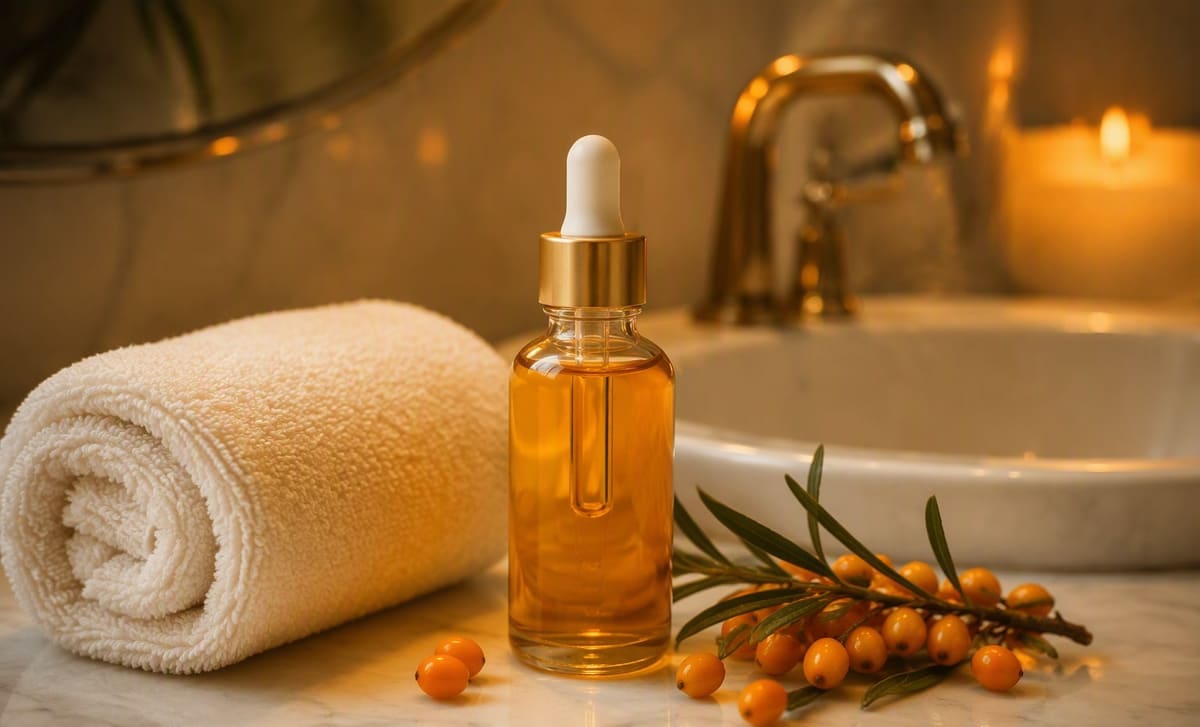
Oil cleansing with sea buckthorn works the way all oil cleansing does: massage a few drops into dry skin to dissolve sunscreen, makeup, and sebum, then remove everything with a warm damp cloth. Use pale seed oil for the face, or berry oil diluted well down. Skip the method entirely during an active acne flare.
The method
Oil cleansing is one of the simplest routines in the how-to-use hub, and it comes down to four steps:
- Start dry. Oil and dry skin mix. Oil and wet skin slide. Pump or pour a few drops into your palm.
- Massage for a minute. Fingertips, small circles, including the hairline and jaw where sunscreen hides. This is the whole active step.
- Warm cloth removal. Soak a washcloth in warm water, wring it out, press it to your face for a few seconds, then wipe gently. Repeat once. The cloth, not scrubbing, does the removal.
- Optional second cleanse. If you wear heavy makeup or simply like the squeak, follow with your normal gentle cleanser. Most evenings, the cloth is enough.
Which oil
Seed oil is the facial choice: pale, light, and rich in omega-3 and 6, with no tint risk. Our top pick for the best sea buckthorn face oil is a pure organic seed oil for exactly that reason. Berry oil is the potent orange one. If you want it in the routine, dilute it first, per the ratios on the dilution page, and keep it off pillowcases. The seed vs berry breakdown settles the underlying differences.
Who should skip it
During an active acne flare, rubbing oil into inflamed skin is the wrong move, full stop. The acne page has the honest version of what helps there. Broken or freshly irritated skin is also a wait. Everyone else: patch test on the inner arm for a few days first, because “natural oil” and “agrees with your skin” are different claims. Nobody has lab-tested sea buckthorn’s comedogenic rating, and anyone quoting you a number is repeating lore.
Why oil removes anything at all
Sunscreen, makeup, and sebum are oil-based, and oil dissolves oil. That is the entire mechanism, the same one behind every cleansing balm and oil cleanser on the market. A sea buckthorn oil cleanse adds the berry’s fatty acids to the job, but it does not add magic: the technique decides whether skin ends up clean or greasy.
The amounts, precisely
Three to four drops of seed oil covers a face. More oil does not clean more, it just takes longer to remove. Sixty seconds of massage is the active step, and the warm cloth does the actual removal, so the sequence is massage, press, wipe, never massage-and-hope. One cloth pass handles light days. Sunscreen days earn the repeat press and wipe from step three.
By skin type
- Dry skin. The method’s natural home. Nightly is fine, and many people find the second cleanser unnecessary.
- Oily skin. Counterintuitive but workable: two to three evenings a week, always followed by the second gentle cleanse, and stop if congestion builds.
- Combination. Oil cleanse the dry zones, cloth over everything, second cleanse only where the day was heavy.
- Sensitive. Patch test for a week first, per the allergy page, and keep the massage pressure feather-light.
Troubleshooting
- Breakouts in the first fortnight. Stop, return to your previous cleanser, and retry later at twice weekly if you want. Your skin’s vote outranks the method.
- A film that will not leave. Too much oil or a lukewarm cloth. Three drops, properly warm cloth, then the second cleanse.
- Stubborn eye makeup. Use a dedicated remover first. Cleansing oils handle faces, not waterproof mascara.
- Orange towel. You used berry oil. Seed oil next time, and the laundry lesson is free.
The double-cleanse question
Oil-then-foam is popular doctrine, but the second cleanse is optional equipment. Wear heavy sunscreen or makeup daily: keep it. Skin runs dry and bare-faced: the cloth alone often suffices, and over-cleansing strips more than it solves. Let the evening’s actual grime decide.
Where it sits in the routine
Evenings, as the first and possibly only cleanse, before any treatment steps. The face routine page picks up from a clean face with the two ways to leave oil on rather than take it off, which is the other half of the story.
The cloth matters more than the oil
Every oil-cleansing failure traces to the removal step, and the tool is a plain washcloth. Microfiber grabs sunscreen better than cotton, warm means comfortably hot to the wrist, and the cloth goes in the wash after each use, because yesterday’s sunscreen is not part of tonight’s routine. Two cloths in rotation solve the whole logistics problem for the price of a coffee.
What this method is not
Oil cleansing is not a treatment, a detox, or a cure for anything. It is a thorough, gentle way to remove the day, and its evidence base is mechanical rather than clinical. Skin that looks better afterward owes the improvement to being properly clean and not stripped, which is real but modest, the two words that describe most of skincare that actually works.
Frequently asked questions
Will oil cleansing with sea buckthorn clog my pores?
There is no lab-tested comedogenic rating for sea buckthorn oil, so nobody can promise either way. Seed oil is the lighter, lower-risk choice for faces. Patch test for a few days, start with two evenings a week, and stop if you break out.
How often should I oil cleanse?
Evenings, and only then. Dry skin can handle nightly use, oily skin does better at two or three evenings a week followed by a second gentle cleanse. Morning oil cleansing is unnecessary for almost everyone, since overnight skin carries little that a warm cloth or mild cleanser cannot remove.