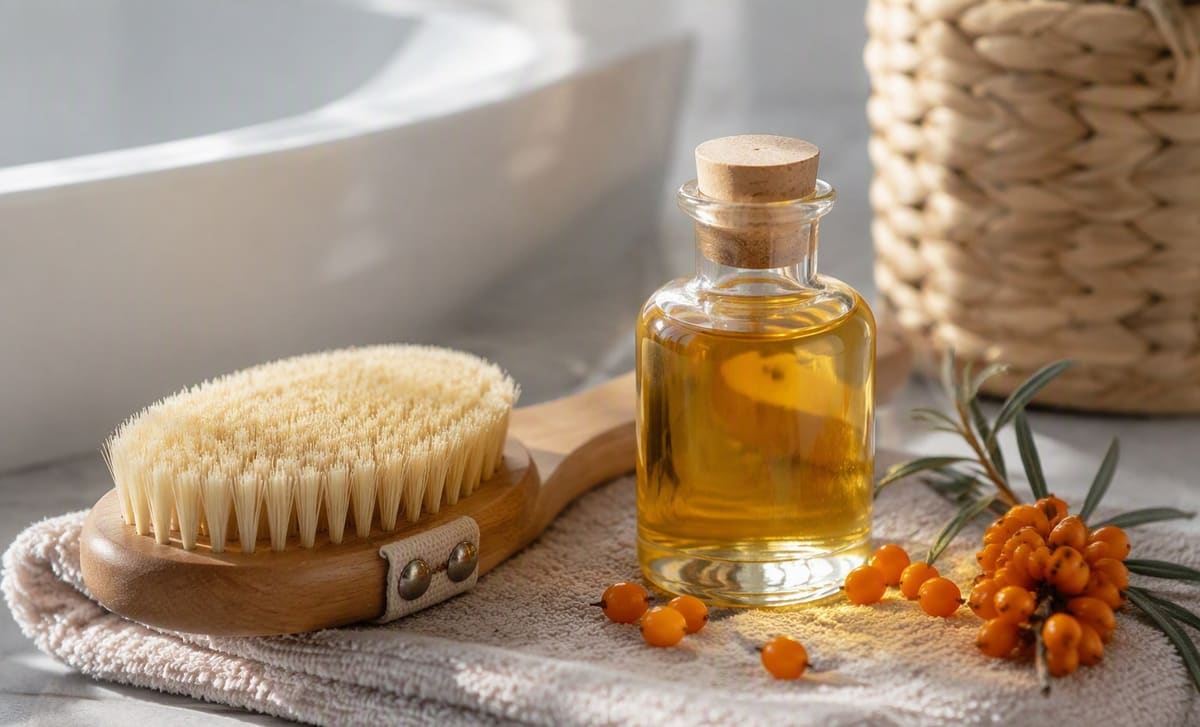
Cellulite is structural, and no cream changes that. Fat lobules press against connective bands under the skin, which is why most women have some dimpling no matter their weight or fitness. An oil massage can make the area look smoother for a few hours. That’s the whole honest story, and anyone selling a cellulite oil is selling the few hours.
The part under the skin that no bottle reaches
Here’s the actual architecture. Fat sits in chambers walled by fibrous bands that anchor the skin to the tissue below. Where a band pulls down and the fat pushes up, the surface dimples. Genetics, hormones, and skin thickness set that layout years ago. Nothing in a jar talks to it.
That’s worth sitting with for a second, because it explains an embarrassing fact: the cellulite cream industry has run for decades without producing a single product that works. Not one. Sea buckthorn was never going to be the exception, and no trial has pretended otherwise. The skin hub grades the claims that do have something behind them.
What an oil massage genuinely does
So why do people swear by it? Because three real things happen:
- Temporary plumping. Hydrated skin looks smoother for hours. Real, brief, repeatable.
- The massage itself. Kneading shifts fluid and wakes up surface circulation. The dimpled look softens for the evening. Not the month.
- The ritual. Five minutes of daily self-massage with an oil that smells good changes how you feel about the body in question. That’s worth something. It’s priced honestly at the cost of the oil.
If you’re doing this, buy the pale seed oil. It’s lighter and cheaper per millilitre than the berry oil, and the berry’s orange pigment adds nothing your thighs asked for.
Where the claim even comes from
Cellulite marketing runs on two ideas that sound scientific and aren’t. The first is circulation. Massage boosts blood flow, so blood flow must melt fat, right? Surface circulation does rise. It never reaches the fat chambers underneath. The second is toxins, a word with no medical content, supposedly trapped in the tissue and rubbed free. Cellulite fat contains nothing that ordinary fat doesn’t.
Sea buckthorn gets pulled into this story the way every pleasant oil does: as a premium-feeling vehicle for a claim the vehicle can’t carry.
Why the before-and-after photos look convincing
Every cellulite-oil ad leans on the same trick. Different light, different posture, a freshly massaged thigh next to an untouched one. The “after” photo is real, for an evening, because massage plumps and warms the skin. What you never see is the six-month follow-up. Nothing in the photo survives that long.
Sea buckthorn oil in one of those ads isn’t a worse product. It’s a nicer oil being asked to star in the same honest-for-hours show.
What sea buckthorn could and couldn’t do here
Could: moisturize the skin over the area, which is real and changes how the surface looks for hours. Make a good massage medium, which the seed oil does well at a fair price.
Couldn’t: alter the fat chambers, the fibrous bands, or the architecture that creates the dimples. The sea buckthorn skin trials measured hydration and elasticity on faces and forearms. Not structure on thighs. The skin studies page shows what was actually measured.
If you enjoy the ritual, here’s the sensible version
- Use the pale seed oil: lighter, cheaper, and free of the berry oil’s orange tint.
- After a shower, on damp skin, five minutes of firm massage per area, a few evenings a week.
- Take a photo in the same light on day one. Judge at four weeks, and expect softer skin, not remapped architecture.
- Stop if the friction irritates, and skip broken or inflamed skin.
The oil buying guide scores bottles for exactly this kind of general use.
Mistakes worth skipping
- Buying a “cellulite blend” at treatment prices. The massage does the temporary work. The cheapest pleasant oil matches the expensive one.
- Expecting the morning after to look different. Plumping lasts hours. Only consistency keeps it repeating.
- Letting the ritual replace the real lever. More on that below.
What actually changes cellulite
Strength training. It changes what sits under the skin more than any cream ever will, and it works on the six-month row rather than the evening row. Dermatology offers procedures with real data for people who want more than that.
And the kindest fact in this whole file: cellulite is normal anatomy on most bodies, not a defect that requires a purchase. If you want body skincare with an honest footing, the dry skin page shows the measured lane.
Frequently asked questions
Does sea buckthorn oil reduce cellulite?
No, and no topical product does. Cellulite is structural: fat lobules pushing against connective bands under the skin, and most women have some regardless of fitness. Oil massage can change how skin looks for a few hours through plumping and circulation. Anyone selling a cellulite oil is selling hope, not change.
Is dry brushing or oil massage better for cellulite?
Neither changes cellulite, because cellulite is structural. The massage itself is the active ingredient in both rituals: it shifts fluid and boosts surface circulation for a few hours. Oil is the lubricant that makes the massage pleasant. If you enjoy one of them, keep it for the ritual and the temporary smoothing, and let strength training do the slow real work.