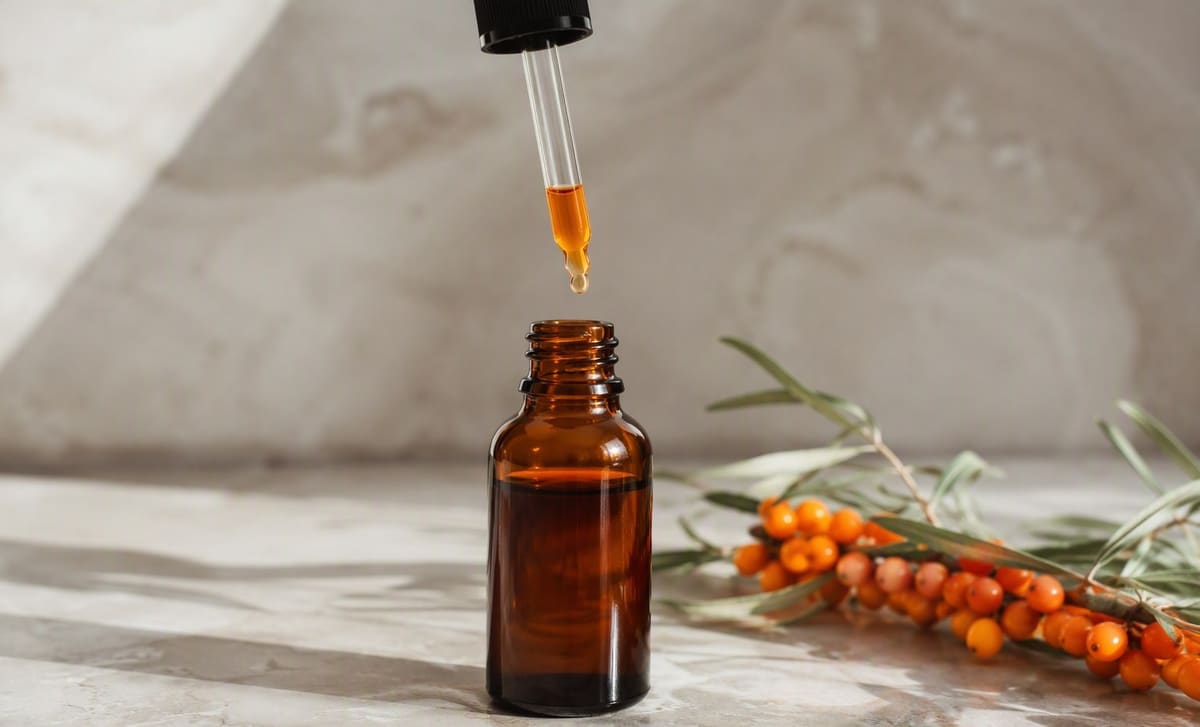
Premium sea buckthorn is worth the money when the higher price buys things you can verify: named species and plant part, CO2 or cold-pressed extraction, printed fatty-acid numbers, and organic certification from a real certifier. It is not worth it when the premium buys packaging and adjectives. Below are the three products where the extra money shows up on the label, not just the shelf.
Prices checked against retailer listings in July 2026. Confirm at checkout. Research-based reviews: scores come from verified label data and certifications per our editorial policy.
When the premium pays
Four things legitimately cost more.
- Verified sourcing. Species and origin on the label, with a supply chain the brand will describe. Documentation costs money and is worth it.
- A stated extraction method. Supercritical CO2 extraction is expensive, and it is what the better research used. The extraction comparison explains what each method does to the oil.
- Printed fatty-acid numbers. A berry oil that states its omega-7 percentage lets you verify the claim instead of trusting it. Published analyses put berry oil’s palmitoleic acid in a wide band, so a brand printing a number is telling you its batch testing exists.
- Real certification. Organic with a named certifier, not a green leaf icon. The organic guide shows how to check a claim in thirty seconds.
When the premium is packaging
Frosted glass, dropper theatrics, “ancient remedy” copy, and a price per milliliter with no data behind it. Wild-crafted language that no one can verify. The checks in our fake-oil guide apply at every price point, and expensive oil fails them just as often as cheap oil.
The picks at a glance
| Product | Best for | Why it earns the price | Cost per day* | Our score |
|---|---|---|---|---|
| SIBU Sea Berry Oil (52 ml) | Premium liquid | Organic, documented sourcing, deep berry oil | about $0.60 | 9.1 |
| SeabuckWonders Omega-7 Complete (120 ct) | Premium softgel | 800/200 blend, printed omega-7 numbers | $0.75 | 9.0 |
| Weleda Sea Buckthorn Body Oil | Premium body care | The category's classic leave-on formula | varies by use | 8.3 |
1. SIBU Sea Berry Oil: premium liquid pick
SIBU Sea Berry Oil, 52 ml
Premium liquid pickWhy it earns the premium. Certified organic, the most documented sourcing story in this market, and a deep orange berry oil that looks and smells like the real thing. This is the trial-style product with the paperwork attached, and our oil guide scores it highest overall.
What we do not love. The price per milliliter sits well above commodity oils, and the dropper bottle will stain your counter at least once.
Best for: anyone who wants liquid berry oil and wants the sourcing verified rather than asserted.
We may earn a commission at no cost to you.
2. SeabuckWonders Omega-7 Complete: premium softgel pick
SeabuckWonders Omega-7 Complete, 120 softgels
Premium softgel pickWhy it earns the premium. The supplement facts panel reads the way every label should: 800 mg organic berry oil at 32 to 38% palmitoleic acid plus 200 mg organic seed oil per serving, supercritical CO2 extracted. It is premium in verification while staying mid-range in price, which is the best combination in this guide.
What we do not love. Beef-gelatin softgels rule out vegans, and 2 softgels a day is 1 gram of oil, below the 2 grams used in the dry-eye trial. Matching the studies means 4 softgels.
We may earn a commission at no cost to you.
3. Weleda Sea Buckthorn Body Oil: premium body care
Weleda Sea Buckthorn Body Oil
Premium body careWhy it earns the premium. The elder statesman of the category: a leave-on body oil where the berry’s carotenoids actually get hours of skin contact, from a brand that built its name on this plant decades before the current wave. Leave-on is where topical sea buckthorn has its best case, per the skincare guide.
What we do not love. The fragrance blend will not suit scent-sensitive buyers, and daily full-body use makes the bottle empty fast.
We may earn a commission at no cost to you.
The premium cost map
Premium pricing only makes sense against the studied window, so here is the 12-week math from the verified prices on this page. The SIBU liquid covers 84 days at 1 ml daily for about $50. The SeabuckWonders softgels run about $63 at 2 a day and about $126 at the full 4-a-day trial dose. Both are premium in verification while sitting mid-range in price, which is the point of this guide. The caution runs the other way: a premium bottle taken at half the studied dose costs more per studied day than a mid-range bottle taken properly. Dose discipline is the cheapest premium feature there is.
Premium buying mistakes
- Paying for the vessel. Frosted glass, heavy droppers, and box inserts cost money that never enters the oil. The how to choose checklist checks what is inside.
- Falling for origin romance. “Himalayan” and “Tibetan” are only meaningful next to a species line and a certifier. Without them, they are adjectives.
- Luxury creams with sea buckthorn at position eight. Ingredient lists are ordered by amount. A $90 cream whose hero sits behind seven other ingredients is a $90 moisturizer with a story.
- Assuming expensive means enough. Dose is grams per day, not dollars per bottle. The premium label should make the grams easier to hit, not just prettier.
The 60-second decision path
- Verify the four label lines first: species, plant part, extraction, printed numbers. Fail one and the price is decoration.
- Match the form to the habit: liquid for the kitchen counter, softgels for everyone else.
- Check the per-day cost, not the sticker: the map above, or the price guide for the wider field.
- Still unsure between two verified bottles: buy the smaller one first. Premium rewards patience.
Storage: protecting a premium bottle
Premium oil is not sturdier oil. Unrefined, carefully extracted oil is often more fragile, because nothing was stripped or hardened in processing. Fridge after opening for liquids, cap tight, dropper wiped clean so skin oils do not travel back into the bottle. Softgels get a cool, dry cabinet, never a bathroom. Buy the smallest bottle that covers two to three months of use, because the best-by date assumes an unopened bottle, and your nose is the final auditor: crayon smell means the premium is over. The fatty acid profile page shows the fragile fats the storage rules are protecting.
Who should skip premium
First-timers still testing tolerance should start mid-range. Culinary users need no supplement-grade paperwork at all. And anyone buying mainly for the story should run the numbers in our price guide first: the budget picks reach study-level doses for a fraction of the premium shelf.
If you take blood thinners, read our safety notes before starting any oral oil, premium or not. High-dose berry oil has a mild antiplatelet signal.
Frequently asked questions
Is expensive sea buckthorn worth it?
When the premium buys verifiable things, yes: named species and plant part, a stated extraction method, printed fatty-acid numbers, and organic certification from a real certifier. When it buys frosted glass and adjectives, no. The label either shows the data or it does not, and price is not the proof.
What should a premium sea buckthorn label show?
Four things: the species (Hippophae rhamnoides), the plant part (berry oil vs seed oil), the extraction method (CO2 or cold-pressed), and the omega-7 percentage for berry oil. A premium bottle missing any of these is charging for packaging.
Does a higher price mean higher omega-7?
Not by itself. Berry oil's palmitoleic acid varies by subspecies and batch across a wide band, and only a printed percentage on the label tells you where a bottle lands. A high price without that number is packaging.