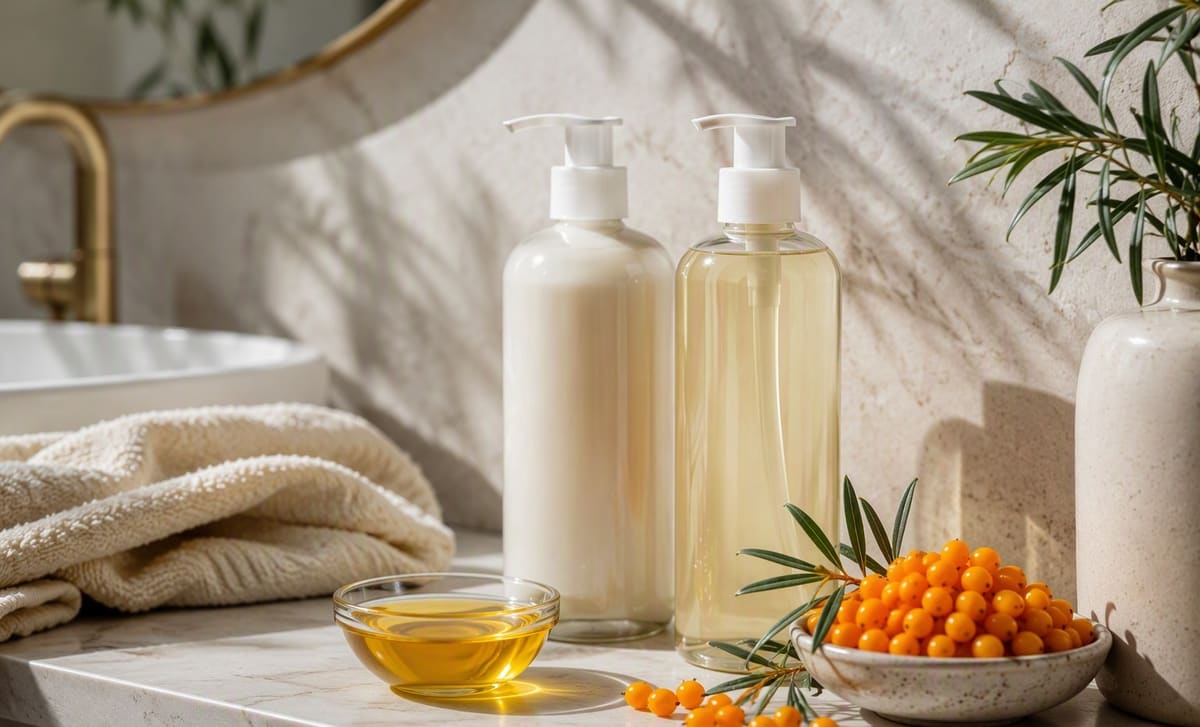
Sea buckthorn shampoo is a fine idea with a physics problem: shampoo touches your hair for a minute or two before rinsing away, and that is too short for most actives to do much. The oil in a wash-off formula contributes feel and a good label story more than measurable results. Buy these products for the base formula, not the berry.
The rinse-off reality
Leave-on products earn their actives time to work. Rinse-off products do not. Conditioners and masks sit for minutes and leave residue by design, so oils in them can genuinely smooth the cuticle. Shampoo’s job is removal, and contact time is the whole game. This is not a sea buckthorn failing, it is how wash-off chemistry works for every hero ingredient ever printed on a bottle.
What the oil contributes in a wash-off formula
Mostly two things. Sensorial feel, because fatty oils soften the squeaky finish of cleansing. And marketing, because “with sea buckthorn” sells. Some carotenoid tint can deposit on very light hair with heavy use of berry-oil formulas, which is a reason to check whether a product uses seed oil or pulp oil.
How to choose one anyway
- Base first. A gentle, sulfate-free shampoo suits more scalps than any active can rescue. Harsh cleanser plus fancy oil still equals harsh cleanser.
- Read the INCI position. Ingredients list by concentration. If Hippophae rhamnoides oil sits in the last few lines beside the fragrance, the dose is a garnish.
- Conditioner carries more promise. Rinse-out conditioner with the oil higher in the list has real contact time to smooth and shine.
- Category examples. The Weleda sea buckthorn line and SIBU’s hair care are the established names here, both covered in our Weleda review and SIBU review. Check current price before buying either, and judge them by base formula first.
Who should skip the category entirely
If your scalp is healthy and your current shampoo works, nothing on a sea buckthorn label will transform your hair, because transformation is not what wash-off products do. Save the money for a good oil bottle instead. And if your real problem is shedding or thinning, no shampoo of any ingredient is the answer, as the hair loss page explains plainly.
The better-value route
A plain gentle shampoo you already like, plus your own bottle of seed oil for the pre-wash ritual, delivers more actual oil contact than any shampoo can, usually for less money. The skincare guide covers suitable oil bottles, and the hair hub keeps the rest of the category honest.
The INCI list, read properly
Ingredients list by concentration, so position is dose. Look for the oil by its Latin name, Hippophae rhamnoides, and note two things: where it sits, and which oil is named. Seed oil and fruit (berry) oil can appear as separate entries, and the fruit oil is the one with the tint question for light hair. An oil sitting beside the fragrance at the end of the list is a garnish with a good story.
Conditioner and masks, where actives get time
Rinse-out conditioner sits for minutes and leaves residue by design, so an oil high in its INCI list has real contact time to smooth the cuticle. Masks stretch the contact further, and leave-in products stretch it to the next wash. If you want sea buckthorn to do something measurable in a commercial formula, the leave-on end of the aisle is where the physics allows it.
The price-per-wash math
A few drops of your own oil in a gentle shampoo you already like costs pennies per wash and puts the oil exactly where you want it. A sea buckthorn shampoo spreads a small dose across every wash at a premium price. Neither is wrong. One of them is arithmetic you control, and the oil buying guide covers the bottles for it, with the seed vs berry page settling which oil to buy for hair.
Who these products are actually for
People who enjoy the ritual and the label, gift buyers, and anyone whose base-formula search happens to end on a sea buckthorn bottle. Those are legitimate reasons to buy. The illegitimate one is expecting wash-off actives to change hair growth or density, because no rinse-off product from any brand has human evidence for that.
The fragrance question
A sea buckthorn shampoo that smells like sea buckthorn is telling you about its fragrance, not its oil content. The INCI list separates the two: the oil appears as Hippophae rhamnoides, the scent as parfum or fragrance. Buy the list, not the smell.
Trying before committing
If a sea buckthorn hair formula tempts you, the conditioner or mask is the smart first buy, because that is where contact time lets the oil work. A trial size or travel bottle answers the base-formula question for a few dollars before the full-size commitment.
Frequently asked questions
Does sea buckthorn shampoo work?
As a shampoo, yes; as a sea buckthorn treatment, mostly no. Shampoo rinses off in a minute or two, far too short for most actives to do anything meaningful, so the oil contributes feel and marketing more than measurable results. Buy it if the base formula suits your hair, not for the berry on the label.
Is sea buckthorn conditioner better than the shampoo?
For the oil itself, yes, because contact time is the whole game. A rinse-out conditioner sits on hair for minutes and leaves residue by design, so the oil in it can genuinely smooth the cuticle. Shampoo rinses in a minute or two. Judge either by base formula first and the berry second.