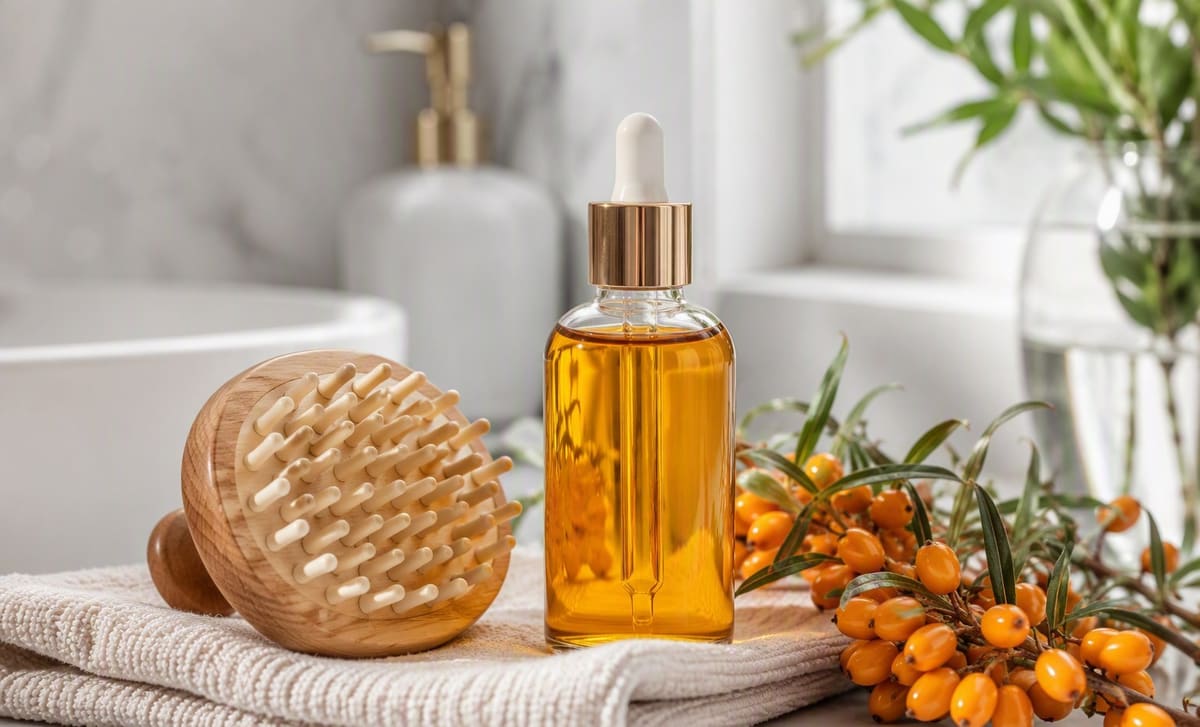
Your scalp is skin with hair in it, and skin rules apply. Sea buckthorn oil’s fatty acids are barrier lipids, so a pre-wash scalp massage can soften scale and calm tightness the way it does anywhere else. No scalp-specific trial exists, which keeps the honest claim at comfort. Flakes with itch or redness belong to medicated care.
The rationale, stated to its limit
Your skin barrier runs on lipids, and sea buckthorn seed oil is rich in linoleic acid, one of the structural ones. The two oral-oil skin trials we lean on measured better hydration on facial skin, and your scalp is that same organ just wearing more hair. So where’s the honest line? Supports a comfortable scalp is a fair claim. Treats scalp conditions is not. The dandruff page draws that line for flakes specifically.
The pre-wash ritual
- Twenty minutes before you wash, work 3 to 5 drops of seed oil into the scalp with your fingertips, section by section.
- Leave it on while you get on with something else, then shampoo twice, letting the second lather sit for a minute.
- Once or twice a week is plenty. Judge it after a month, when less tightness and softer scale are the realistic wins.
Reach for seed oil over berry oil here. It’s lighter, it’s cheaper per use, and it leaves no orange tint on light hair or your pillowcase. The how-to page has the full technique with amounts.
Where comfort care ends
Some signs mean stop. Itch with heavy flakes, redness, weeping, or hair coming away with the flakes are medicated-shampoo and doctor questions, not oil questions. Patch test before your first massage, because a scalp reacts like the skin it is. When does the routine really earn its keep? In winter, when indoor heating dries your scalp the way it dries your face, and the weekly massage is the cheapest countermeasure in the house. The hair hub maps every claim in this collection.
The barrier, explained
Picture the scalp’s outer layer as brick and mortar. The cells are the bricks. The lipids are the mortar. Linoleic acid is one of those structural lipids, and sea buckthorn seed oil is rich in it. Let the mortar run thin and water escapes, so the scalp starts reading tight, dry, and flaky. Topping up those lipids from the outside is the logic behind every moisturizer ever made, and it’s the whole honest claim on this page.
The massage is half the benefit
The oil gets the billing, but the massage does half the work. Fingertips in small circles for two to three minutes loosen the scale mechanically and press the oil into real contact with the skin under your hair. Section the hair, use pad-of-finger pressure, and cover the whole scalp instead of scrubbing at one spot. Two unhurried minutes beat thirty seconds of vigor.
What the skin trials actually measured
Here’s exactly what the borrowed evidence rests on. The two oral-oil skin trials measured hydration on facial skin, not scalps, and they dosed by mouth, not by massage. That’s a real result stretched across two gaps at once. Face to scalp. Oral to topical. Borrowing like that isn’t fraud, it’s inference, and we tell you it’s inference. The full trial details live on the skin studies page.
When the season is the cause
Indoor heating drops the humidity hard, and a scalp that felt fine in October can be flaking by January with nothing actually wrong. Flakes that show up with the radiators are the pattern this ritual handles best, because here the real deficit is simply moisture. It’s also the pattern that turns around fastest. You’ll often feel the difference within a couple of washes.
Patch testing, because scalps are skin
A single drop behind your ear or on your inner forearm, left for a few days, tells you what your scalp will think before you commit the whole thing. Reactions are uncommon. They still happen, so the neck under your jaw is the polite place to find out. If that test spot stings, reddens, or flakes more, the oil is wrong for your skin, and you just learned that cheaply.
The symptoms that change the answer
These symptoms change the answer completely. Itch with heavy flakes, redness, weeping, or hair coming away with the flakes are medicated-shampoo and doctor territory, and no oil belongs anywhere near them. The dandruff page has the medicated route. Shopping for a bottle instead? The oil guide covers what we’ve scored, with seed oil the clear pick for scalp work.
The product shelf, honestly
You don’t need a special scalp product for any of this. The seed oil you might already own for your skin is the very same bottle, and the skincare guide covers the scored options. What your scalp actually wants is the oil and the massage, not a dedicated label.
Judging the month
Give the ritual a month before you judge it, and judge it on comfort. Less tightness after washing. Softer scale. Fewer itchy moments through the day. Those are the wins this page is allowed to promise you, and on a winter scalp they’re genuinely worth having. And if a month changes nothing? Then your scalp is telling you this was never a moisture problem, which puts you back in medicated-shampoo or doctor territory.
Frequently asked questions
Is sea buckthorn oil good for your scalp?
As comfort care, yes: a pre-wash massage with a few drops of seed oil softens scale and calms a tight, dry scalp, the same emollient job it does on skin. No scalp-specific trial exists, so dryness and tightness are the honest targets. Flakes with itch or redness are medicated-shampoo territory, covered on the dandruff page.
How often should I oil my scalp?
Once or twice a week is plenty for the pre-wash massage. Daily oiling courts buildup and can irritate an already unhappy scalp. If you want more frequent comfort, the lighter move is a single drop pressed into damp hair after washing, kept off the roots.