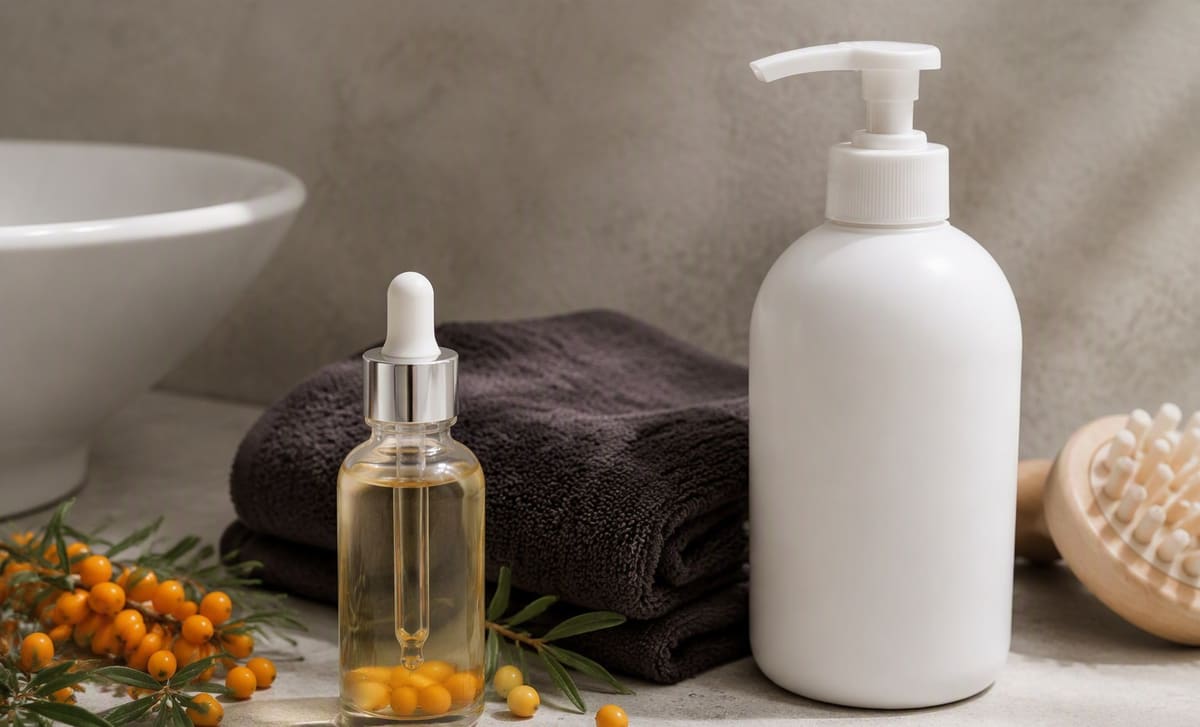
No trial has ever tested sea buckthorn against dandruff. Dandruff is usually driven by a yeast called Malassezia, and medicated shampoos are the proven fix. Sea buckthorn oil can still earn a place as comfort care: it softens scale and calms a tight, flaky scalp before washing. Treatment versus comfort. That’s the line this page draws.
What the evidence actually says
Short version: there are zero dandruff trials for sea buckthorn. Human or otherwise. What we have is adjacent evidence. Scalp is skin, the oil has decent human data for skin hydration, and its fatty acid profile (linoleic, palmitoleic, oleic) reads like a barrier-support formula.
That justifies one sentence: it may help a dry, flaky scalp feel better. It doesn’t justify the sentence most sellers use, which is that it fights dandruff. The hair hub grades every hair claim on that difference.
Dandruff versus dry scalp, because they’re not the same problem
Most true dandruff involves Malassezia, a yeast that lives on scalps and irritates some of them. It feeds on scalp oils, its byproducts annoy the skin, the annoyed skin speeds up cell turnover, and the extra cells shed as visible flakes. That’s why the treatments with real trial data are antifungal shampoos: ketoconazole, zinc pyrithione, selenium sulfide. They cut the yeast population instead of chasing the symptom. If flakes are heavy, itchy, or persistent, start there. If the scalp is red, weeping, or shedding hair, skip the internet and see a doctor.
But here’s the twist. A dry, tight scalp also flakes, and it’s not dandruff. Winter heating and over-washing cause fine white flakes too, and that’s the scenario where an oil massage genuinely helps, because moisture is the actual problem. If your flakes arrive with the radiators and leave in spring, you’re probably dealing with dryness impersonating dandruff.
One thing worth stating plainly: no test we could verify has shown antifungal activity against Malassezia for sea buckthorn oil. It speaks to the irritated-skin half of the chain, not the yeast half. Which is why it belongs in the comfort column.
A pre-wash routine that makes sense
- Twenty minutes before washing, massage 3 to 5 drops into the scalp, section by section. Seed oil is the lighter, cheaper pick. Berry oil is richer and can tint light hair and towels. If you’re still choosing a bottle, the oils we rated for hair sort the light seed oils from the richer berry ones.
- Leave it while you do something else. Then shampoo twice, letting the lather sit for a minute on the second pass.
- Repeat once or twice a week and judge after a month.
Realistic wins: softer scale, a calmer feel, less tightness. Flake disappearance is the shampoo’s job. Plenty of people alternate oil night with medicated-shampoo night, and it’s a sensible split of duties, because antifungal shampoos tend to be drying. The shampoo handles the yeast. The oil handles the tightness the shampoo leaves behind.
If your scalp stings, reddens, or flakes more after oiling, stop. Occluding an inflamed scalp can feed the problem instead of calming it.
The pillowcase note nobody mentions
Berry oil stains fabric, and that matters more in a scalp routine than anywhere else, because the routine is massage, wait, wash. Use a dark towel. Keep the oiled scalp off good pillowcases during the wait. Or use seed oil and skip the worry entirely.
What to expect, week by week
First couple of washes: scale softens, and the scalp feels calmer right after rinsing. By a month of once-or-twice-weekly massages, a dry scalp should feel noticeably less tight.
What won’t change without an antifungal is the flake count from true dandruff. So if four weeks of honest routine changes nothing, stop experimenting. Treat it as dandruff with a medicated shampoo, or as a skin question for a doctor.
The borrowed skin evidence behind all of this lives on the skin studies page, growth gets the same treatment, and omega-7 explains the fatty acid everyone talks about.
Used as comfort care alongside a medicated shampoo, sea buckthorn oil earns its shelf space. Asked to be a dandruff cure, it fails a test it never took.
Frequently asked questions
Does sea buckthorn oil get rid of dandruff?
No evidence says so. Dandruff is usually driven by the yeast Malassezia, and antifungal shampoos are the proven fix. Sea buckthorn oil can soften scale and soothe a dry scalp as pre-wash comfort care, which is different from treating the cause.
How do you use sea buckthorn oil on your scalp?
Massage 3 to 5 drops into the scalp 20 minutes before washing, then shampoo twice. Once or twice weekly is plenty. Berry oil can tint light hair and fabric, so use sparingly and patch test first.