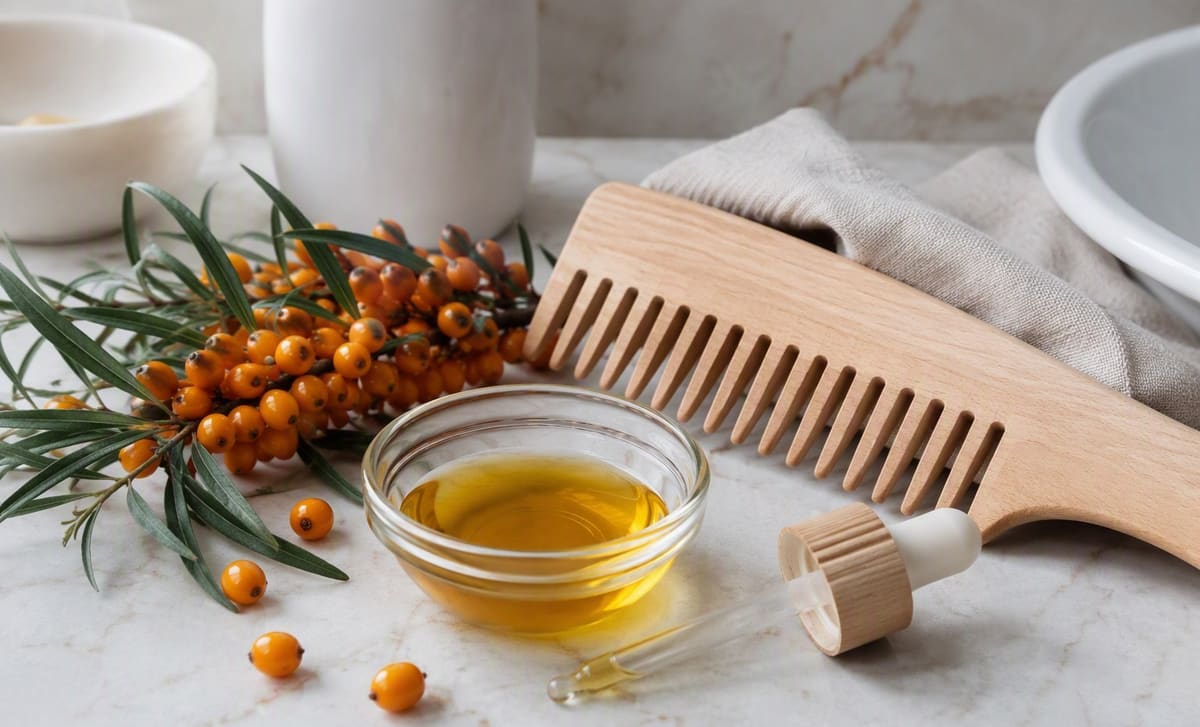
The effective routine is simple: seed oil on the scalp twenty minutes before washing, a trace of oil on damp ends after, once or twice a week. Expect softer, shinier hair and a calmer scalp, because that is what fatty acid oils deliver. Do not expect regrowth, because no oil has human evidence for that.
Before you start: which oil goes where
Sea buckthorn seed oil is pale, light, and the right choice for scalps. Berry (pulp) oil is deep orange, richer, and carries carotenoids that can tint light hair and definitely stain towels and pillowcases. The seed vs berry page explains the difference fully, and the hair hub grades what each one can honestly do. Rule of thumb: seed oil for the scalp, berry oil only on darker lengths and ends if you accept the tint risk.
The pre-wash scalp ritual
- Patch test first. A drop behind the ear or on the inner forearm for a few days, especially with sensitive skin.
- Three to five drops of seed oil onto fingertips, not more. Oil spreads, and excess means harder rinsing.
- Massage into the scalp with pads of fingers in small circles, two to three minutes. The massage is half the benefit.
- Wait twenty minutes. Longer is fine, overnight is unnecessary.
- Shampoo twice. The first pass breaks the oil, the second actually cleans. Condition as usual.
The leave-in for ends
After washing, one drop rubbed between palms and pressed into damp ends smooths frizz and adds shine. Start with less than feels right. Fine hair needs the smallest amounts, and anyone can add more next wash.
What can go wrong
Too much oil is the classic mistake: buildup, limp lengths, and double the shampooing to recover. Berry oil on blonde or grey hair is the second: carotenoid tint is real, so patch a hidden strand first. And any oil left on an unhappy scalp can feed the wrong microbes, so if itching or flaking worsens, stop and treat the scalp as a skin question.
Frequency and realistic expectations
Once or twice weekly for the scalp ritual, leave-in as often as you wash. Give it four to six weeks before judging. What improves: softness, shine, frizz, scalp comfort. What does not: growth rate, density, or shedding, because no human trial supports those, as the growth page and hair loss page explain. Persistent scalp symptoms belong to a doctor.
The pre-wash mask, measured
Three to 5 drops is roughly a quarter of a millilitre or less, and that is genuinely enough for a scalp. Oil spreads under friction, and the massage does the distributing. Twenty minutes is the contact time: shorter sells the oil short, overnight adds mess without proven extra benefit. Then the wash-out: the first shampoo pass breaks the oil, the second pass cleans, and letting the second lather sit a minute lifts what the first loosened. Lukewarm water rinses oil better than hot, and it is kinder to the scalp you just oiled.
Week one versus week six
The first wash tells you about the shine and softness, because cuticle smoothing works the day you apply it. The scalp comfort takes longer: tightness easing over several weeks of steady once-or-twice-weekly massage. That is why the honest judging window is four to six weeks, not one shower. Keep notes if you like data, or just notice whether you reach for the bottle without thinking by week six.
Adjusting for hair type
Fine, straight hair: 2 drops on the ends, below the ears, and never at the roots. Thick, curly, or coarse hair: 4 to 5 drops worked through in sections, with an extra drop on dry ends if they still fuzz. Short hair and beards: 2 to 3 drops total, as the beard page details. The rule that survives every hair type is to start with less than feels right and add next wash if needed.
Storage, so the oil outlives the routine
Rich oils degrade with heat, light, and air, and a rancid oil helps nothing. Keep the bottle capped, cool, and out of the sun, and trust your nose if the smell turns. The storage page has the shelf-life details. If the oil feels too heavy even at the right dose, the dilution guide covers carriers that lighten it without losing the habit.
The two-oil shelf, simplified
If you keep both oils, the shelf logic is simple: seed oil lives by the shampoo for scalp nights, berry oil lives by the conditioner for dark ends only. If you keep one, make it the seed oil, which does every job on this page except the richness some dark, coarse ends enjoy. Ready to restock? Our best sea buckthorn oil for hair guide ranks the bottles we scored.
Traveling with the ritual
The ritual survives travel: a small dropper bottle of seed oil covers the scalp massage and the end-smoothing for any trip. Decant a few millilitres rather than flying the full bottle, and keep it capped in a bag, because oil in luggage is a laundromat story.
Frequently asked questions
How often should I use sea buckthorn oil on my hair?
Once or twice a week is the sweet spot for the pre-wash ritual, with a tiny leave-in amount on damp ends as often as you wash. More is not better with rich oils: overuse means buildup, dull lengths, and extra shampooing. Give it four to six weeks before judging the shine and softness.
Can I leave sea buckthorn oil in my hair overnight?
You can, but you do not need to. Twenty minutes gives the oil its contact time before washing, and overnight adds mess and pillowcase staining, especially with berry oil, without proven extra benefit. The leave-in that matters is the single drop pressed into damp ends after washing.