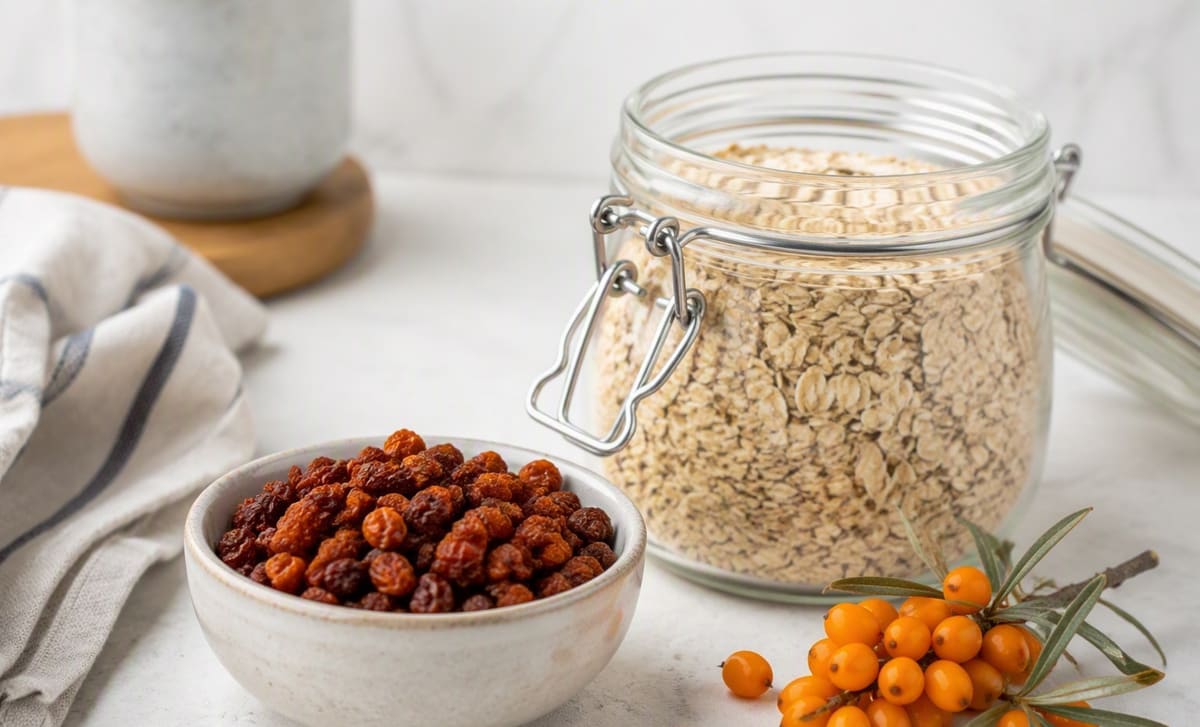
Dried sea buckthorn berries are the loudest little fruit in the pantry: intensely tart, chewy, and best deployed where sweetness or fat can meet them halfway. Eat them by the small handful, mix them into trail mix, soak them into overnight oats, simmer them as tea, or bake them like sour raisins.
They are the pantry form on the how-to-use hub, which is to say the one that survives being forgotten.
Five ways that work
- The straight snack. A small handful, eaten slowly. Expect a sour first punch that fades into something pleasant. This is an acquired taste worth acquiring.
- Trail mix. Their tartness is made for company: nuts for fat, dark chocolate or raisins for sweetness. Two parts mix to one part berries keeps the balance.
- The overnight soak. Stirred into overnight oats, they rehydrate by morning, softening in texture and mellowing in flavor while tinting the whole jar orange.
- The tea simmer. A tablespoon simmered in water for five to ten minutes makes a tart infusion. Mash the berries midway and sweeten to taste.
- Baking. Chopped and folded into muffins, scones, or granola bars, anywhere a sour raisin would work. Pair with honey or white chocolate and they behave beautifully.
The pairing rule
Tart fruit wants sweet or fat partners, ideally both. Yogurt, honey, nuts, oats, and chocolate all answer the question these berries ask. The dried berries explainer covers what drying keeps and loses, the recipes hub scales these ideas up, eating them raw covers the fresh version if you ever find it. Dried fruit is a grocery, so price it like one, which is what our price guide does form by form.
The portions, concretely
A small handful of dried berries runs 20 to 30 grams, and that is a sensible daily ceiling as a snack, matching the 28 grams the whole-berry trial dosed daily for three months in fresh form. For tea, a tablespoon per pot. For baking, a half cup per dozen muffins, chopped so no bite is a sour ambush. More than that is a stomach-acidity experiment, not a serving.
The soak, two ways
- Overnight, cold. Stirred through oats with yogurt or milk and refrigerated. By morning they are plump, mild, and have tinted everything a cheerful orange. This is the gateway use for sourness skeptics.
- Fifteen minutes, hot. Covered with just-boiled water while you preheat the oven, then drained. Baking-ready berries that behave like raisins and do not scorch as fast as dry ones.
Three more uses worth the bag
- Simmered compote. A cup of berries, a cup of water, two tablespoons of honey, ten minutes at a gentle bubble. Spoon over pancakes, yogurt, or roast pork, where it plays the cranberry role.
- Granola fold-in. Added after baking, never before, because direct oven heat turns them bitter. Two handfuls per tray of finished granola.
- Salad topper. Soaked first, then scattered over a grain salad with nuts and a sharp cheese. The sour pop replaces pomegranate seeds one for one.
A note for bakers
Chop the berries for even distribution, toss the pieces in a spoon of flour before folding them into batter, and they suspend instead of sinking. Kids take to them soaked or baked more readily than straight, and as food they are fine for the whole family in normal amounts.
Mistakes that sour the experience
- Eating them dry by the bowl. The acid adds up faster than the pleasure does. Small handful, or soaked.
- Skipping the partner. Tart fruit without fat or sweetness nearby is a dare, not a snack. Yogurt, nuts, honey, chocolate: one at minimum.
- Expecting supplement effects. Drying keeps the fiber and the acids and costs some vitamin C, and no studied oil dose hides in a handful. The fiber page credits what these berries genuinely deliver.
Buying and keeping them
Look for berries without added sugar or oil coating: the ingredient list should say one word. Airtight jar, dark cupboard, and they hold for about a year, trading vitamin C slowly for convenience. Clumping means moisture got in, and a dry spoon every time prevents it.
The tea connection
The tablespoon simmer from use four is the same drink the make tea page brews, with the berries left in if you like the chew. One bag of dried berries serves both pages, which is the pantry argument for keeping it stocked.
The lunchbox test
Dried berries earn their keep in portable food: a small bag in a desk drawer, a handful through homemade trail mix, a spoon over a desk yogurt. They survive commuting, temperature swings, and neglect better than any fresh fruit, which is half of what a pantry staple is for. The portion discipline from earlier still applies: a handful, not the bag.
A word on the sugar-coated versions
Some brands sell dried berries sweetened or juice-infused, and those are closer to candy than to fruit. The ingredient list tells the story in one line. Plain berries pair with your own honey when you want sweetness, on your own terms, for a fraction of the sugar.
Frequently asked questions
Do you need to soak dried sea buckthorn berries before eating?
No. They are edible straight from the bag, just very tart and chewy. Soaking (overnight oats are the easy route) softens them and tames the sourness, and a simmer turns them into tea. Try them straight first so you know what you are working with.
Are dried sea buckthorn berries as healthy as fresh?
Mostly, with one honest loss. Drying keeps the fiber, the organic acids, and most of the flavor, while heat and time cost part of the vitamin C. Added-sugar versions trade health points back, so check the ingredient list for a single word: sea buckthorn.