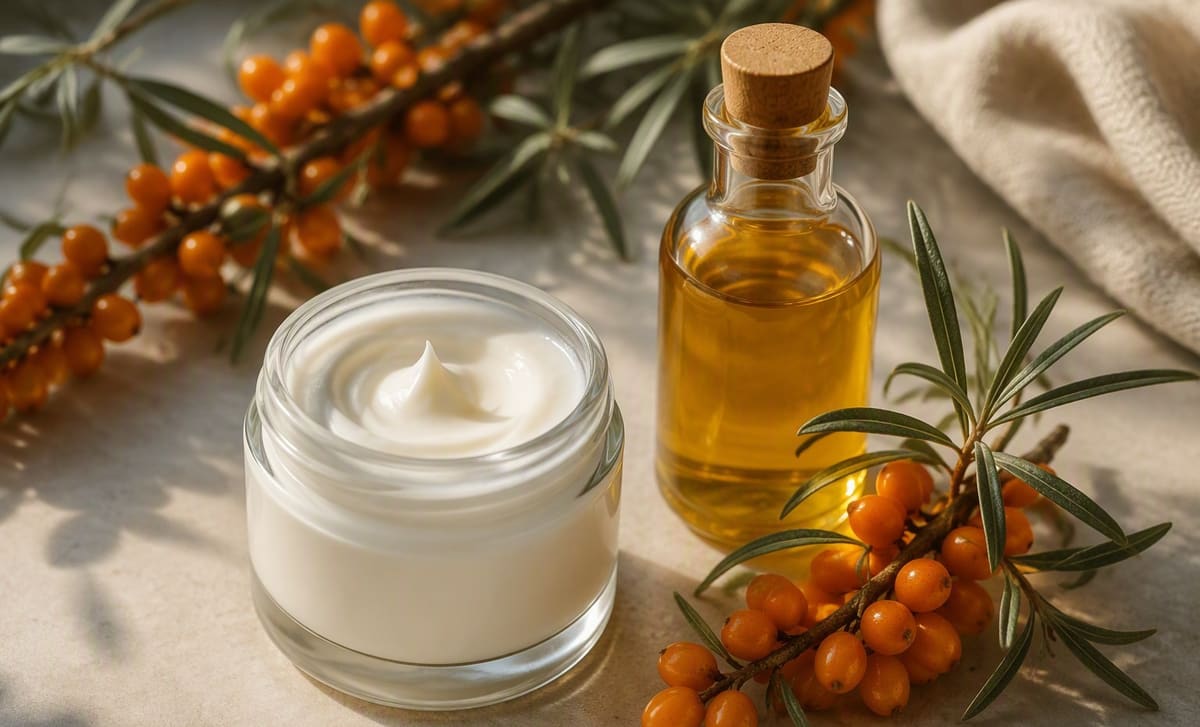
No human trial has tested sea buckthorn for psoriasis. Psoriasis is an autoimmune disease that speeds up skin turnover into thick plaques, and no oil changes that program. What an oil can do is soften scale and ease the tight, cracked feel of plaques, a comfort job any good emollient does. Treatment itself belongs to your dermatologist.
Where the evidence stops
It stops before it starts. Our research file contains no human trial of sea buckthorn for psoriasis, in either direction. The two skin trials we do have enrolled healthy women and measured hydration and elasticity, a different question on different skin. Anything you have read claiming sea buckthorn calms psoriasis is extrapolation, not evidence, and the skin hub grades it that way.
The inflammation angle deserves its own honesty. One trial did find lower CRP, an inflammation marker, in healthy adults eating sea buckthorn berries daily. That is a mild systemic signal in healthy people, not a skin finding, and autoimmune inflammation is a different mechanism entirely. Stretching a berry-and-CRP result into a psoriasis claim is exactly the move this site exists to refuse.
What psoriasis is doing under the plaque
Normal skin replaces itself on a cycle of about a month. Psoriasis is an immune program that shortcuts that cycle to a matter of days, so cells arrive at the surface faster than they can mature and shed, piling up into the thick, silvery plaques you can see. The soreness comes from the plaque cracking over moving joints, and the itch feeds a scratch cycle that damages skin further. Understanding the speed of the process explains the whole treatment picture: slowing the immune signal is prescription work, while softening the piled-up scale is emollient work.
What moisturization honestly does here
Plaques are dry, thick, and often sore. An occlusive layer over damp skin softens scale, reduces cracking, and makes plaques less irritating under clothing. Sea buckthorn oil does this the way any emollient does, with its linoleic and palmitoleic fatty acids playing the barrier-lipid role. Softer plaques feel better. Feeling better is comfort, not treatment, and the distinction matters with an autoimmune condition. Thick scale on elbows and knees responds best after a soak, when the plaque is softest and takes the emollient.
The emollient hierarchy is worth knowing: plain, bland, fragrance-free wins, and boring products like petroleum jelly are dermatology staples for exactly that reason. A single-ingredient plant oil fits the same bland category, with two practical caveats: the berry oil’s pigment clings to thick scale and everything it touches, and any fragranced blend is an avoidable risk on inflamed skin.
Triggers worth knowing
Psoriasis runs on triggers as much as on skin. Stress, infections, cold dry weather, and skin injury are the classic ones, and new plaques famously appear at sites of scratches and scrapes, which is one more reason oil never belongs on cracked or broken areas. Keeping skin intact, hydrated, and unscratched is the part of trigger management a moisturizer genuinely supports.
The itch, handled without scratching
Plaque itch is real, and scratching is how plaques spread and crack. The boring anti-itch toolkit works here: keep the area moisturized, keep showers lukewarm rather than hot, and press or pat instead of scratching when it flares. Persistent, sleep-stealing itch is a symptom to report to your dermatologist, because it factors into treatment choices.
Realistic use, if you want to try
- Choose seed oil: pale, lighter, and free of the berry oil’s orange tint, which clings to thick scale. Plenty of bottles say only “sea buckthorn oil”, so read the label for the plant part before you pay.
- Press a few drops onto damp plaques after bathing, then your regular emollient on top.
- Patch test first, and keep oil off cracked, bleeding, or infected skin.
- Stop on any stinging or worsening, and mention it to your dermatologist.
Common mistakes
- Treating psoriasis as ordinary dry skin. Dry skin is a moisture problem. Psoriasis is an immune program with a moisture symptom, and the difference is the whole page.
- Stopping prescriptions when skin looks better. Looking better is the treatment working, and plaques return when it stops. Changes to medication go through the prescriber.
- Expecting the oil to calm a flare. Comfort on stable plaques is the ceiling. A flare is a dermatologist appointment.
- Hot showers for relief. Heat feels good for ten minutes and dries plaques for hours. Lukewarm is the unglamorous winner.
The treatments with actual data
Prescription topicals, vitamin D analogs, light therapy, methotrexate, and the biologics have the trial record in psoriasis, and the modern biologics have changed what moderate-to-severe patients can expect. Many people now reach nearly clear skin on them, a sentence that was not true a generation ago. That conversation is the real path, and it happens in a dermatologist’s office. For what sea buckthorn can genuinely offer skin, the dry skin page shows the measured lane, the eczema page covers the same adjunct-not-treatment logic for atopic dermatitis, the research hub maps the evidence we do have.
Frequently asked questions
Can sea buckthorn oil treat psoriasis?
No. No human trial has tested sea buckthorn for psoriasis, and psoriasis is an autoimmune condition that oils cannot switch off. As a moisturizer on plaques it can soften scale and ease tightness, the same job any bland emollient does. Treatment belongs to prescription topicals, light therapy, or biologics via a dermatologist.
Is sea buckthorn oil safe on psoriasis plaques?
Usually, on intact plaques, with a patch test first. Skip cracked, bleeding, or infected skin, and stop if anything stings or reddens. Berry oil will also tint skin and clothing orange, which matters on thick plaques that hold oil at the surface.
Sea buckthorn fights inflammation, so can it calm psoriasis?
The inflammation data is narrower than the question. One berry trial found lower CRP, a mild systemic marker signal, in healthy adults eating berries. That says nothing about calming an autoimmune skin disease, and no trial has tested sea buckthorn on psoriasis. Anti-inflammatory marketing language is not a treatment claim, and your dermatologist owns the treatment plan.