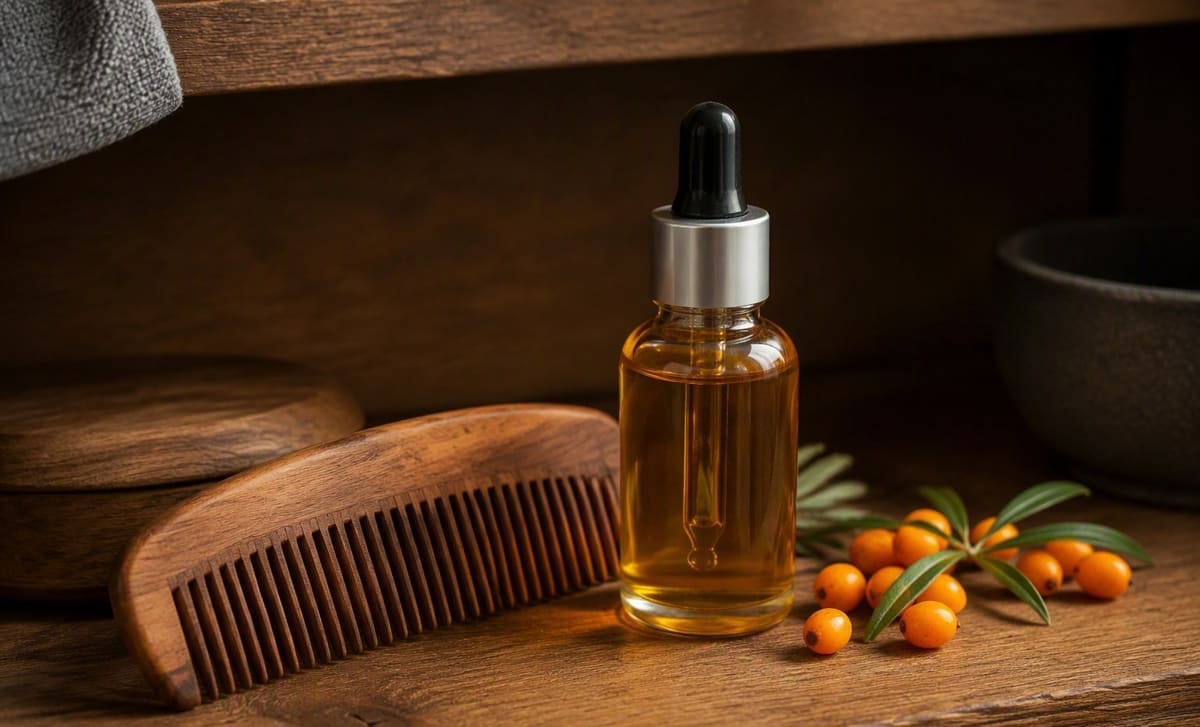
A beard is coarse hair over forgotten skin, and sea buckthorn oil handles both halves of that equation. Two or three drops softens the wiry texture and moisturizes the skin underneath, which is where beard itch actually lives. Choose the seed oil: the berry oil can tint light and grey beards. Growth claims, as always, have no trial behind them.
What a beard oil actually does
Beard hair is thicker and curlier than scalp hair, and it wicks oil off the skin beneath it. The result is the classic new-beard itch: dry skin under dry, scratchy hair. A conditioning oil fixes both ends of the problem at once, coating the hair so it lies softer and sealing the skin so it stops flaking into the beard. Sea buckthorn’s fatty-acid profile does this job well. So do several cheaper oils, and the difference is preference, not magic, which is how the hair hub grades it.
The two-oil choice for beards
- Seed oil: pale, light, invisible in any beard. The default.
- Berry oil: richer, and orange. On dark beards it is undetectable. On blonde, red, or grey beards it can add a warm tint, which is either a feature or a problem, and only you know which.
The routine
- After washing, towel the beard damp, not dry.
- Rub 2 to 3 drops between palms, work through the hair to the skin beneath.
- Comb through. Done. Daily at first, then as needed.
Wash the beard itself two or three times a week with something gentle, because oil on top of old oil and dead skin is buildup, not conditioning. Patch test on the neck under the jaw before the first full application.
If flakes keep showing in the beard despite conditioning, that is face dandruff, and the dandruff page has the honest medicated-shampoo answer. The shine page covers the same oil physics on head hair.
The amounts, in millilitres
Two to 3 drops is roughly a tenth of a millilitre. That tiny dose is the point: beard oil is a coating, not a soak, and a thin film does the work. At that rate a 30 ml bottle lasts the better part of a year even with daily use, which makes the per-use cost of good oil trivial. A dropper that delivers actual drops, not a pour spout, is worth having for that reason. Store the bottle away from heat and light, because oils degrade faster than you will use them.
What the oil cannot do for a beard
Grow one. Nothing topical grows facial hair, and no trial says otherwise, which is why the growth question does not appear elsewhere on this page. Patchy beards are genetics and hormones, and an oil changes neither. What changes with oil is the hair you already have: softer, flatter, less wiry. If a patchy beard is new and bothering you, that is a conversation for a doctor, not a bottle.
The tint question, beard edition
The tint question matters more on beards than on head hair, because grey and white facial hair is common and carotenoids show on unpigmented hair. The deposit is temporary and washes out over a few shampoos, but you should choose knowing it exists. Seed oil is the default for any beard with light in it. Berry oil is for dark beards where the richness is welcome and the tint is invisible.
If you prefer a balm
Some beards do better with a balm’s hold than a straight oil’s slip. The certified-organic balm corner is covered in our Badger review, where sea buckthorn plays a supporting role in a real certification culture. Read the ingredient position before buying, since position tells you how much sea buckthorn is actually in the tin.
The wash question
Oil on top of old oil and dead skin is buildup, not conditioning, which is why the beard itself wants washing two or three times a week with something gentle. On wash days, oil after toweling damp. On off days, a rinse is enough. The goal is a clean beard with a thin oil film, not an oily beard.
When the itch is not dryness
New-beard itch is usually dry skin under scratchy hair, and oil fixes it. Itch with redness, heavy flakes, or soreness is a different animal: that is face dandruff or a skin question, and the honest medicated answer lives on the dandruff page. If the skin stays angry despite treating it as dandruff, see a doctor. If you want a lighter blend for a short beard, the dilution guide covers carriers and ratios.
The patch test, placed well
A drop on the neck under the jaw for a few days tells you what your face thinks before the beard finds out. Reactions are uncommon, and the jawline is the polite place to discover one. If the spot stays calm, the beard is cleared for oil.
Oil and the comb
The comb-through after oiling is not optional grooming theater. It distributes the film from the few hairs you touched to the hundred you did not, and it trains the beard to lie the way you want while the oil sets. Ten seconds of combing is half the result.
Frequently asked questions
Is sea buckthorn oil good for beards?
As a conditioning beard oil, yes: 2 to 3 drops softens coarse hair and moisturizes the skin under the beard, which is where the itch lives. Choose seed oil, since berry oil can tint light or grey beards. For beard growth, no: nothing topical grows facial hair, and no trial says otherwise.
How long does a bottle of beard oil last?
At 2 to 3 drops a day, a 30 ml bottle lasts the better part of a year, since each use is a fraction of a millilitre. Beard oil is one of the cheapest grooming habits per use once the bottle is open. Store it away from heat and light, because oils degrade.