Weleda is a long-established name: a natural cosmetics company founded in 1921 whose sea buckthorn body oil and hand cream sit in the US range, with a sea buckthorn juice on its German site. It scores 8.5 in our rubric on the maker’s NATRUE certified-natural statement, heritage and cosmetic craft, losing points on supplement-style documentation.
Research-based review per our editorial policy. We scored the sea buckthorn line, not Weleda’s whole catalog.
The scorecard
| Criterion | Weight | Weleda result | Score |
|---|---|---|---|
| Purity and sourcing | 30% | Certified natural by NATRUE per the maker, no origin stated for the oil | 9.0 |
| Fatty acid profile | 25% | Body oil blends sea buckthorn with companion plant oils | 8.0 |
| Third-party testing | 20% | NATRUE certified-natural statement by the maker, no supplement-style assays | 8.5 |
| Value | 15% | Based on the maker's US prices, check current price | 8.5 |
| Transparency | 10% | Full ingredient lists on the product pages, no origin stated for the oil | 8.5 |
| Weighted total, out of 10 | 8.5 | ||
The math: 30% × 9.0 + 25% × 8.0 + 20% × 8.5 + 15% × 8.5 + 10% × 8.5 = 8.525, shown as 8.5. Rubric details in the editorial policy.
This link earns us no commission right now.
Visit Weleda's siteWeleda was founded in 1921, and age alone earned it nothing. The maker’s body oil and hand cream pages state no origin for the sea buckthorn, and the sourcing statements we found sit on the German juice page, which is not a scored product. So the 9.0 on sourcing can’t rest on where the sea buckthorn in the body oil or hand cream comes from. It rests on the maker’s NATRUE certified-natural statement, which is a natural-cosmetics standard and not a sourcing statement. We didn’t compare other brands’ sourcing, so the number is our judgment.
What the documents show
- The company: founded in 1921 with Swiss and German roots, per Wikipedia.
- The line’s age: Wikipedia says Weleda added a sea buckthorn elixir to its range in 1955. We found no source for when the cosmetics line began.
- Sourcing statements: the maker’s German juice page says the berries come from organic or biodynamic cultivation or organic wild harvest. The body oil and hand cream pages show a NATRUE certified-natural statement, with no Demeter mention and no origin for the sea buckthorn.
- Availability: the maker runs separate US and German sites, and the products below are what each listed on 6 October 2026.
The products in the line
- Hydrating Body & Beauty Oil, Sea Buckthorn: our body-oil slot winner in the skincare guide. A 3.4 fl oz bottle at $21.99 on the maker’s US site, 6 October 2026. The maker says it blends sea buckthorn oil with sesame oil and essential oils and promises a golden glow on the skin.
- Hydrating Hand Cream, Sea Buckthorn: the gateway product. A 1.7 fl oz hand cream at $14.49 on the maker’s US site, 6 October 2026, with sesame oil and beeswax in the ingredient list.
- Body lotion: the maker’s sea buckthorn category page also lists a Restoring Body Lotion, 8.45 fl oz at $15.99. We didn’t open its page.
- Mein Sanddorn Immunsaft: a 200 ml juice, 100% sea buckthorn juice and pulp per the maker, at 13.60 euros (a promotional price, down from 16.95 euros) on the German site, 6 October 2026. We didn’t find it on the US site.
Where Weleda falls short
Weleda is a cosmetics house, not a supplement company. You will not find printed omega-7 percentages or trial-matched dosing here, and the body oil is a blend rather than a pure sea buckthorn oil. If a labeled supplement dose is the goal, the capsules guide is the right page, and the brands ranking shows who wins it.
Who should buy Weleda
Buy it for the body oil and hand cream if you want heritage natural cosmetics from a long-established company, and for the juice if you’re in Germany and the traditional food format appeals. Skip it for concentrated supplement oil, which is SIBU and SeabuckWonders territory. One note on the juice: the maker’s German page suggests 1 to 2 teaspoons three times a day, diluted in water, tea or milk, and anyone on blood thinners or pregnant should skim the safety hub first.
The label, line by line
Cosmetic labels and supplement labels play by different rules, and Weleda’s are good examples of the cosmetic kind. Full ingredient lists are published on the product pages, and the body oil presents itself as a blend: sea buckthorn oil with sesame oil and fragrance ingredients, with sesame oil listed first. That honesty is worth points, and the blend itself is why fatty acid profile scores 8.0 rather than higher. A blend means a smaller sea buckthorn dose per drop than a pure oil. What cosmetic labels do not print are assays, so there are no omega-7 percentages to check here. For a body oil that matters less than it would for a supplement, and the rubric weights it accordingly.
The cost-per-day question
Body care economics differ from supplement economics, so a cost per day isn’t the right yardstick here. The maker’s US site lists the body oil at $21.99 and the hand cream at $14.49 (6 October 2026). The German-market juice is a food purchase, best judged per serving against other specialty juices rather than against supplement anchors. Across the line, value scores 8.5 on the maker’s prices. We did not open stockist pages or compare other brands’ prices, so the 8.5 is our judgment from the maker’s own prices.
How it compares
The closest topical rival on our list is Badger at 7.5, the balm house that says it is certified organic, where sea buckthorn is one botanical among several. Weleda sits a full point higher on the strength of a dedicated sea buckthorn line, though on the maker’s pages the body oil lists sesame oil before sea buckthorn oil and the hand cream lists sea buckthorn oil after water, sesame oil, alcohol and beeswax. Against SIBU’s skincare system, Weleda is the heritage single-products alternative rather than a routine. The Badger review maps the organic-balm corner, and the face oil guide covers facial use if that is your lane.
What would raise or lower the score
Raise it: little is left within cosmetics. A pure, unblended sea buckthorn oil would push the fatty acid score up. Lower it: any retreat from the certification and sourcing statements the 9.0 on purity leans on, or the line being discontinued. The score assumes the current line stays in production.
What to verify before you buy
Confirm the line is still in production on Weleda’s current site and check the ingredient list on the body oil if blend composition matters to you. Compare current prices across stockists, since international availability means international price variation. And set expectations by lane: this is heritage body care, not a supplement. Buyers wanting printed omega-7 numbers belong on the brands ranking with the supplement specialists.
Frequently asked questions
Is Weleda sea buckthorn good?
For body care, yes. Weleda sells a sea buckthorn body oil and hand cream, and the body oil is our body-oil pick in the skincare guide. The maker's body oil page shows a NATRUE certified-natural statement and names no origin for the sea buckthorn. It scores 8.5 in our rubric. For concentrated supplement oil with printed omega-7 numbers, look to SIBU or SeabuckWonders instead.
Does Weleda still make sea buckthorn products?
Yes. On 6 October 2026 the maker's US site listed a sea buckthorn body oil and hand cream, plus a body lotion in its sea buckthorn category. A sea buckthorn juice, Mein Sanddorn Immunsaft, is sold on Weleda's German site, and we didn't find it on the US site. Wikipedia says Weleda added a sea buckthorn elixir in 1955.
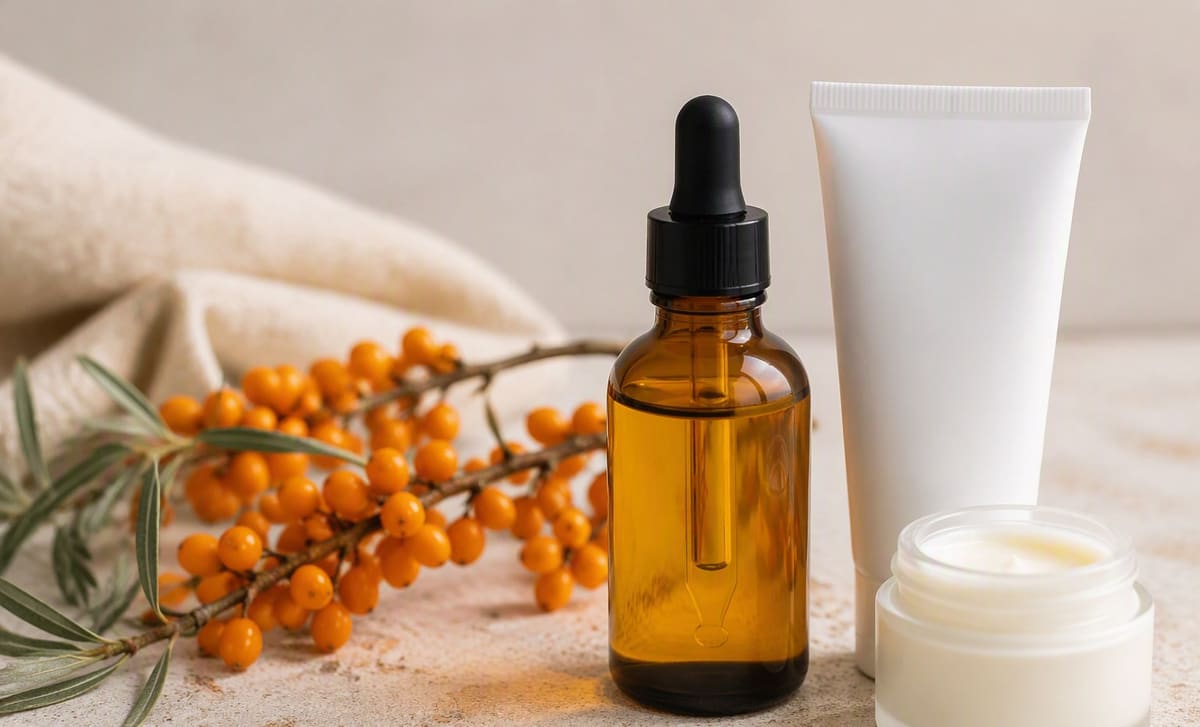
Illustration.