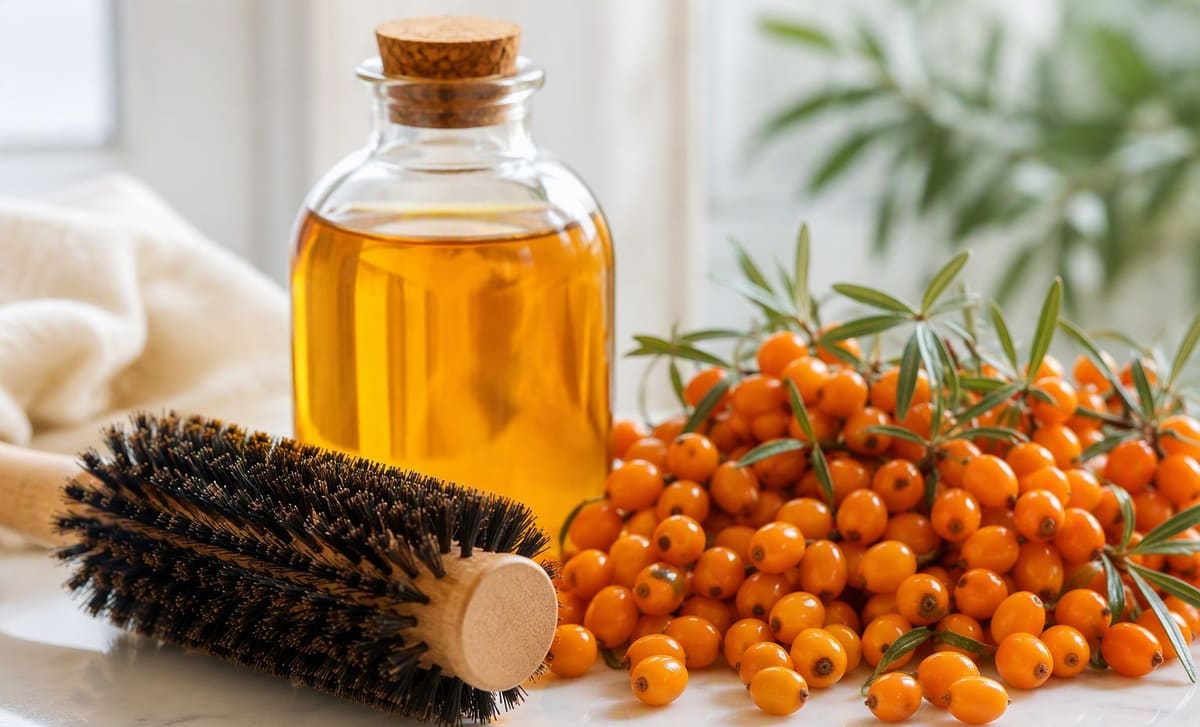
No oil makes hair thicker. Strand diameter is set at the follicle, and follicle count is set by genetics, both beyond the reach of anything in a bottle. What sea buckthorn oil can do is cut breakage and smooth the cuticle, so hair keeps more of its length and bounces more light. Hair that breaks less and shines more reads as fuller, and that honest mechanism is the whole claim.
What thickness actually is
Thickness has two meanings that marketing blurs on purpose. Strand thickness is the diameter of each hair, written into your follicles and unchangeable by topicals. Hair fullness is how much hair you have and how it behaves, and that one has moving parts: breakage, shedding, frizz, and shine. Oils speak only to the second list.
The two mechanisms that are real
- Less breakage: conditioned hair bends instead of snapping. Over months, keeping more of your length is indistinguishable from having grown more hair, and it is the closest thing to thickening an oil can honestly claim.
- More reflection: a smoothed cuticle lies flat and reflects light evenly, which reads as denser, healthier hair in person and in photos. The physics is covered in full on the shine page.
Neither touches the follicle, and no human trial has measured sea buckthorn against any thickness endpoint.
The routine that delivers the real effect
Two to 3 drops on damp ends after washing, seed oil for fine hair and berry oil for dark, coarse hair only. Skip the roots, or volume dies where it starts. Judge after a month of fewer broken hairs on your brush, not after a week of mirror checks. Heat styling is the other half of the breakage story, and dropping one hot session a week helps more than any second drop of oil. If thinning is the real concern, the growth page separates hope from evidence, and the hair hub maps the rest.
The breakage math
Hair that bends survives brushing, styling, and winter scarves. Hair that snaps leaves half its length in the sink. Over months, the difference between those two heads is indistinguishable from a difference in growth, and it shows up first as fewer broken hairs on the brush. That is the entire thickening claim an oil can honestly make, and it is still worth having.
Where volume actually comes from
Lift lives at the roots, and oil is the enemy of roots, which is why every routine on this site keeps the drops below the ears. Volume comes from the cut, the styling, and the health of the scalp the hair grows from. The oil’s job is the lengths: keep them intact, keep them reflective, and let the roots do their own work.
The honest before and after
Week one: shine and slip, the day-one cuticle effect. Month one: fewer broken hairs in the brush and on the collar. Month three: lengths that look denser because more of them survived. That timeline is conditioning, not growth, and no mirror will separate the two, which is precisely the point and precisely the limit.
The heat half of the story
Breakage has two parents, and friction is only one. Heat styling is the other, and dropping one hot session a week preserves more length than any second drop of oil can. Conditioner-first thinking beats product-first thinking here: protect the hair you have before shopping for more.
The scalp connection
Fullness starts where hair starts, and a comfortable scalp is a better base than a tight, flaky one. That is borrowed skin logic, not a growth claim, and the scalp page has the pre-wash ritual for it. Keep the expectation in the conditioning column: calm scalp, intact lengths, honest mirror.
When fullness loss is a medical question
Fullness that drops rather than plateaus is not a conditioning problem. Widening parts, more scalp showing, or shedding that accelerates belong on the hair loss page, which lists the patterns that deserve a doctor and the treatments with trial data. Oils keep the hair you have looking its best. They do not negotiate with follicles. If you are shopping anyway, the oil guide has the scored bottles.
The mirror test that works
Judge fullness changes with photographs, not mirrors: same light, same angle, same day of the wash cycle, once a month. Mirrors lie daily and photos compare honestly. What you are looking for over a season is more surviving length, which is the only thickening this page sells.
What we did not claim
Nowhere on this page does a follicle get fed, woken, or stimulated, because no topical has human evidence for those verbs. The claim is humbler and true: hair that breaks less and reflects more looks fuller. In a category full of promises, humble and true is the premium option. The growth page grades the other verbs.
Frequently asked questions
Can sea buckthorn oil make hair thicker?
Not literally: no oil changes strand diameter or follicle count, and no trial supports thickening. What oil does is reduce breakage and smooth the cuticle, so hair keeps more of its length and reflects more light. Hair that breaks less and shines more reads as fuller, which is a real effect with an honest mechanism.
How long until my hair looks fuller?
Shine improves with the first wash. The fuller look takes longer, because it comes from keeping more of your length: judge after a month or two of fewer broken hairs on the brush, not after a week of mirror checks. If fullness is dropping rather than plateauing, read the hair loss page and consider a doctor.