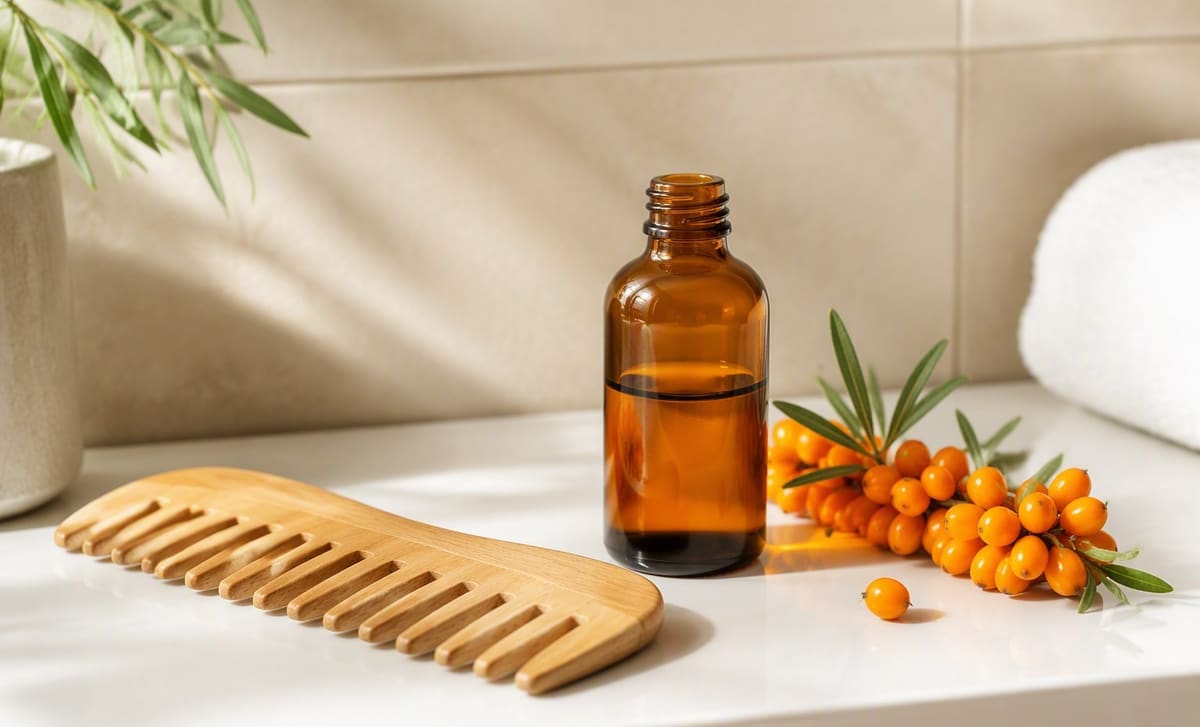
No human trial has tested sea buckthorn for hair loss of any kind, so the honest answer is unproven. Pattern hair loss already has proven medical treatments, and watching hairline real estate shrink while experimenting with oils has a real cost. Use sea buckthorn for scalp comfort if you enjoy it, and take actual loss to a doctor.
What the evidence contains, and what it does not
The complete human-trial record for sea buckthorn and hair is empty: no study has measured the oil against hair count, thickness, shedding, or regrowth. What exists is composition data. The oils carry omega-7 in the berry pulp oil and omega-6 with omega-3 in the seed oil, plus carotenoids and vitamin E, and those nutrients appear in skin and follicle biology textbooks. Presence is not proof. Nutrients sitting in a bottle have never been shown to move a single hair outcome in people. The growth page unpacks the known-versus- inferred split in full.
The proven route for pattern loss
Androgenetic hair loss, the common hereditary kind, has two established medical treatments: minoxidil and finasteride. Both have real trial records and real limitations, and both are conversations for a doctor rather than recommendations from us, because suitability and side effects are individual. The point worth repeating is that proven options exist, and the earlier they start, the more hair they tend to keep.
Where sea buckthorn honestly fits
As scalp comfort care, nothing more and nothing less. A few drops of seed oil massaged in before washing can soften scale and calm a dry, tight scalp, the way any good fatty acid oil can. That is pleasant and safe for most people, the how-to page has the ritual, and the seed oils we scored for grooming narrow down which bottle to buy for it. Just file it under grooming, not treatment.
When hair loss needs a doctor promptly
Some patterns are medical questions, not cosmetic ones. Sudden shedding handfuls over weeks, smooth round patches of loss, loss with scalp pain or redness, or thinning arriving with fatigue, weight change, or feeling cold: these point at thyroid, iron, autoimmune, or medication causes that blood work can find and treatment can address. A doctor visit beats a year of oils, and the safety hub covers supplement cautions if you experiment anyway. The hair hub maps the whole cluster.
The cost of waiting, spelled out
Pattern loss is progressive: follicles shrink over time, and hair they once made thick comes in finer and shorter. Both proven treatments work better at keeping hair than at regrowing it, which is why the literature keeps landing on the same point: earlier starts keep more hair. A year spent rotating through oils is a year the follicles did not wait with you. None of this means panic. It means the experiment has a price, and the price is real estate.
The red flags, listed plainly
Book a doctor rather than a bottle when you see any of these:
- Sudden shedding of handfuls over weeks.
- Smooth, round patches of loss.
- Loss arriving with scalp pain or redness.
- Thinning that shows up with fatigue, weight change, or feeling cold.
The first three point at scalp or autoimmune questions. The last one points at thyroid or iron. All four are findable with basic blood work and examination, and most have real treatments.
What the doctor visit looks like
History first: when it started, how fast, what else changed. Then examination of the pattern, and usually blood work for the fixable causes. That visit converts a year of guessing into a diagnosis, and it is the single highest-value step on this page. Bring your supplement list if you have one, because honesty about what you take saves a second visit.
If you use the oil anyway
Keep it topical and call it grooming. Seed oil before washing, a drop on damp ends after, and no expectations past comfort and shine. Comfort and shine are genuine wins, as long as they are not standing in for a diagnosis. If you also experiment with oral sea buckthorn, read the dosage page and the safety hub first, and run the amounts through the dosage tool so the experiment is at least measured. The oil can share a shelf with real answers. It just cannot be one.
The emotional math
Hair loss is one of the few health topics where the product aisle sells hope by the ounce and the doctor’s office sells answers by the visit. The visit is cheaper. If thinning is bothering you enough to read this far, it is bothering you enough to book, and that booking is the highest-value move on this page.
What to watch while you experiment
If you oil your scalp through a shedding period, keep a loose count: hairs on the pillow, in the drain, on the brush. A stable count is grooming weather. A climbing count over weeks is data for the doctor, and bringing it makes the visit shorter.
Frequently asked questions
Can sea buckthorn oil regrow hair?
There is no human evidence that it can. No trial has measured sea buckthorn against hair count, thickness, or regrowth. Pattern hair loss has two proven medical treatments, minoxidil and finasteride, which a doctor can discuss. The oil is reasonable scalp comfort care, not a hair-loss treatment.
What are the proven treatments for pattern hair loss?
Minoxidil and finasteride have decades of trial data for androgenetic hair loss, with real limitations and individual suitability questions. They are doctor conversations, not recommendations from us. The consistent finding across treatments is that earlier starts keep more hair.