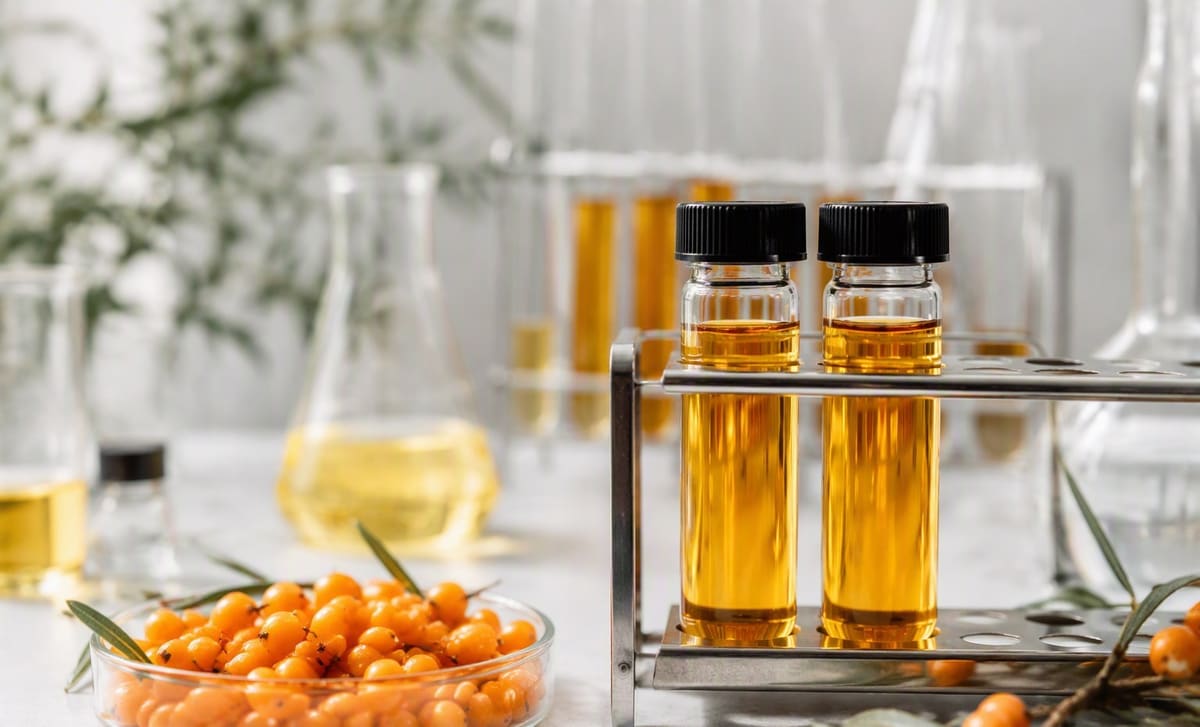
Omega-7 (palmitoleic acid) is sea buckthorn berry oil’s signature molecule, at 15 to 54 percent of its fatty acids. But every human trial behind this plant tested the whole oil, never isolated omega-7. Purified omega-7 has its own separate research literature, mostly animal, with mixed results. When marketing says “omega-7 studies show,” it is borrowing credibility from whole-oil trials and spending it on a molecule.
What the human trials actually dosed
The human file, graded study by study on our research index, is short and consistent. The dry-eye trial gave 2 grams a day of blended seed-and-berry oil. The skin trials gave 1 to 2 grams of branded whole oils. The vaginal trial gave 3 grams of the blend. In each case the capsule contained omega-7, yes, but also omega-9, palmitic acid, carotenoids, vitamin E, phytosterols, and flavonoids, as mapped on our oil nutrition page.
Attributing the results to omega-7 alone is a reasonable hypothesis and an untested one. No trial has run isolated palmitoleic acid against whole sea buckthorn oil, or against placebo, for any of these outcomes. The honest sentence is short: the whole oil has human data, the molecule does not. So if you are shopping on the strength of these trials, the studied product is a whole berry or blend oil, the kind in the whole-oil bottles we rank, not an isolated omega-7 softgel.
The gap matters because the molecule’s share varies so widely. Pulp oil runs 15 to 54 percent palmitoleic acid depending on species, origin, and harvest, typically 30 to 40 percent, so the 2-gram dry-eye dose delivered somewhere between a few hundred milligrams and about a gram of omega-7, plus everything else in the oil. No one knows which number applied in any given batch, and no one knows whether the number was the active ingredient. The palmitoleic acid glossary keeps the chemistry straight, and the mechanisms page shows the same uncertainty from the pathway side.
The separate literature marketing borrows from
Purified omega-7 does have its own research shelf, and it is a mixed one:
- Animal studies dominate. Palmitoleic acid appears in mouse research on fat-cell signaling, insulin sensitivity, and inflammation. The “omega-7 burns fat” claim traces to mouse studies, and mouse metabolism findings fail to translate to humans more often than they translate.
- Human data is thin and inconsistent. The purified-molecule supplement literature has produced mixed results across small studies, nothing like a replicated human evidence base.
- Dose forms differ. A purified omega-7 softgel and a whole sea buckthorn berry oil are different exposures, and results from one say nothing automatic about the other.
Two 2017 mouse studies sit behind most of the fat-burning headlines, the kind where purified palmitoleic acid changed fat-cell signaling and metabolic readouts in rodents. They are real mouse science, they say nothing about people, and the human half of the story already exists and says no: the 15-trial meta-analysis found no significant effect on BMI or body weight, which the weight loss page prints at full size.
Meanwhile the strongest human finding attached to sea buckthorn, the lipid improvements in the 2022 meta-analysis of 15 trials, came from whole oils, and the same analysis found no effect on body weight. Both halves of that sentence matter.
Why the whole oil might be the point
There is a serious scientific version of the anti-splice argument. The whole berry oil carries its omega-7 inside a matrix of omega-9, carotenoids, tocopherols, phytosterols, and flavonoids, and several of those have their own proposed roles: phytosterols compete with cholesterol absorption, tocopherols run antioxidant chemistry, and the trials that worked dosed all of it together. If the benefit belongs to the matrix, isolating one fatty acid could keep the marketing claim and lose the effect. That is a hypothesis too, symmetric with the one it opposes, and the same missing trial would test both. The antioxidants glossary holds the supporting cast’s definitions.
What would settle the question
One trial would cut the knot: isolated palmitoleic acid against whole sea buckthorn oil against placebo, about 120 people, 12 weeks, one outcome like skin hydration or lipids. If the molecule alone matches the whole oil, the marketing was right by accident. If the whole oil wins, the other compounds carry the effect, and the omega-7 story becomes a footnote. That trial has never been run, and until it is, every isolated omega-7 claim is a loan against whole-oil credibility. You can watch for the day it changes: when a purified capsule cites its own human trial instead of borrowing sea buckthorn’s, this page gets rewritten. The cholesterol meta-analysis page shows what the pooled whole-oil evidence actually supports.
Why the shell game works
“Contains X” plus “studies on X show” is the oldest move in supplement marketing, because each half is defensible alone. Sea buckthorn does contain omega-7 at unusual concentrations, among the richest plant sources known. And studies do show benefits, for the whole oil. Spliced together, the two truths imply a third claim nobody tested.
The audit also runs in reverse. When a purified omega-7 capsule advertises itself with sea buckthorn’s whole-oil trial results, it is spending credibility the other direction: the molecule borrowing from the oil this time. Same splice, same missing experiment.
You can audit any omega-7 claim in ten seconds. Ask which study, which population, and whether the capsule in the study was the whole oil or the isolated molecule. The clinical trials catalog keeps the answer one click away, and the fatty acid profile page shows exactly how much omega-7 each oil actually carries. And when the answer is the whole oil, the follow-up question is whose oil: the safety review covers the dose fence every one of those whole-oil trials stayed inside. Ten seconds of auditing beats ten minutes of ad copy.
Frequently asked questions
Is omega-7 clinically proven?
No. The human trials behind sea buckthorn tested whole oils (berry, seed, or blends), which contain omega-7 alongside dozens of other compounds. No human trial has tested isolated palmitoleic acid from sea buckthorn for dry eyes, skin, or lipids. The benefits belong to the whole oil, and crediting one fatty acid is an inference, not a finding.
Does omega-7 burn fat?
That claim comes from mouse studies, not human research. Palmitoleic acid appears in animal research on fat cell signaling and metabolism, and mouse results fail to translate to people more often than they translate. The 2022 meta-analysis of human sea buckthorn trials found no significant effect on BMI or body weight.
Should I buy omega-7 capsules or sea buckthorn oil?
The human trial evidence sits with sea buckthorn oil, because that is what the trials dosed. Isolated omega-7 has a thinner, mostly animal literature and no human trial for the outcomes sea buckthorn is known for. If you want the studied exposure, it is the whole oil at 1 to 3 grams daily. If a purified capsule appeals to you anyway, know that you are buying the hypothesis, not the evidence.