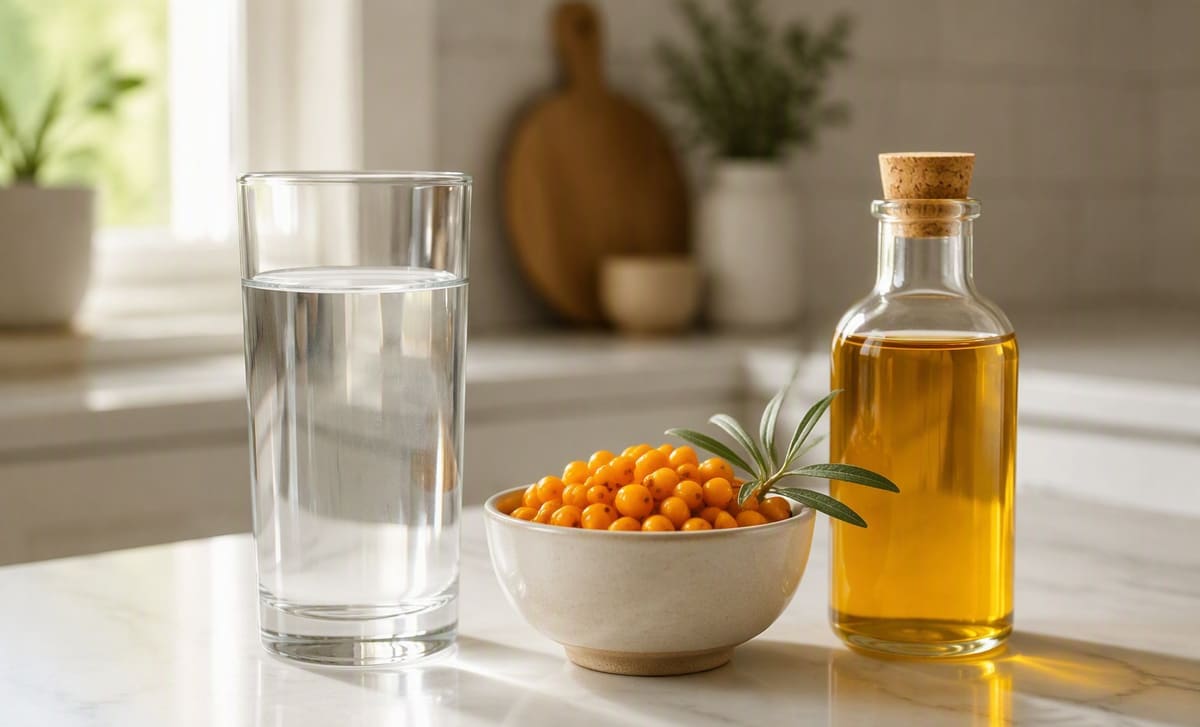
The liver file for sea buckthorn has three layers: centuries of traditional use, a stack of animal studies, and zero verified human liver trials. Any page presenting detox or liver-cleansing claims for this plant is selling a framing, because no trial has measured a liver outcome in people.
The traditional layer
Liver and digestive complaints appear in the plant’s traditional record, from Tibetan medical texts to Chinese pharmacopeia listings, which the Tibetan medicine page and Chinese medicine page document. Tradition is real data about popularity and long use as a food. It has no control group, and it cannot tell a protective effect from a placebo that happened to be tasty. The research desk grades every claim on that distinction.
Notice what the traditional record does not contain: no tradition claimed to detoxify anything. The cleanse vocabulary is modern marketing projected backward onto old texts, and the old texts deserve better representation than that.
The animal layer
Pharmacology reviews catalog rodent studies where sea buckthorn oil or extracts reduced chemically induced liver damage: lower enzyme readings, less fat accumulation, less fibrosis on the slides. This is legitimate hypothesis-grade science, the same grade as the plant’s ulcer and radiation animal work. Rat livers, induced injuries, and extract doses scaled by body weight are how research questions are born. They are not how treatments are made, and most compounds that protect rodent livers fail to replicate in people.
The rodent designs share a shape worth knowing: researchers injure the liver first with a chemical insult, then give the extract and measure the rescue. Rescue-from-injury is the easiest liver effect to produce in a rat and the least predictive of benefit in a person whose liver was never injured for science. The mechanisms page grades the chemistry behind these studies at proposal level for the same reason.
One small human NAFLD trial from a Chinese research group circulates in marketing. We flag it rather than count it: it appears in a journal we grade as low quality, it has never been replicated, and our evidence method excludes it from the verified corpus until a stronger version exists.
Flagging is not sneering. The trial exists, it points the direction the animal data points, and it may yet be the seed of a real literature. What it cannot do today is bear weight: a single small study in a low-quality journal, never replicated in the years since, is exactly the paper the reading-studies page trains you to quarantine. If a stronger version appears, this page will carry it with a grade attached.
Why detox is the red flag
The liver is the organ that performs detoxification. It does not need to be detoxified, and no supplement has human trial evidence of cleaning, flushing, or resetting it. When a product page pairs sea buckthorn with cleanse language, it is borrowing the organ’s job description and selling it back to you. That framing, not the berry, is the problem.
The practical test is one sentence long: any product promising to flush, cleanse, or reset your liver is describing a job your liver already does, and charging you for the description.
The lipid connection, stated precisely
Pooled human trials show sea buckthorn improves blood lipids in people with abnormal levels, dissected on the cholesterol meta-analysis page. Fatty liver travels with abnormal lipids, and marketers splice the two facts into a liver claim. The splice fails: the lipid trials measured cholesterol panels, not liver fat, liver enzymes, or liver histology. Better numbers on one blood test are not evidence about a different organ.
The enzymes question, answered early
Buyers ask a fair question here: if blood lipids improve, might liver enzymes improve too? It is a reasonable hypothesis and it has never been tested. None of the trials in the lipid pool was designed around liver endpoints, and a cholesterol panel says nothing about ALT, AST, or fat on an ultrasound. The fatty liver page carries the same discipline for the metabolic version of this question: what helps the lipid panel is documented, what it does to the organ itself is unmeasured.
What tradition is actually good for here
The traditional layer earns its keep in two specific ways. It tells researchers which questions are worth a rodent study, which is exactly how the animal file got built. And centuries of culinary use across Tibet, Mongolia, China, and Russia amount to a long, informal safety observation of the berry as food, which the safety review counts alongside the trial record. What tradition cannot do is settle an efficacy question, and the liver file is the site’s cleanest example of the gap between a question’s age and its answer. The traditional use map shows where that hypothesis record succeeded and where it failed.
What a real liver trial would look like
It would randomize people with diagnosed fatty liver, dose a defined sea buckthorn product against placebo for months, and measure imaging, liver enzymes, or biopsy endpoints. Call it about 150 participants, six months, ultrasound or MRI measurement of liver fat, pre-registered endpoints, and an independent lab with nothing to sell. That study is entirely feasible, it has never been run, and the reasons are the usual ones: no patent, no budget, no sponsor. Until that trial exists, the honest grade for every liver claim stays at traditional-plus-animal. The consumer liver page makes the same argument in plain buyer language, the clinical trials catalog shows what the verified human file does cover, and the safety review completes the picture.
Frequently asked questions
Do studies show sea buckthorn detoxifies or heals the liver?
No. The liver research file contains traditional use, animal studies, and lab work, with no verified human liver trial. Detox framing is a marketing construct: your liver detoxifies itself, and no supplement has human proof of cleaning it. The interventions with human evidence for fatty liver are weight loss and limiting alcohol.
Can sea buckthorn help with fatty liver disease?
Nobody knows, and that is the honest answer. Fatty liver often travels with abnormal blood lipids, sea buckthorn does have human evidence for improving those lipids, and animal studies point in a hopeful direction, but no verified human trial has measured liver fat, liver enzymes, or any liver outcome. The interventions with human evidence for fatty liver remain weight loss and limiting alcohol.