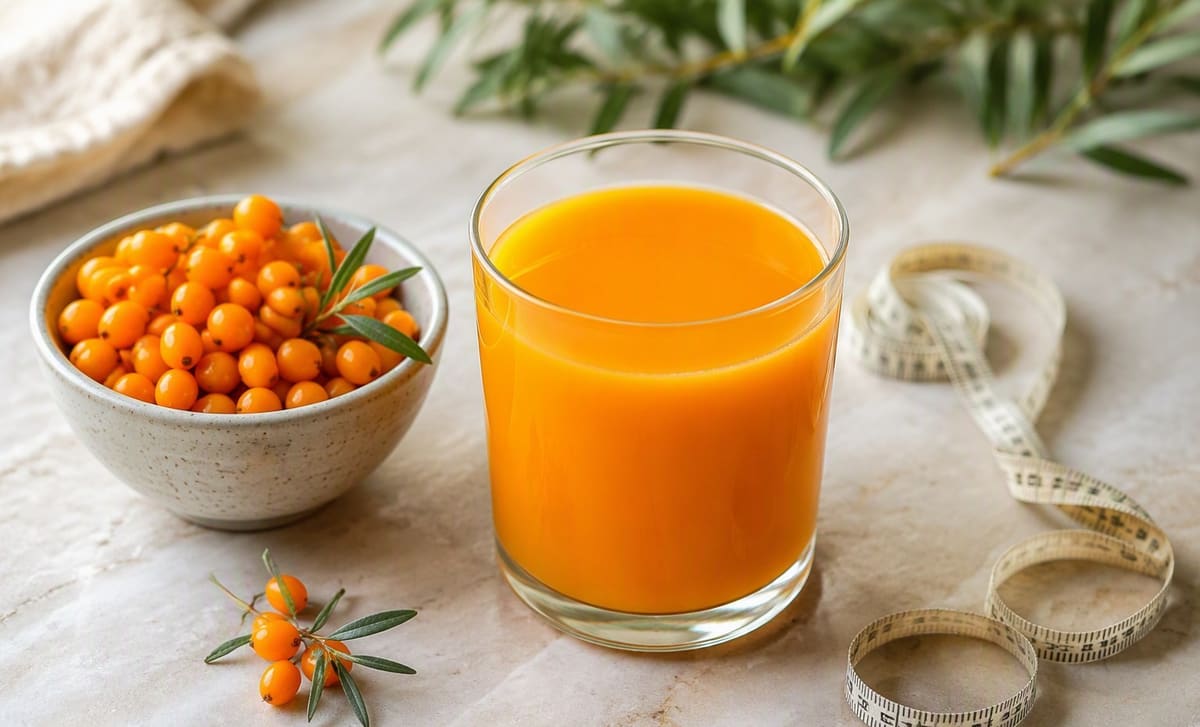
No human trial has tested sea buckthorn for weight loss. The claims come from mouse studies and from omega-7’s role in fat metabolism, neither of which predicts what happens in a person. If a product sells you this berry as a weight loss aid, it is selling ahead of the science.
Where the claim actually comes from
Trace any “sea buckthorn burns fat” article to its sources and you find two things:
- Animal studies. Mice on high-fat diets given sea buckthorn extracts gained less weight or had better metabolic markers than controls. Interesting, frequently misquoted, and not evidence for humans. Mouse metabolism research fails to translate more often than it translates.
- Omega-7 mechanism talk. Palmitoleic acid appears in research on fat cell signaling and insulin sensitivity. Mechanism research tells scientists where to look next. It does not tell consumers what works, which is how the heart hub grades it.
What the human research actually measured
The human trials on sea buckthorn oil measured dry eyes, skin hydration, vaginal dryness, and blood lipids. Weight was not the target in any of them, and no trial reported meaningful weight change as a side observation worth citing. The 2022 meta-analysis of 15 human trials found no significant effect on BMI or body weight. The research hub lists what has genuinely been tested.
A word on the marketing pattern
Weight loss is where weak evidence goes to become strong copy. The pattern is always the same: cite the mouse study without the word “mice,” cite the mechanism without the words “not tested in humans,” add a testimonial. You now know the recipe, which makes you immune to it.
The BMI null, in context
The most useful sentence on this page is a negative one. When the 2022 meta-analysis pooled 15 randomized trials, it measured body weight and BMI alongside the metabolic markers, and found no significant effect. That matters more than any mouse study, because it is the direct human test of the claim this page exists to grade. The same analysis found real lipid effects, so the trials were sensitive enough to detect changes when they existed. Weight did not change. The cholesterol meta-analysis breakdown shows both halves of that report, and the blood sugar page covers the glucose null from the same analysis.
The three tiers, sorted
- Real evidence: the human null. Fifteen pooled trials, no effect on weight or BMI. That is the answer.
- Plausible: mouse studies on high-fat diets and omega-7 mechanism research on fat cell signaling. Both are legitimate science, and both sit below the human null in any honest ranking.
- Marketing: “burns fat,” “boosts metabolism,” “the weight loss berry,” and testimonials where the diet changed the same month the softgels arrived. The calories page has the arithmetic that actually governs the scale.
Why the omega-7 story sounds so convincing
Palmitoleic acid genuinely appears in fat-metabolism research, and genuinely interesting papers exist on fat cell signaling and insulin sensitivity. Mechanism research is how scientists choose what to test next. It is not what they found when they tested it. The supplement industry sells step one of that process as if it were step three, and sea buckthorn’s omega-7 content, real and rare and measured, makes it an easy vehicle for the shortcut.
Common mistakes
- Crediting the softgel for the diet. Weight lost while taking sea buckthorn and eating differently belongs to the eating differently. The pooled trials are the control group you did not run.
- Buying the juice version for weight loss. Sweetened blends add calories to the problem. Unsweetened and diluted is the only sensible form, and it still does not burn anything.
- Delaying the effective options. Calorie balance, protein, movement, sleep, and medical treatments with outcome data all have better files than this berry. Start there.
The appetite question
One honest sub-claim deserves a direct answer: does sea buckthorn reduce appetite? No human trial has measured appetite, hunger hormones, or food intake after sea buckthorn. The mouse studies sometimes report reduced food intake, which means even less than usual here, because appetite is where animal-to-human translation fails most often. If a product implies you will eat less, it is inventing a study that has not been run.
The fiber footnote
The closest thing to a weight-relevant property the plant has is ordinary: the berries themselves contain fiber and are sour enough to eat slowly, like any whole fruit. Whole fruit in general supports satiety as part of a sensible diet. That is a property of fruit, not a sea buckthorn discovery, and no one should pay softgel prices for it. If the fruit is what you want, buy the fruit: dried berries keep the fiber that the oil leaves behind entirely.
What deserves your effort instead
Calorie balance, protein, movement, sleep, and (where appropriate) medical options with real trial data. If you take sea buckthorn for its evidenced uses and happen to eat better alongside it, good. Just let the berry carry the claims it earned, and none of them live on a scale.
Frequently asked questions
Does sea buckthorn help you lose weight?
There is no human evidence for weight loss. The claims trace to animal studies (mostly mice fed high-fat diets with sea buckthorn extracts) and to omega-7's role in fat metabolism research, none of which has been tested for weight outcomes in human trials. Any product selling sea buckthorn as a weight loss aid is ahead of the science.
Does sea buckthorn juice help with weight loss?
No. Juice is a food, and the pooled human trials found no weight or BMI effect for sea buckthorn in any form. Unsweetened diluted juice can fit a calorie-aware diet the way any tart, low-sugar drink does, but the juice does not create the deficit. Sweetened blends work against one. The berries are honest food. The weight loss label is not.