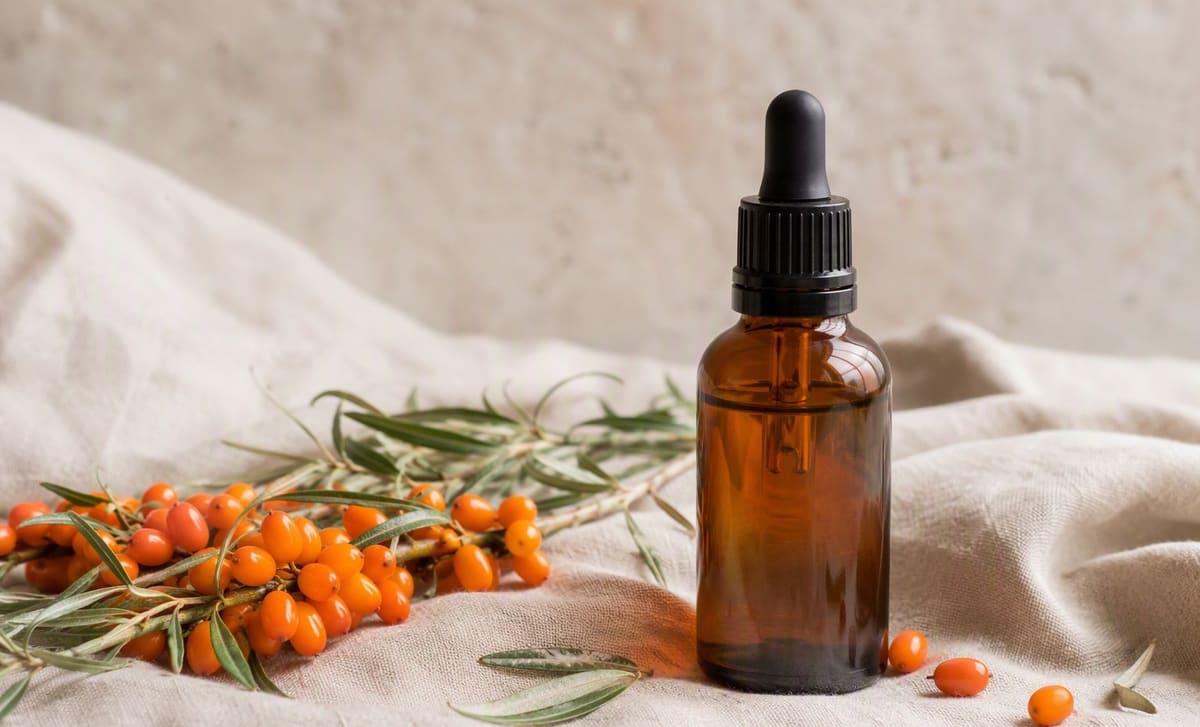
Every pick on this page carries named organic certification (USDA or equivalent), because a plant you concentrate into oil and swallow daily should come with paperwork. SIBU’s sea berry oil is the best certified liquid, SeabuckWonders the best certified softgel value, and The Ordinary the certified budget topical. Anything organic in spirit but not on paper did not make the list.
Prices from retailer listings checked July 2026. They move, so confirm at checkout. Research-based review per our editorial policy.
The picks at a glance
| Product | Best for | Certification | Cost per day* | Our score |
|---|---|---|---|---|
| SIBU Sea Berry Oil (52 ml) | Best overall | Certified organic | about $0.60 | 9.1 |
| SeabuckWonders Omega-7 Complete (120 ct) | Best value | Certified-organic oils | $0.75 | 9.0 |
| SIBU Organic Sea Berry Seed Oil (30 ml) | Best seed oil | Certified organic | about $0.83 | 8.2 |
| The Ordinary Sea Buckthorn Fruit Oil | Budget topical | Organic, cold pressed | lowest entry price | 7.6 |
1. SIBU Sea Berry Oil: best overall
SIBU Sea Berry Oil, 1.76 fl oz (52 ml)
Best overallWhy it wins. Certified organic Himalayan berries, supercritical CO2 extraction, and labels that name the plant part. The full paperwork stack, not just one piece of it. At roughly $0.60 a day at a 1 ml serving, it is also the cheapest verified path to study-level oil dosing.
What we do not love. The earthy taste and the orange stains are the price of a real berry oil. If convenience beats cost for you, the softgels below are the easier habit.
Best for: daily supplementers who want certified sourcing and will actually measure and take a liquid oil.
We may earn a commission at no cost to you.
2. SeabuckWonders Omega-7 Complete: best value
SeabuckWonders Omega-7 Complete, 120 softgels
Best valueWhy it wins. Both oils in the blend are certified organic, and the supplement facts panel prints the numbers competitors hide: 800 mg berry oil at 32 to 38% palmitoleic acid plus 200 mg seed oil per serving. Certification plus printed chemistry is the strongest label combination we have verified, at $0.75 a day.
What we do not love. Kosher beef gelatin shell, so it is not vegan. The vegan alternative is scored in our capsules guide.
Best for: anyone who wants certified-organic study-form oil in the most convenient form.
We may earn a commission at no cost to you.
3. SIBU Organic Sea Berry Seed Oil: best certified seed oil
SIBU Organic Sea Berry Seed Oil, 30 ml
Best seed oilWhy it made the list. Certified organic, unrefined, single-ingredient seed oil. For topical use on oilier skin or for the omega-3 and 6 profile, this is the cleanest certified seed oil we have checked.
What we do not love. Seed oil carries almost no omega-7, so certified or not, it is the wrong bottle for the dry-eye and skin studies. Our seed vs berry breakdown explains the split.
We may earn a commission at no cost to you.
4. The Ordinary Sea Buckthorn Fruit Oil: budget certified pick
The Ordinary 100% Organic Cold-Pressed Sea Buckthorn Fruit Oil
Budget pickWhy it made the list. An organic, single-ingredient fruit oil at the lowest entry price we verified. For topical use, it delivers real carotenoid-rich berry oil without premium pricing.
What we do not love. It is sold as a cosmetic, so do not take it by mouth, and cold pressing is a step below CO2 extraction. It will also tint your face if you overdo it.
We may earn a commission at no cost to you.
How to verify an organic claim in thirty seconds
- Find the certifier’s name and logo on the label: USDA Organic, EU organic leaf, or a national equivalent. A generic green leaf drawn by the marketing team is not a certification.
- Check it applies to the product, not just the company. Certification is per product line.
- Confirm the other four label lines from our how to choose guide: plant part, species, extraction, origin. Organic plus vague is still vague.
What organic does and does not guarantee
The guarantee is real and specific: certified organic means the plants were grown and handled under inspected rules for pesticides and inputs, with paperwork a third party checks. For a berry you concentrate into oil and swallow daily, that documentation is worth a modest premium.
The non-guarantees matter just as much. Certification says nothing about omega-7 content, freshness, extraction quality, or honest ratios in a blend. A certified-organic seed oil still carries almost no omega-7, and a certified bottle stored badly is still a dead bottle. Treat the certification as one strong line on the label, not the whole label.
Common organic-buying mistakes
- Paying the premium for the wrong plant part. Organic seed oil at berry-oil prices is still seed oil. The seed vs berry page settles which one your goal needs.
- Trusting “wildcrafted” over certified. Wild sounds better and verifies nothing. There is no inspector for a mountainside.
- Assuming organic means studied-form. The trials dosed specific oils at specific grams. Certification is orthogonal to matching them.
- Buying organic powder for oil benefits. Powder keeps the berry’s fiber and polyphenols, and almost none of the oil. The powder guide scores that category on its own honest terms.
The 60-second decision path
- Daily oral oil is the goal: the certified liquid or the certified softgel above, whichever habit you will keep.
- Topical use is the goal: the certified budget bottle, because skin-level exposure still argues for clean sourcing.
- Choosing between two certified products: drop to the label checks: plant part, extraction, printed numbers. Certification ties, data wins.
- Wondering if conventional is ever fine: it is, occasionally, but the verified conventional options failed other label lines, which is why this page is all certified.
Storage for certified oils
Certified organic oils skip synthetic preservatives, which is part of their appeal and all of their fragility. The plant’s own tocopherols do the guarding, and they lose to heat, light, and air on your shelf the same way they lose in any oil. Fridge after opening for liquids, cool cabinet for softgels, small bottles over economy jugs, and the crayon smell test as the final word. The fatty acid profile page shows exactly which fragile fats you are protecting.
Where organic matters least and most
It matters most for daily oral products: concentrated oil, taken for months, is the maximum-exposure case. It matters least for rinse-off products, where contact is measured in seconds. Powders and juices sit in the middle, and for those the certification premium competes with freshness as the smarter spend. When in doubt, certified plus fresh beats certified plus old.
If you take blood thinners, are pregnant or nursing, or have surgery planned, read our safety notes and talk to your doctor before dosing. The brands hub profiles the companies behind these labels.
Frequently asked questions
Is organic sea buckthorn worth the extra cost?
For a plant you concentrate into an oil and take daily, yes, within reason. Certification is a verifiable, third-party claim in a market full of unverifiable ones, and every product we score highest carries it. The premium over conventional options is usually small next to the cost of buying the wrong plant part or a diluted oil.
What organic certification should I look for?
A named certifier: USDA Organic, EU organic, or an equivalent national program, with the logo and the certifier on the label. A green leaf graphic or the word pure means nothing. Certified brands will also tell you which product lines are certified, because certification applies per product, not per company.
Does organic certification mean higher omega-7?
No. Certification documents how the plants were farmed, not the chemistry of the oil. Omega-7 content comes from the subspecies, the plant part, and the extraction, which is why the label checks apply to every certified bottle too.