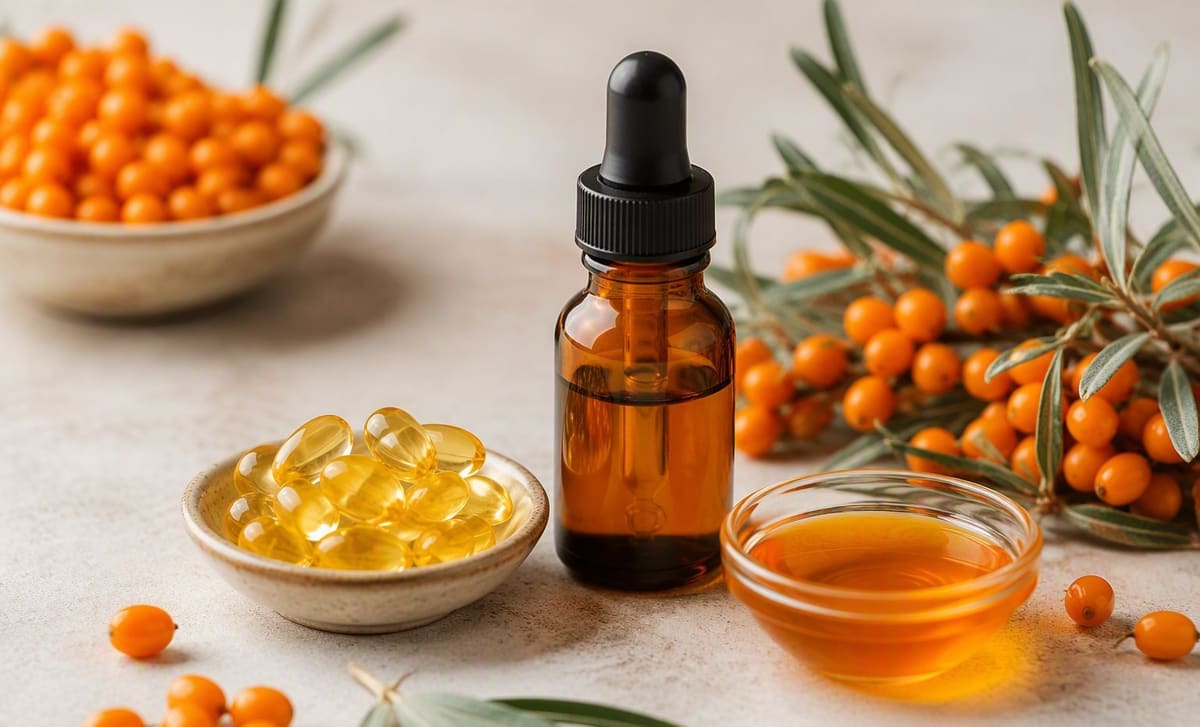
For skin, the best-evidenced sea buckthorn product is an oral oil at trial doses, because that is exactly what the skin trials used. SeabuckWonders Omega-7 Complete is our top oral pick, paired with SIBU’s Sea Berry Therapy line on the topical side. Twelve weeks of both is the routine the evidence most resembles.
Prices checked July 2026. Research-based reviews per our editorial policy.
The two picks at a glance
| Product | Best for | Route | Price checked July 2026 | Cost per day | Our score |
|---|---|---|---|---|---|
| SeabuckWonders Omega-7 Complete (120 softgels) | Matches the trials | Oral softgel | $44.86 (Vitacost), $27.06 for 60 ct (iHerb) | $0.75 at 2 softgels/day | 9.0 |
| SIBU Sea Berry Therapy (face cream, serum, cleanser) | Best topical system | Topical routine | Mid to premium tier | varies by product | 8.9 |
1. The oral anchor: SeabuckWonders Omega-7 Complete
SeabuckWonders Omega-7 Complete, 120 softgels
Matches the trialsWhy it wins for skin. The 800/200 berry-seed blend mirrors the oil style the skin studies dosed, with the omega-7 percentage printed on the panel. At 2 to 4 softgels a day you are inside the studied 1 to 2 gram window for under $1.50.
What we do not love. Beef gelatin shell rules out vegans (the capsules guide has the vegan alternative), and 12 weeks of 4-a-day adds up.
We may earn a commission at no cost to you.
2. The topical partner: SIBU Sea Berry Therapy
SIBU Sea Berry Therapy (face cream, serum, cleanser)
Best topical systemWhy it made the list. The most complete sea buckthorn skincare system from the most documented source. Daily cleanser, serum, and cream cover the surface while the softgels work from inside.
What we do not love. The full line is an investment. The single-product alternative is in the skincare guide.
We may earn a commission at no cost to you.
Why the combination is the honest answer
Both skin trials dosed oil orally and measured hydration, elasticity, and collagen density from inside. Topical products have formulation logic and tradition but thinner direct data. Selling you a cream as the whole answer ignores the study design. Selling you capsules without a decent surface routine ignores how skin works. The two-lane routine respects both.
The evidence behind the routine, in plain numbers
Two human trials sit under everything on this page, and their numbers deserve quoting before your money moves. The 2009 study gave women 2 grams of oral oil daily for three months and measured hydration up about 49 percent and elasticity up about 26 percent, but the oral arm had no placebo group, so treat the size with care. The 2024 trial used 1 gram daily for 12 weeks against a real placebo and measured hydration up 8 percent and collagen density up 10 percent, with industry funding attached. Read together they say: the effect is real, smaller than the old headline, and worth 12 weeks of a verified product rather than 4 weeks of a mystery one. The skin studies page dissects both, and the how we research page explains how funding and design change our grades.
The 12-week cost map
Both skin trials measured at the 12-week mark, so 84 days is the honest budget unit. From the verified July 2026 prices on this page: the SeabuckWonders softgels at 2 a day run $0.75 daily, about $63 for the window. Matching the full 2-gram trial dose takes 4 a day, about $126 for 12 weeks. The liquid route in our oil guide covers the same window for roughly $50 at 1 ml a day, at the price of measuring and stains. The topical line sits on top of either. Decide the number before week one, because the most common way this routine fails is quitting at week six when the bottle runs out unexpectedly.
Who should skip this category
Skip the two-lane routine if breakouts are your main issue: acne has its own evidence picture, graded on the acne page, and persistent acne earns a dermatologist visit before any supplement. Skip it if you will not commit to 12 weeks, because judging at week two wastes the money you already spent. Skip the softgel anchor specifically if you avoid beef gelatin without checking the label, and check with your doctor first if you are pregnant, nursing, or on blood thinners, per the safety hub.
The 60-second decision path
- Skin is the goal, evidence matters: the oral anchor first, topical second. That order follows the trial designs.
- Budget-tight: liquid oil from the oil guide replaces the softgels at about half the daily cost.
- Routine already full: add the single product you will actually use daily, not three you will abandon.
- Want the trial details first: the skin studies page dissects both trials before you spend anything.
Common skin-routine mistakes
- Quitting at week two or three. The trials measured at weeks 4 and 12. Nothing about skin turnover promises faster.
- Cream-only, expecting trial results. The studied benefits came from oral oil. A cream routine is a different bet with thinner data.
- Doubling the dose for double the speed. The studies capped at 1 to 3 grams a day, and more than that is unstudied, not faster. The dosage page maps the studied range.
- Changing three things at once. New softgels, new cream, new cleanser in the same week means you will never know which one worked. One change per month, one baseline photo.
Storage and handling
Softgels belong in a cool, dry cabinet, not a steamy bathroom and never a hot car, because heat degrades the oil inside the gelatin faster than the printed date suggests. Creams and serums keep best with caps tight and fingers out of jars, and any product that changes smell or color gets retired early. The oil nutrition page explains why freshness is a chemistry issue for these oils, and the capsules guide compares the oral alternatives if softgels do not suit your routine.
The timeline to expect
Week 4: early hydration changes (the 2009 trial measured at weeks 4 and 12). Week 12: the full studied window. Judging earlier tells you nothing, per the dry skin evidence page.
If you take blood thinners, are pregnant or nursing, or have surgery planned, read our safety notes and talk to your doctor before dosing.
Frequently asked questions
What is the best sea buckthorn product for skin?
The evidence favors the oral route: the skin trials fed people oil, so a well-dosed softgel like SeabuckWonders Omega-7 Complete is the closest match to what was tested. Pair it with a topical (SIBU's Sea Berry Therapy line is our top topical pick) for the complete routine.
Can I use the cream without the softgels?
You can, but know what changes. The human skin trials measured oral oil at 1 to 2 grams a day, so a topical-only routine rests on formulation logic rather than the study data. The two-lane routine is the one the evidence most resembles.